Key Attractions
View all attractions →
High Place of Sacrifice
Perched dramatically atop Petra's highest point, this ancient Nabataean altar offers sweeping views across rose-red canyons and distant desert plateaus. The climb rewards you with archaeological intrigue—two obelisks mark what scholars believe was a sacred space for ritual offerings over 2,000 years ago. Standing here amid wind-carved stone, you'll feel the profound spiritual weight that drew pilgrims to this remote mountaintop sanctuary.
Photo by David Stanley from Nanaimo, Canada
Horse Rides through the Siq
Experience Petra's most iconic passage on horseback as you journey through the narrow, towering Siq—a dramatic gorge carved naturally into rose-colored stone that opens into the breathtaking Treasury square. Your local guide will lead you past ancient water channels and carved facades, sharing stories of Nabataean engineering while your horse's hooves echo against 80-meter cliffs. This traditional mode of transport connects you to centuries of desert travelers who first discovered this hidden city.
Little Petra (Siq al-Barid)
This lesser-known sister site to Petra showcases an intimate canyon lined with carved Nabatean facades, storage chambers, and dwelling spaces tucked into rose-red cliffs. The narrow siq creates a dramatic tunnel effect where sunlight filters through towering walls, revealing intricate architectural details without the crowds of the main site. Local guides can point out Byzantine mosaics and explain the sophisticated water management systems that sustained this thriving trade settlement.

Monastery (Ad Deir)
Towering majestically above the desert floor at 50 meters high, Ad Deir is Petra's largest carved monument and a breathtaking testament to Nabatean craftsmanship. The exhausting climb through the mountain rewards you with an intimate encounter with a 1st-century temple that feels isolated and timeless, with weathered columns and vast courtyards that echo with centuries of pilgrimage. Standing before this colossal facade, you'll understand why the ancient builders chose this remote summit—the effort itself becomes part of the spiritual experience.
Photo by Diego Delso
Petra Archaeological City (UNESCO)
Carved directly into rose-red sandstone cliffs over two millennia ago, Petra reveals itself gradually as you wind through a narrow gorge, suddenly opening onto an awe-inspiring Hellenistic temple facade that seems impossibly monumental. This ancient Nabatean trading hub showcases remarkable engineering and artistry, with intricate rock-cut chambers, monasteries, and burial sites that transport you back to a thriving crossroads of civilizations. The interplay of light on the carved stone throughout the day creates an ever-changing tapestry of warm colors that make each visit unique.
Petra Museum
Located at the gateway to Petra, this modern museum houses exquisite Nabatean artifacts, intricate pottery, and detailed exhibits explaining the city's rich history and architectural significance. The climate-controlled galleries offer welcome respite while providing context that transforms your understanding of the ancient carved city beyond the walls. Interactive displays and stunning photography bring the stories of Petra's merchants and craftspeople vividly to life.

Royal Tombs
Perched dramatically along Petra's rose-red sandstone cliffs, these four majestic royal burial chambers showcase the extraordinary architectural ambitions of the Nabataean kingdom. Each tomb features intricate Hellenistic facades with towering urns and decorative elements that catch the afternoon light beautifully. The climb to reach them offers breathtaking views across the ancient city and reveals how these royal monuments were integrated into the natural landscape.
Photo by Berthold Werner

The Siq (Gorge Entrance)
This dramatic slot canyon winds through towering rose-red cliffs for nearly half a mile, creating an otherworldly passage that builds anticipation with every step before the Treasury suddenly materializes at its end. The Siq's walls narrow to just 12 feet in places while soaring 300 feet overhead, transforming the walk itself into an immersive geological experience that feels like stepping through layers of time. Ancient water channels carved into the bedrock still hint at the sophisticated engineering of the Nabataeans who controlled this hidden valley.
Photo by Diego Delso
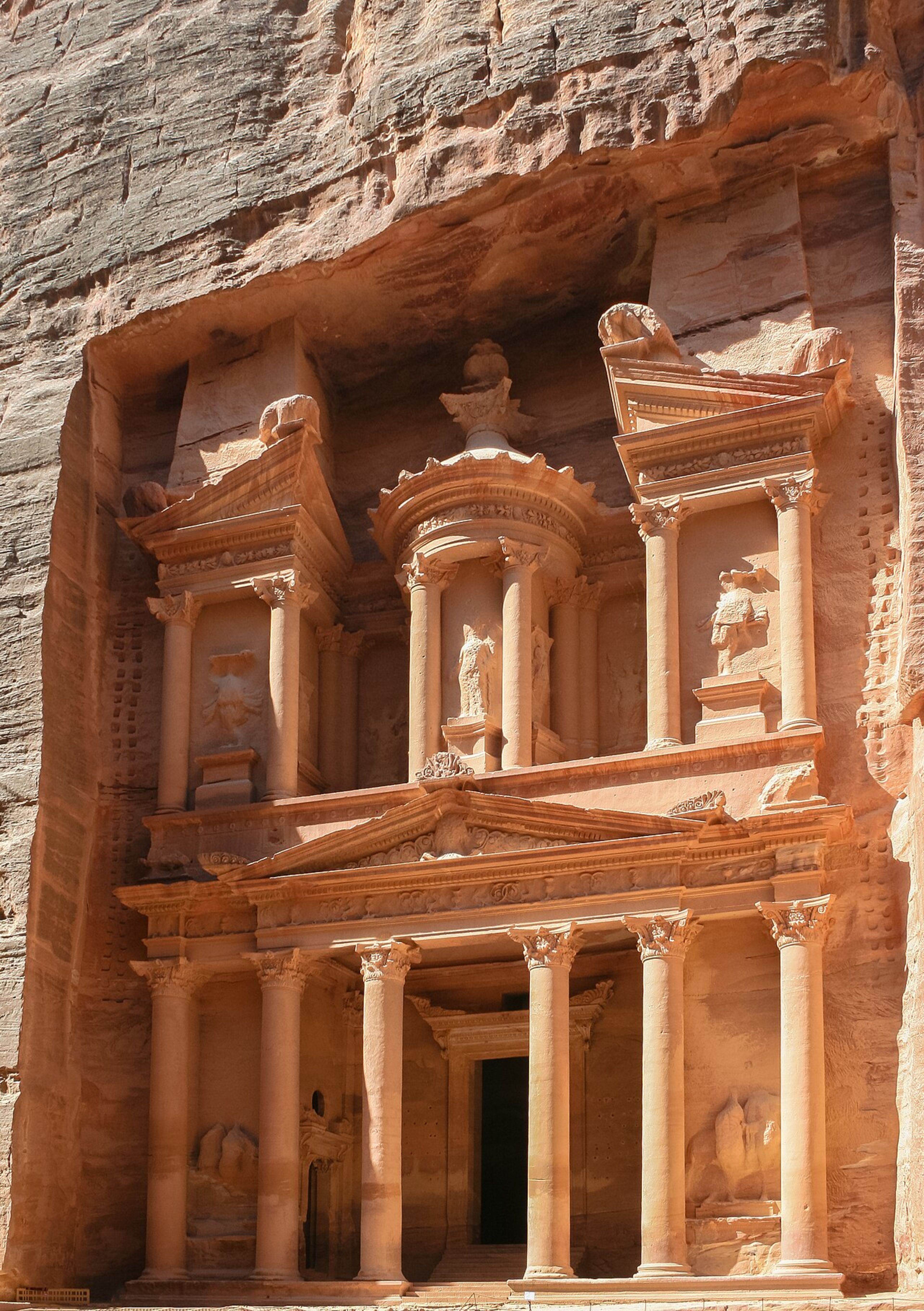
Treasury (Al-Khazneh)
Carved into rose-red sandstone cliffs over two millennia ago, this iconic Nabatean temple facade rises majestically at the end of the Siq canyon, its ornate columns and intricate carvings a testament to ancient architectural ambition. Sunlight dances across the stone throughout the day, transforming the facade from golden-pink at dawn to deep crimson by late afternoon, creating an otherworldly experience that photos simply cannot capture. Once believed to house a royal treasure—hence its modern name—this monument actually served as an elaborate tomb for a wealthy Nabatean king.
Photo by Diego Delso
Wadi Rum Desert (day/overnight)
This otherworldly valley of towering red sandstone cliffs and golden dunes feels like stepping onto an alien planet, where silence and vastness replace the noise of everyday life. Overnight Bedouin camps offer authentic desert experiences complete with traditional meals, stargazing, and the chance to explore ancient rock formations by camel or jeep at sunrise. The dramatic landscape has captivated visitors for centuries and served as a filming location for major motion pictures.
Itineraries Here
Planning a Trip to Petra: FAQs
What are the top things to do in Petra?
⌄
Top attractions in Petra include High Place of Sacrifice, Horse Rides through the Siq, Little Petra (Siq al-Barid), Monastery (Ad Deir) and Petra Archaeological City (UNESCO). Itinara lists 10 verified attractions in total.