
Tashkent pulses with the layered energy of a Silk Road crossroads where ancient Sogdian traditions collide with Soviet grandeur and modern Central Asian ambition. Once razed by Genghis Khan and rebuilt as a trading hub, the city now unfolds as a captivating blend of ornate bazaars, stately plazas, and underground metro stations adorned with Soviet mosaics. From the manicured green spaces of Alisher Navoi Park to the intellectual treasures housed in its museums, Tashkent invites travelers to trace centuries of cultural exchange in a setting that feels simultaneously exotic and surprisingly welcoming.
Key Attractions
View all attractions →Alisher Navoi Park
Named after Uzbekistan's greatest poet and scholar, this sprawling urban sanctuary in the heart of Tashkent offers shaded walkways beneath towering pines and manicured gardens that provide respite from the city's heat. The park features a central amphitheater, peaceful ponds with fountains, and a bronze monument to Alisher Navoi himself, creating an atmosphere where locals gather to stroll, socialize, and escape the bustle. At dusk, the park transforms into a romantic setting as families and couples emerge to enjoy the cooler evening breeze.
Amir Timur Museum
This elegant museum honors the legendary Central Asian conqueror Timur (Tamerlane) through an impressive collection of artifacts, manuscripts, and historical weaponry displayed across multiple levels. The building itself, with its distinctive blue dome and traditional Timurid architectural elements, serves as a visual testament to the grandeur of his empire. Inside, you'll encounter intricate displays that bring to life the military strategies, cultural achievements, and complex legacy of one of history's most formidable leaders.
Applied Arts Museum of Uzbekistan
Housed in a beautifully restored traditional Uzbek mansion, this museum showcases the remarkable decorative traditions that have flourished across Central Asia for centuries. The intimate galleries feature exquisite ceramics, textiles, woodcarvings, and metalwork that reveal the skilled hands behind Uzbekistan's artistic heritage. Walking through these rooms feels like stepping into a collector's personal journey through the region's most treasured crafts.
Bukhara (day trip/overnight)
Bukhara is a mesmerizing Silk Road jewel just 270km from Tashkent, where medieval madrasahs, turquoise domes, and labyrinthine bazaars transport you straight into Central Asian history. The compact old city rewards wandering—you'll stumble upon hidden courtyards, bustling spice markets, and locals brewing tea in family-run chaikhanas that haven't changed in centuries. Whether you spend a rushed day or a leisurely overnight, Bukhara's spiritual atmosphere and architectural treasures make it one of Uzbekistan's most enchanting destinations.

Chorsu Bazaar
Chorsu Bazaar pulses with the sensory chaos of authentic Central Asian commerce, where vendors hawk fragrant spices, colorful silks, and freshly baked non-bread under the distinctive blue dome that's become Tashkent's iconic symbol. The market has thrived for nearly five centuries as the beating heart of the old city, where locals and travelers alike navigate labyrinthine stalls packed with everything from dried fruits and nuts to traditional handicrafts and clothing. This isn't a sanitized tourist attraction—it's a living marketplace where Uzbek, Tajik, and Kazakh merchants conduct business much as their ancestors did.
Photo by Benjamin Goetzinger
Independence Square (Mustaqillik Square)
Uzbekistan's grandest civic plaza celebrates the nation's independence with a stunning 46-meter independence monument at its heart, surrounded by harmonious government buildings that blend classical and modern architecture. The vast open space invites leisurely strolls past manicured gardens, fountains, and monuments honoring national heroes, creating a serene urban sanctuary despite the bustling city beyond. Evening illumination transforms the square into a magical gathering place where locals and visitors alike experience the pulse of contemporary Tashkent.
Khast Imom Complex
This sacred religious complex in the heart of Tashkent's Old City houses one of Islam's most treasured manuscripts—an 8th-century Quran once belonging to Caliph Uthman—displayed within beautifully restored madrasahs and mosques. The compound's intricate tilework, carved wooden doors, and peaceful courtyards create an atmosphere of spiritual reverence that transports visitors back centuries, while the attached museum illuminates Central Asian Islamic scholarship and heritage.
Navoi Theatre (Opera & Ballet)
This stunning Soviet-era theater is the cultural heart of Tashkent, showcasing world-class opera and ballet performances in an ornate auditorium with impressive chandeliers and red velvet seating. The building itself is an architectural gem with its columned facade and grand interiors, representing the golden age of Central Asian performing arts. Whether you catch a traditional Uzbek ballet or a classic opera, the experience transports you into a world of elegance and artistic excellence.
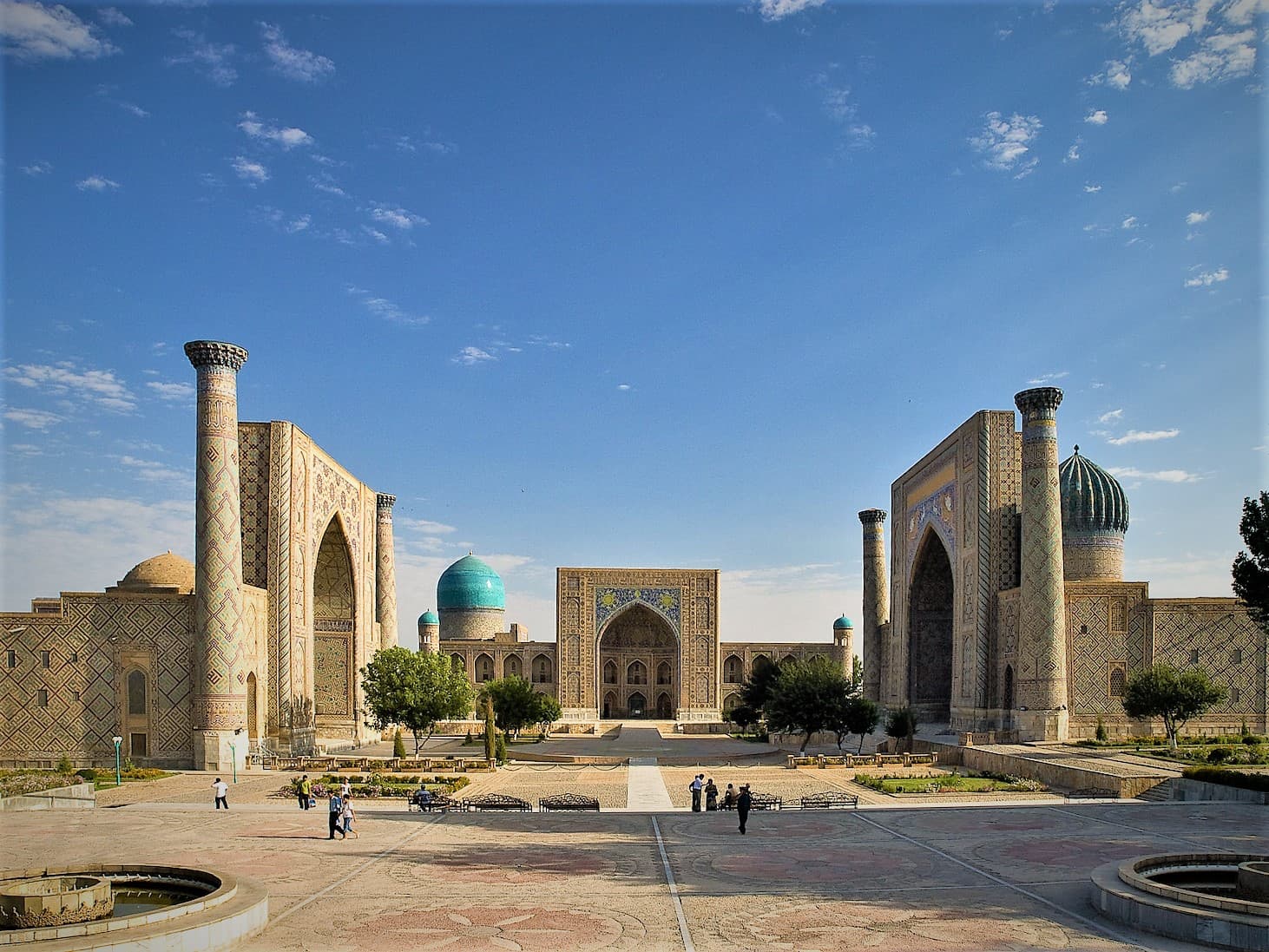
Samarkand (day trip – Registan)
The Registan stands as one of Central Asia's most breathtaking architectural ensembles, featuring three ornate madrasahs adorned with intricate tilework, calligraphy, and towering iwans that create an almost dreamlike atmosphere. Built over nearly two centuries starting in the 15th century, each building tells its own story through mesmerizing geometric patterns and glazed ceramic details that shift color with the changing light. This UNESCO World Heritage site captures the essence of Samarkand's golden age when it rivaled Baghdad and Cairo as a cultural powerhouse.
Registan_-_Gusjer.jpg: Gustavo Jeronimo from Aranjuez, Spain derivative work: MrPanyGoff, CC BY 2.0, via Wikimedia Commons

Tashkent Metro (Soviet Mosaics)
Tashkent's metro system is a stunning underground museum of Soviet artistry, where each station showcases intricate mosaics, marble columns, and chandeliers reflecting the grandeur of 1970s Central Asian design. Riding these trains feels like traveling through a time capsule, with stations like Kosmonavtlar featuring cosmic-themed artwork and Mustaqillik displaying nationalist symbolism from the independence era. The network remains both a functional transportation system and an open-air gallery celebrating the region's layered cultural identity.
Photo by Sunriseforever
Itineraries Here
Planning a Trip to Tashkent: FAQs
When is the best time to visit Tashkent?
⌄
The best time to visit Tashkent is spring.
How many days do you need in Tashkent?
⌄
Plan on about 4 days to cover Tashkent's highlights at a comfortable pace.
How do you get to Tashkent?
⌄
Tashkent International Airport (TAS) is the primary gateway, located roughly 15–20 km south of the city center and served by regional and international carriers. The city is well-connected by rail and road to nearby historical centers; Samarkand lies approximately 3–4 hours south by train, while Bukhara is accessible as an overnight journey. Most visitors arrive by air; domestic flights and trains also link Tashkent to other Uzbek cities.
What are the top things to do in Tashkent?
⌄
Top attractions in Tashkent include Alisher Navoi Park, Amir Timur Museum, Applied Arts Museum of Uzbekistan, Bukhara (day trip/overnight) and Chorsu Bazaar. Itinara lists 10 verified attractions in total.