3 DaysSolo Traveler6 Stops

Valley of Fire SP (near Las Vegas), Nevada

3-Day Itinerary for Solo Traveler

Red Rock Solitude: 3 Days Alone in Valley of Fire

Red Rock Solitude: 3 Days Alone in Valley of Fire

The desert here doesn't whisper, it burns — crimson sandstone stacked in waves and beehives against a sky so blue it looks digitally saturated. This is a landscape built for solitude: no crowds at dawn, no small talk required, just you, the wind through the washes, and rock that's been catching light for a billion years.

At a Glance

Climate & Weather
Summer here means 90–98°F by midday and relentless sun with zero shade—mornings before 9 AM and the hour before sunset are your operating windows. Pack a wide-brim hat, UPF clothing, sunglasses, sunscreen, and no less than 3 liters of water per person per outing; the park has no water refill stations.
Getting Around
A personal vehicle is non-negotiable—there's no public transit, no shuttle, and no ride-share coverage inside the park. High-clearance isn't required for the main sites in this itinerary, but a full tank and good tires matter; the nearest gas is in Overton.
Budget
Expect roughly $40–65/day for a solo traveler: park entrance fee (~$15 per vehicle for non-Nevada residents), a casual lunch and dinner in Overton or Mesquite ($10–20 each), and incidentals like snacks and water.
Safety
Solo travelers should tell someone their planned route and return time before each hike, carry a paper map or offline GPS (cell service is unreliable), and treat 11 AM–4 PM as off-limits for exertion. Watch for rattlesnakes on warm rock in the mornings and evenings, stay on marked trails, and never enter washes if storm clouds are visible—flash floods move fast and give little warning.
Connectivity
Cell signal is spotty to nonexistent inside the park boundaries and improves noticeably once you're back on I-15 near Overton or Las Vegas. Download offline maps and any trail apps before you leave your accommodation.
Local Tips
Arrive at trailheads by 7–7:30 AM in summer—by 9 AM the heat and the tour vans both arrive in force. Base yourself in Overton or Mesquite rather than the Strip if you want more sleep and less drive time; the trade-off in nightlife is worth the extra hour of cool morning trail time. Solo travelers should introduce themselves to rangers at the visitor contact station—they're a good source of real-time trail and heat advisories and often chat with solo visitors more freely than groups.

Highlights

  • Sunrise light hitting Atlatl Rock's ancient petroglyphs before the heat sets in
  • Scrambling the striped sandstone waves at Fire Wave with barely another soul in sight
  • Tracing 3,000-year-old rock art at Mouse's Tank on a flat, accessible path
  • Golden hour at the Beehives when the hoodoos glow like embers
  • The full-panorama payoff at Rainbow Vista, rated a perfect fit for solo travelers
  • Retreating to Overton's local grill for a cold drink and real conversation after a hot morning

Day-by-Day Plan

Orientation & Ancient Rock

Day 1: First Light on the Canyon Floor

A gentle, low-mileage introduction to the park's iconic red rock and petroglyph sites—roughly 2 miles of easy walking, moderate energy, timed to dodge the worst of the summer heat.

Wear
Lightweight long sleeves or UPF shirt, wide-brim hat, sturdy trail shoes (not sandals—loose sand and slickrock), sunglasses, and a daypack for 3L of water.
Budget
$45 (park entry $15, lunch $15, dinner $15)
7:00 AM - 7:45 AM
Atlatl Rock · morning · 45 min · Northern Fire Canyon Loop

Arrive before 7:30 AM and this ancient petroglyph panel is yours alone—no shuffling behind tour groups, just the scrape of your boots on stone stairs and the low murmur of wind. The carvings, some 3,000 years old, catch dramatic side-lighting in early sun, grooves deepened by shadow. It's an easy, contained first stop that eases you into the park's scale without overtaxing a still-adjusting solo traveler.

Atlatl Rock
Thompson, Sally (Sally N.) Plochman, Heidi United States. Forest Service. Northern Region / wikimedia (Public domain)
Shoot the south-facing panel just after sunrise when raking light deepens the carved grooves—by 9 AM the light flattens and the detail washes out.
Stairs to the platform are uneven and unshaded; not wheelchair accessible, and morning visits avoid the worst heat radiating off the rock.
10 min driveA short hop along the main park road, red rock walls rising on both sides as the road curves past scattered Joshua trees.
8:00 AM - 8:45 AM
Beehives · morning · 45 min · Northern Fire Canyon Loop

A short drive brings you to these swirling, honeycombed hoodoos—stratified layers of burnt orange stacked like something out of a dream. Morning light hasn't yet turned harsh, so the striations pop with color and texture rather than glare. It's a quick, contemplative stop: good for slow circling and close-up shots of the honeycomb texture before the day heats up.

Beehives
Internet Archive Book Images / wikimedia (No restrictions)
Get close-up texture shots of the honeycomb striations in soft early light; skip midday when the sun flattens the color contrast.
Uneven, unshaded terrain with no benches—plan for a short, standing visit rather than lingering.
8 min driveA quick backtrack on the loop road—windows down while the temperature is still bearable.
9:00 AM - 10:15 AM
Fire Canyon Trail · morning · 75 min · Northern Fire Canyon Loop

This is the day's main event—a descent into a canyon whose walls seem to burn with layered color. The sand-scrunch underfoot and total silence (aside from wind funneling through narrow passages) make this feel like a solo pilgrimage rather than a hike. By 9 AM the crowd starts to build slightly, but it's still manageable; save the golden-hour crowds for another day and use this window for a quieter, more immersive walk.
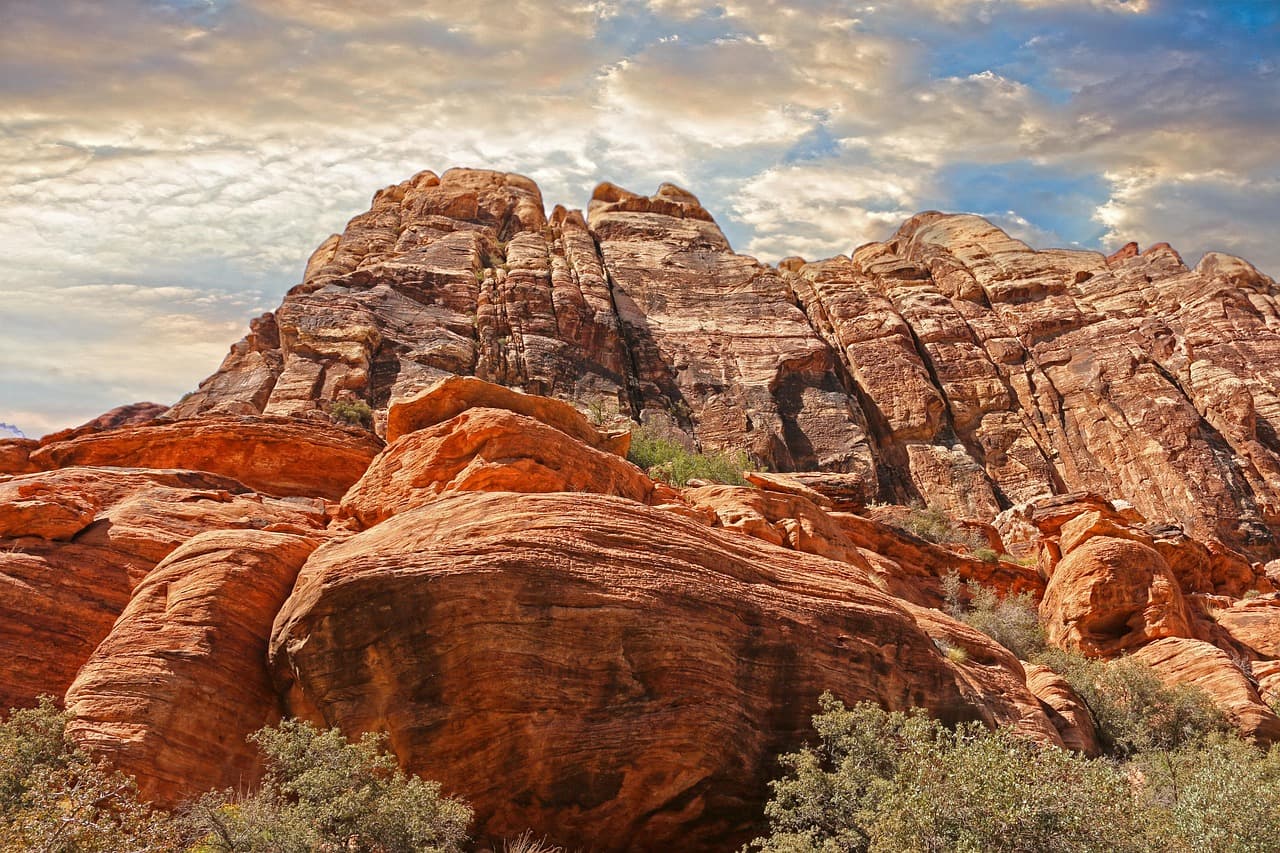
Fire Canyon Trail
Photo by elizabethannphotolv on Pixabay
The canyon mouth at the trailhead gives the widest view of full striations; the mid-loop alcove cluster offers more intimate, shaded framing.
Uneven sandy trail, not wheelchair accessible—turn back early if heat or fatigue sets in, since there's no shade for retreat.
Lunch
Rivas Mexican Grill $
Mexican · Near Rainbow Vista / Overton town center
A no-frills local spot in Overton where solo travelers can grab a counter seat, cool off, and refuel with hearty, unfussy plates after a hot morning on the trail.
Dinner
Greens & Grill $
Mediterranean/Burger/Gyro/Kabob · Near Rainbow Vista / Overton town center
Casual counter-service variety that's easy for solo diners—order at the counter, chat with staff, and take a seat without the awkwardness of a two-top table for one.
If it rains: If storms roll in, skip Fire Canyon Trail (flash flood risk in washes) and instead drive the scenic loop road, viewing formations from your vehicle, or head into Overton for an early lunch until conditions clear.

The day opens in near-total stillness—Atlatl Rock at first light feels less like a tourist stop and more like a quiet appointment with the past, grooves in ancient stone lit gold by a sun still low enough to be kind. From there it's a short hop to the Beehives, their honeycombed layers glowing in soft morning color, before the day's centerpiece: a descent into Fire Canyon Trail, where sand-scrunch footsteps and canyon silence make for a genuinely meditative solo hike.

By late morning the heat has real teeth, so the smart move is retreat—back to the vehicle, AC on, and a drive toward Overton before the sun turns punishing. This is built-in rest time: hydrate, review the morning's photos, and let the body recover from the trail before the evening's lighter plans.

Dinner in Overton at a casual counter-service spot offers an easy, low-pressure way to end a solo day—no reservations, no awkward solo-table energy, just good food and maybe a conversation with the person next to you at the counter. An early night follows; tomorrow's centerpiece hike demands another pre-dawn start.

Remote Scramble & Solitude

Day 2: Chasing the Wave

The most physically demanding day—roughly 3-4 miles round trip to Fire Wave with moderate scrambling, requiring an early start to beat both heat and crowds.

Wear
Moisture-wicking layers, broken-in hiking shoes with good grip for sandstone scrambling, hat, sunglasses, and at least 3L of water carried in a hydration pack for hands-free scrambling.
Budget
$35 (lunch $15, dinner $20, snacks/water $10)
6:00 AM - 7:30 AM
Fire Wave · morning · 90 min · Fire Wave Overlook

This is the payoff hike of the trip—an undulating canvas of red, orange, and purple stone that looks almost painted. Arriving at 6 AM means near-total solitude and the softest, most flattering light raking across the ridges; by 9 AM the parking area fills and the formation loses some of its magic to foot traffic. The moderate scrambling over slickrock gives the morning real texture—part hike, part scramble, part quiet meditation—well-suited to a solo traveler moving at their own pace without needing to coordinate with anyone else.

Fire Wave
Rufus B. Sage / wikimedia (Public domain)
Dawn light (6–8 AM) rakes across the wave formations for the most dramatic color separation; the unmarked ridge north of the main viewing area offers a quieter alternate vantage.
Trail involves sandy stretches and rock scrambling with no shade—not accessible for mobility devices, and turnaround should happen well before 10 AM heat sets in.
Lunch
Wingstop $
Wings · Near Rainbow Vista / Overton town center
A quick, satisfying refuel option near Rainbow Vista's dining cluster—good for grabbing something fast before an afternoon of rest.
Dinner
Pizza Hut $
Pizza · Near Rainbow Vista / Overton town center
Familiar, low-effort comfort food after a demanding scramble day—reliable and unfussy, with easy solo seating at the counter or a small table.
If it rains: Rain is rare here in summer, but if storms threaten, postpone the Fire Wave scramble entirely—wet sandstone becomes dangerously slick—and shelter in the vehicle or retreat toward Overton until skies clear.

Pre-dawn departure gets you to the Fire Wave trailhead as the sky just starts to lighten—the walk in is quiet, cool, and increasingly dramatic as the striped sandstone comes into view. The scramble up to the main formation rewards patience and steady footing, and with almost no one else around, it feels like discovering the place for the first time. Linger for photos while the light is still soft; this is the kind of moment solo travel is made for.

With the sun climbing fast and the trail now firmly in "too hot" territory, the rest of the day shifts to recovery mode—back to the car, into shade or air conditioning, and a slow lunch to rehydrate and cool down. This is intentionally light; the morning's exertion warrants real rest rather than pushing into another hike.

Dinner keeps things simple and low-key—comfort food, minimal decision fatigue, and an early wind-down. Tomorrow's plans are gentler, so tonight is about letting tired legs recover fully.

Panoramas & Petroglyphs

Day 3: Rainbow's Edge and the Long Goodbye

A lighter closing day combining an easy, accessible historic site with a scenic overlook—under 2 miles total, low-to-moderate energy, timed for an early finish before the drive back.

Wear
Breathable clothing, comfortable walking shoes (flat paths today), hat and sunglasses still essential, light layers for the cooler morning hours.
Budget
$40 (lunch $15, dinner $20, snacks $5)
7:00 AM - 7:45 AM
Mouse's Tank · morning · 45 min · Southern Valley Panorama

A gentle, flat, fully accessible walk among centuries-old rock art makes for a calm start to the final day—no scrambling required, just warm sandstone underfoot and ancient symbols etched sharp against burnt-orange rock. Early arrival means the path is quiet enough to actually sit with the petroglyphs rather than jostling for a viewing angle. It's a good contrast to the previous day's scramble—contemplative rather than physical.

Mouse's Tank
Photo by lusepho on Pixabay
The main boulder cluster is best backlit by afternoon sun, but early morning offers softer, more even lighting for detail shots of individual panels.
Flat, wheelchair-accessible path—the most accessible stop of the whole trip, with sparse benches for rest.
12 min driveA short scenic drive with the valley opening up ahead—last chance to soak in the park's scale before heading out.
8:15 AM - 9:00 AM
Rainbow Vista · midday · 45 min · Southern Valley Panorama

A short drive delivers one of the park's best solo-rated stops—rated a full 5/5 fit for solo travelers, and it's easy to see why: the overlook rewards quiet, unhurried standing and staring, no group logistics needed. Brilliant red and ochre rock faces glow against deep blue sky, with only the occasional raven call breaking the silence. This is the natural closing image of the trip—expansive, humbling, and worth sitting with rather than rushing past.

Rainbow Vista
Yard, Robert Sterling / wikimedia (Public domain)
The main overlook platform is the signature shot; arrive before 9 AM for softer light and thinner crowds before the mid-morning rush.
Accessible pullout available for a shorter, 15–30 minute visit if mobility or heat is a concern; unpaved sections nearby are less even.
Lunch
Rivas Mexican Grill $
Mexican · Near Rainbow Vista
A satisfying final park-adjacent meal—casual, quick, and a good spot to reflect on the trip over a cold drink before the drive back to Las Vegas.
Optional detour: Fire Canyon TrailBetween Mouse's Tank and Rainbow Vista
If energy allows, revisiting this trail at a different time of day offers new light and shadow patterns on the striated walls. Skip if: It duplicates Day 1's hike and adds unnecessary mileage on a day meant to be lighter before the drive back to Las Vegas.
If it rains: If rain moves in, Mouse's Tank remains passable even in light rain (though slick rock warrants caution), while Rainbow Vista should be approached carefully on unpaved sections—consider shortening the visit to the accessible pullout only.

The final day opens gently at Mouse's Tank, where flat, accessible paths and centuries-old petroglyphs make for an easy, contemplative morning—no scrambling, no exertion, just quiet appreciation. A short drive later, Rainbow Vista delivers the trip's most fitting farewell: a sweeping, solitary overlook that feels tailor-made for a solo traveler's unhurried gaze.

With both stops wrapped by mid-morning, the smart move is to beat the heat back toward Overton or Las Vegas rather than lingering in the park past its comfortable window. A relaxed lunch offers one last chance to sit with the trip before the 60–75 minute drive back to the Strip or the airport.

Depending on flight timing or onward plans, the evening is open—whether that means Las Vegas Strip energy as a deliberate contrast to three days of desert silence, or simply an early departure home with sand still in your shoes and a camera full of red rock.

Want to tweak this trip?

Our AI planner can customize this itinerary to your exact dates, interests, and travel style.

Customize This Itinerary
Good to Know

Restaurant details (hours, menus, availability) change frequently. Check current hours before visiting, especially in seasonal destinations.

Dietary compatibility tags are general guidance. If you have severe allergies, confirm directly with the restaurant.

Travel tips are general guidance, not professional safety advice. Check government advisories for latest information.

All prices are approximate and may vary seasonally.

We use cookies to improve your experience and analyze site usage. Essential cookies are always active. You can customize your preferences or accept all cookies. Cookie Policy