4 DaysSolo Traveler8 Stops

Poconos (Waterfalls/Ski), Pennsylvania

4-Day Itinerary for Solo Traveler

“Snow, Falls & Solitude: 4 Days Alone in the Poconos”
Snow, Falls & Solitude: 4 Days Alone in the Poconos

Snow softens the ridgelines here into something quieter than any brochure captures — chairlifts creak overhead while frozen waterfalls hold their breath mid-fall. This is a trip built for one set of footprints in fresh powder, one seat at the lodge bar, and the particular freedom of moving at your own rhythm through Pennsylvania's highland winter.

At a Glance

Climate & Weather
Winter days run cold, typically 20–35°F, with snow and occasional ice underfoot; layered thermal wear, waterproof outer shells, insulated boots, and gloves are essential. Shortest daylight hours mean planning outdoor stops before 4pm.
Getting Around
A car is essential — clusters are spread across the region with 30-60 minute drives between them. Roads are well-maintained but can be slippery after snowfall; winter tires or all-wheel drive recommended.
Budget
Budget roughly $80–130/day for a solo traveler, covering lift tickets or park fees, casual meals, and incidental costs; ski rental and lodging are separate line items.
Safety
Very safe for solo travelers, though winter roads can ice over — drive cautiously and check conditions before mountain routes. Tell someone your trail plans if hiking alone, carry a charged phone, and be aware that some trails have minimal cell signal. Black bears are dormant in winter but food storage discipline is still wise near dumpsters and cabins.
Connectivity
Cell coverage is reliable near Camelback and main roads but spotty in deeper sections of Hickory Run State Park and along lower Bushkill Falls trails — download offline maps in advance.
Local Tips
Arrive at Camelback before 8:30am on weekends to beat lift lines; weekday visits offer near-empty runs. Bushkill Falls' trails turn magical but slick after snow — microspikes are a smart addition to your daypack. Solo diners will find the most natural conversation at lodge bars during après-ski hours, roughly 3–6pm.

Highlights

  • First tracks on Camelback's slopes before the lift lines form
  • Frozen mist and ice-rimmed cascades at Bushkill Falls
  • Snow-hushed boulder fields older than the surrounding forest
  • Après-ski conversations at Cameltop's bar seating
  • Golden-hour light on layered ridges from the summit plateau
  • Solo-friendly lodge dining with communal tables and easy conversation
  • Quiet weekday trails with almost no other hikers in sight

Day-by-Day Plan

Settling In

Day 1: Arrival & First Light on the Mountain

A gentle arrival day easing into the Camelback Mountain corridor with light orientation and an early evening on the slopes; minimal walking, moderate energy.

Wear
Warm layered base and mid-layers, waterproof winter jacket, insulated snow boots, gloves, and a hat — dress for standing outdoors in cold air with intermittent activity.
Budget
$70–100 (lift ticket or day pass, dinner, incidentals)
1:00 PM - 4:00 PM
Camelback Mountain · afternoon · 180 min · Camelback Mountain Ski Corridor

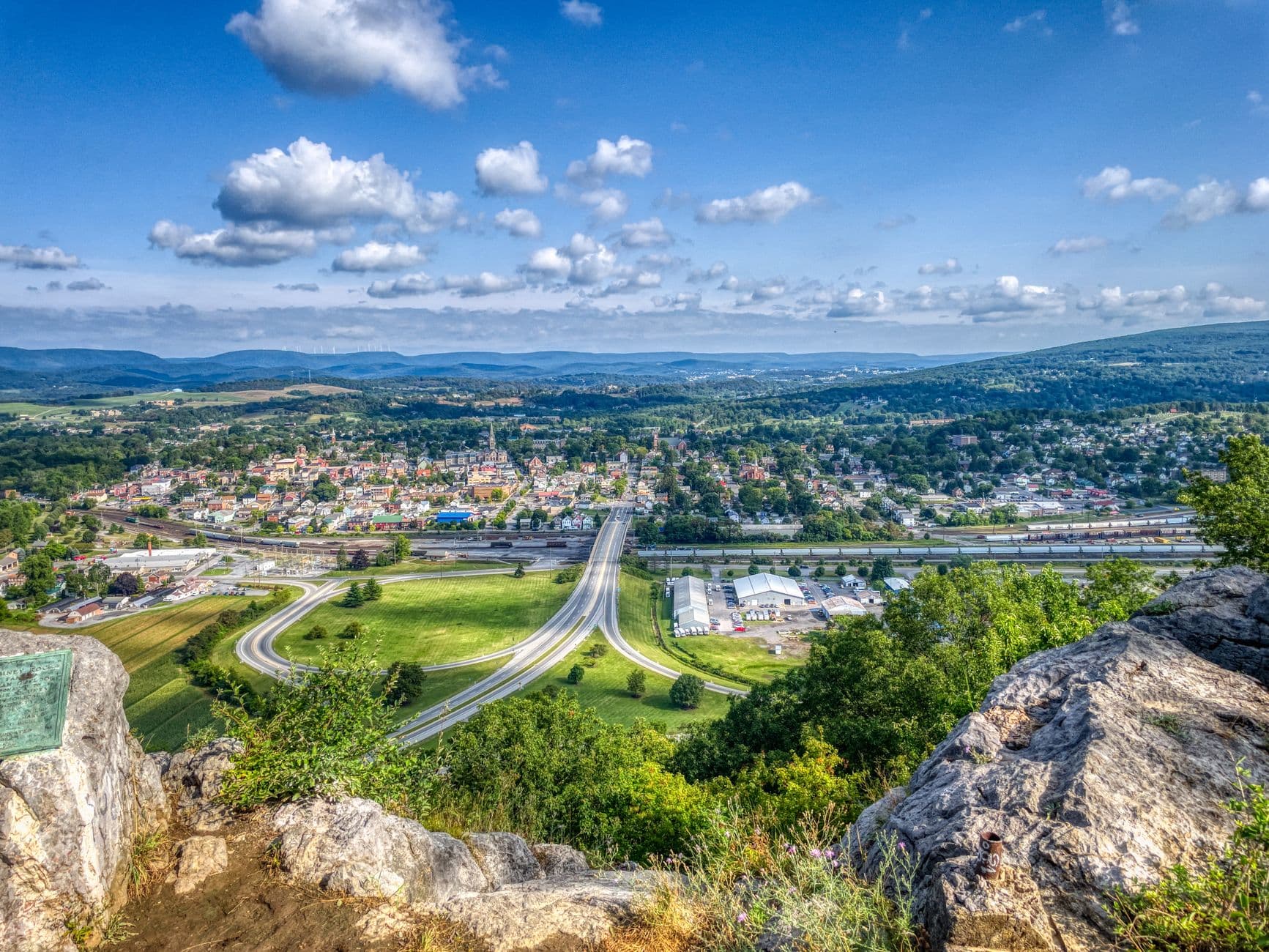
Settle into the mountain slowly on arrival day — the crisp mountain air hits first, sharp and clean, followed by the distant swoosh of skis carving fresh snow. Solo travelers will appreciate the low-pressure pace here: no need to sync schedules, just find your rhythm on gentler runs or simply ride the chairlift up for the view. Late-afternoon light rakes low across the layered ridges, turning the snow gold-pink by 4pm.

Camelback Mountain
Unknown / wikimedia (Public domain)
Ride the chairlift mid-ascent around 3:30pm for soft light over the forested valley below.
Terrain is not wheelchair accessible; paths are ungroomed in areas away from the main lodge.
Dinner
Cameltop $$
American/local · At Camelback Mountain base
Lodge-style dinner spot with bar seating — easy to strike up conversation with fellow skiers over a hearty plate after a day on the mountain.
If it rains: If snow turns to rain or ice, spend the afternoon in Camelback's indoor lodge facilities — dining, shops, and ski school areas offer a warm, low-key alternative to outdoor runs.

Use the morning for travel, check-in, and settling into the Camelback Mountain area — there's no need to rush on day one. Let the drive itself be part of the transition, watching the terrain rise from rolling hills into proper ridgelines.

By early afternoon, head up to Camelback Mountain itself. Whether skiing, snowshoeing, or simply riding the lift for views, keep the pace light — this is about acclimating to the cold, the altitude, and the rhythm of mountain time, not conquering the whole resort in one go.

Wind down with dinner at Cameltop, where bar seating makes solo dining comfortable and natural. The bar here tends to fill with other skiers swapping trail stories — an easy, low-effort way to feel part of the mountain's social fabric on your first night.

Ski & Summit

Day 2: Full Mountain Day

A full day dedicated to Camelback Mountain with morning slopes, midday lodge lunch, and afternoon summit exploration; moderate-to-high energy, under 3 miles of movement.

Wear
Full ski or snow gear: thermal base layers, waterproof pants and jacket, goggles, neck gaiter, insulated gloves, and warm socks — mountain wind chill can be significant.
Budget
$90–140 (lift ticket, rentals if needed, lunch and dinner)
7:30 AM - 11:00 AM
Camelback Mountain · morning · 210 min · Camelback Mountain Ski Corridor

Arrive by 7:30am and the slopes are nearly empty — just the crunch of fresh snow underfoot and the occasional early chairlift creaking overhead. This is prime time for solo skiers: no crowds, no waiting, just clean runs and cold, bright air. By 9am, weekend crowds start filling in, so claim the early morning for the summit's best snow conditions.

Camelback Mountain
Unknown / wikimedia (Public domain)
Summit plateau at sunrise delivers layered ridge silhouettes with almost no one else in frame.
Not wheelchair accessible; benches are sparse along mountain paths.
10 min walk — A short walk back from the lodge to the lift base, boots crunching over packed snow.
1:00 PM - 4:00 PM
Camelback Mountain · afternoon · 180 min · Camelback Mountain Ski Corridor

After a lodge lunch break, return to the mountain for an afternoon session — try the eastern-facing runs where light shifts beautifully toward golden hour. The energy changes as weekend crowds arrive, but solo travelers can pivot to quieter trails or simply enjoy people-watching from the base lodge deck with a warm drink.

Camelback Mountain
Unknown / wikimedia (Public domain)
Eastern exposure overlooking the Delaware Water Gap glows gold in late afternoon light — worth pausing mid-run for.
Not wheelchair accessible; terrain is uneven and icy in shaded patches.
Lunch
Cameltop $$
American/local · At Camelback Mountain base
Convenient mid-mountain refuel with generous portions — the bar area is a natural spot for solo skiers to trade trail recommendations.
Dinner
Cameltop $$
American/local · At Camelback Mountain base
Return here for dinner — the après-ski crowd peaks in the early evening, making it the liveliest and most social option nearby.
Optional detour: Camelback Mountain — Between morning session and lunch
Extending the morning session captures the best snow conditions before it gets skied out by midday crowds. Skip if: Skip if legs are tired — an early finish preserves energy for the more social afternoon and evening ahead.
If it rains: If conditions turn icy or rain moves in, retreat to indoor lodge facilities, dining areas, or the ski school building at Camelback for a warm, dry afternoon.

Rise early and get to Camelback Mountain by 7:30am — this is the golden window before the lift lines form. Snow is freshest, light is crisp and low, and the mountain feels like it belongs to you alone. Ride a few runs, or if skiing isn't the plan, take the chairlift purely for the sweeping views of layered ridgelines under morning light.

After refueling at the lodge, head back out for an afternoon session on the eastern-facing trails, where the light begins its slow shift toward gold. The mountain grows busier through the afternoon, but there's a rhythm to weekend crowds that's easy to work around — duck into quieter runs or take a break on the summit plateau to simply take in the view.

Evening belongs to Cameltop, where the bar buzzes with a mix of locals and visiting skiers. This is peak social hour — pull up a stool, order something warming, and let the conversation happen naturally among people who've just shared the same mountain.

Waterfalls & Woodland

Day 3: Falls in Winter Silence

A full day exploring Bushkill Falls' frozen cascades and forest trails, with a slower pace and moderate walking of roughly 3-4 miles.

Wear
Waterproof hiking boots or microspikes for icy trail sections, moisture-wicking base layers, insulated waterproof jacket, and gloves — mist near the falls can freeze on exposed skin.
Budget
$40–70 (park entry, casual lunch, incidentals)
45 min drive — A quiet backroad drive west through snow-dusted forest, radio off, watching the terrain change from resort corridor to deep woodland.
8:00 AM - 10:30 AM
Bushkill Falls · morning · 150 min · Bushkill Falls & Woodland Escapes

Arrive by 8am and the trails are hushed — just the low thunder of the main falls and your own breath fogging in the cold. In winter, ice rims the edges of the 100-foot plunge while the center still roars, a striking contrast that's rarely photographed because so few visitors brave the cold this early. Moss along the trail is stiff with frost, and the mist near the base can catch morning light in a way that feels almost otherworldly.

Bushkill Falls
CyberXRef / wikimedia (CC0)
The main overlook bridge at Bushkill Falls catches soft morning light around 9am, illuminating the ice-rimmed edges beautifully.
Main overlook is accessible via a short paved path; the wider trail network involves uneven terrain and stairs, more difficult when icy.
15 min walk — A forest path walk descending gently toward the lower falls loop, snow muffling every footstep.
11:00 AM - 12:30 PM
Bushkill Falls · midday · 90 min · Bushkill Falls & Woodland Escapes

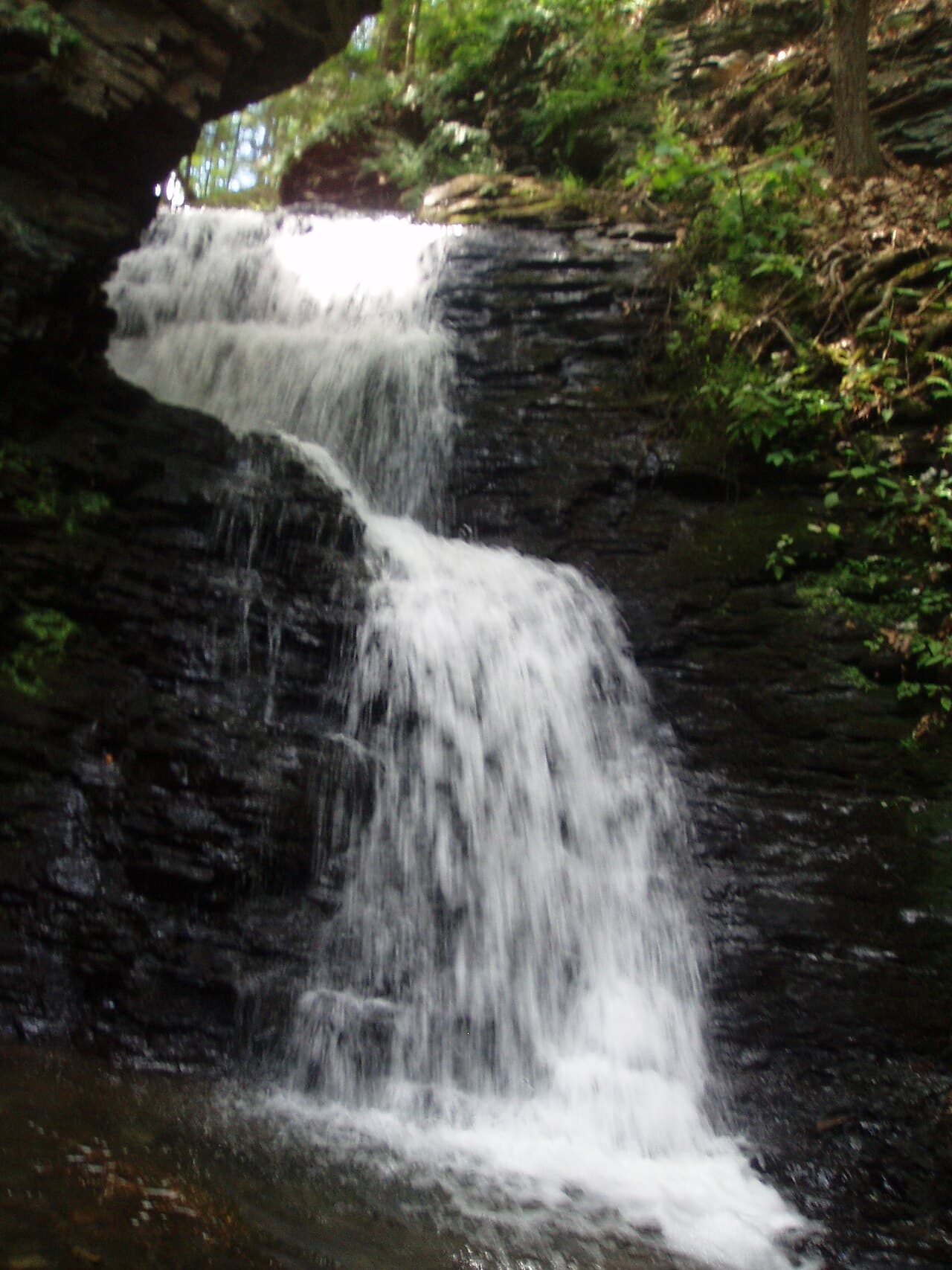
Continue onto the lower loop toward Bridal Veil and Bridesmaid Falls, where the crowds thin to nearly nothing on a winter weekday. Ferns along the path are frosted, and the cascades here are smaller, more intimate — the kind of quiet worth lingering over rather than rushing past for the next viewpoint.

Bushkill Falls
CyberXRef / wikimedia (CC0)
Bridal Veil Falls from the side angle works best with diffuse midday light, softening the ice detail.
This section is not wheelchair accessible; footing can be slick, microspikes recommended.
Lunch
Cousin's Pizza & Deli $
pizza · Near Bushkill Falls
A no-frills, satisfying stop after a cold morning on the trails — casual counter service makes it easy and low-pressure for solo diners.
Optional detour: Bushkill Falls — Between the main overlook and the lower loop trail
Extending time at the main falls overlook rewards patient photographers with shifting light as the morning progresses. Skip if: Skip lingering if cold is becoming uncomfortable — the lower loop offers similarly striking views with a warmer, more sheltered walk.
If it rains: Rain or sleet actually enhances Bushkill Falls — the cascades surge more dramatically. Wear waterproof gear and sturdy boots; trails become more scenic but slippery, so pace slows accordingly.

Get to Bushkill Falls early, ideally by 8am, when the parking lot is nearly empty and the main overlook belongs to you and the roar of falling water alone. Cold air sharpens every sound — the crack of icicles, the low rumble beneath the bridge — and the frost-laced trees along the trail edge feel like walking through a held breath.

By midday, wander the lower loop toward Bridal Veil and Bridesmaid Falls, where the pace slows further and the forest closes in more intimately. This part of the trail rewards unhurried exploration — few other visitors, softer light, and smaller cascades that reward a longer look rather than a quick photo.

Head back toward lodging with an easy dinner plan in mind — the day's cold hiking makes an early, warming meal appealing. Keep the evening low-key after a day spent largely outdoors in winter conditions; a quiet night helps recovery before tomorrow's exploration of Hickory Run.

Rugged Exploration

Day 4: Boulder Fields & Forest Silence

A final day exploring Hickory Run State Park's dramatic Boulder Field and forest trails before departure, with roughly 3-5 miles of walking and moderate energy.

Wear
Sturdy waterproof hiking boots, insulated layers, gloves, and a warm hat — the Boulder Field is exposed and windier than surrounding forest trails.
Budget
$30–50 (park access is free, casual food, incidentals)
50 min drive — An hour-plus drive east through changing terrain — worth a scenic pullover partway if the ridgelines open up along the route.
8:30 AM - 11:00 AM
Hickory Run State Park · morning · 150 min · Hickory Run State Park & Boulder Field

Arrive early and Hickory Run feels almost prehistoric — 16,000 acres of forest silence broken only by the crunch of your own boots and, occasionally, water running somewhere beneath the snow. The Boulder Field is the highlight: a moss-covered expanse of glacial rock that looks otherworldly dusted in snow, especially in the soft, low light of morning when you're likely to be the only one there.

Hickory Run State Park
Famartin / wikimedia (CC BY-SA 4.0)
The Boulder Field is best photographed in dappled early morning light, when snow catches in the moss-lined crevices.
Boulder Field terrain is uneven and not wheelchair accessible; sturdy footwear is essential.
20 min walk — A forest trail walk deeper into the park, the sound of the main road fading behind you.
11:15 AM - 12:45 PM
Hickory Run State Park · midday · 90 min · Hickory Run State Park & Boulder Field

Round out the visit with a walk toward Hickory Run Falls, a smaller but no less lovely cascade tucked into the park's mixed forest. In winter it's often partially frozen, ice building in delicate layers along the rock face — a quiet, contemplative note to close the trip on before the drive home.

Hickory Run State Park
Famartin / wikimedia (CC BY-SA 4.0)
Hickory Run Falls looks best in late-morning to early-afternoon light when the cascade briefly catches direct sun.
Trail to the falls is uneven with some elevation change; not accessible for wheelchairs.
Optional detour: Hickory Run State Park — Between the Boulder Field and Hickory Run Falls
The Lake Hickory Run overlook offers a peaceful sunrise view if timing allows for an earlier start. Skip if: Skip if pressed for time before departure — the Boulder Field and falls together already capture the park's essential character.
If it rains: Many Hickory Run trails remain passable in light rain, particularly the Boulder Field and lower lake loop; in heavier rain, shorten the visit to just the Boulder Field, which has better drainage and less slippery footing than the steeper falls trail.

Spend the morning at Hickory Run State Park, starting with the Boulder Field while the light is still low and soft. There's a stillness here that's hard to describe — just moss, stone, and snow stretching out in every direction, with almost no one else around on a winter weekday morning.

Before wrapping the trip, walk the forest trail to Hickory Run Falls for one last quiet moment among the trees. The cascade here is smaller than Bushkill's, but the solitude makes it feel like a private discovery — a fitting, low-key close to a solo mountain winter.

With travel plans likely calling by late afternoon, use the last hours for the drive back toward departure points, letting the ridgelines recede in the rearview mirror. If time allows before hitting the road, a final warm coffee or light meal near the park makes for an easy, unhurried transition out of the mountains.

Want to tweak this trip?

Our AI planner can customize this itinerary to your exact dates, interests, and travel style.

Customize This Itinerary
Good to Know

Restaurant details (hours, menus, availability) change frequently. Check current hours before visiting, especially in seasonal destinations.

Dietary compatibility tags are general guidance. If you have severe allergies, confirm directly with the restaurant.

Travel tips are general guidance, not professional safety advice. Check government advisories for latest information.

All prices are approximate and may vary seasonally.
We use cookies to improve your experience and analyze site usage. Essential cookies are always active. You can customize your preferences or accept all cookies. Cookie Policy