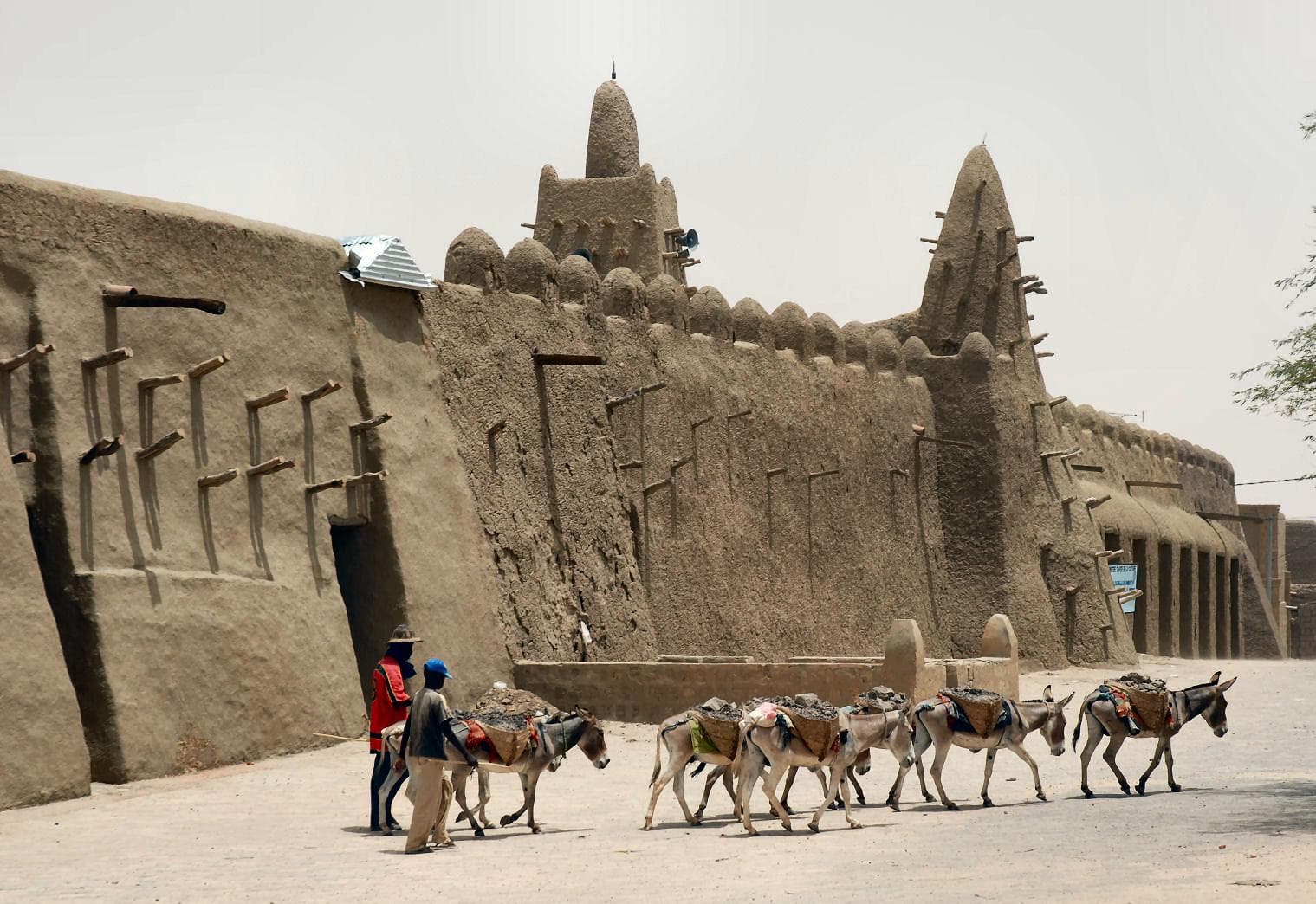
Timbuktu is a storied desert city on the edge of the Niger River where centuries of Islamic scholarship, legendary gold trade, and Saharan mystique converge into one of Africa's most evocative destinations. Once a magnet for merchants, pilgrims, and scholars from across the Islamic world, this ancient settlement preserves that intellectual and commercial heritage through its graceful mosques, hidden manuscript collections, and the living memory of trans-Saharan camel caravans. Walking Timbuktu's sandy streets feels like stepping into a carefully guarded chapter of world history—one where art, faith, and trade shaped empires.
Key Attractions
View all attractions →
Ahmed Baba Institute (Manuscripts)
This remarkable research center preserves thousands of centuries-old Islamic and West African manuscripts, offering an intimate glimpse into Timbuktu's scholarly heritage as a historic seat of learning. The climate-controlled reading rooms display beautifully illuminated texts covering medicine, astronomy, and Islamic law, many handwritten by local scholars during the city's golden age. Visitors can observe conservators working to restore fragile documents and gain insight into the meticulous efforts required to protect these irreplaceable cultural treasures.
upyernoz from Haverford, USA, CC BY 2.0, via Wikimedia Commons
Camel Trek (Sahara)
Journey into the golden dunes surrounding Timbuktu on camelback, experiencing the vast Sahara as traders and travelers have for centuries. Local guides lead expeditions across rippling sand landscapes, offering authentic encounters with Tuareg nomadic culture and breathtaking desert sunsets that paint the horizon in shades of amber and rose. This immersive trek connects you directly to the rhythms of desert life, far from modern distractions.
Djinguereber Mosque (UNESCO)
This stunning mudbrick mosque stands as a masterpiece of Sudanese-Sahelian architecture, its towering minaret piercing the Timbuktu skyline with centuries of spiritual presence. Built during Mali's golden age of Islamic learning, the mosque features intricate wooden door frames, carved pillars, and graceful interior columns that have weathered centuries of desert heat. The labyrinthine interior creates a cool, peaceful sanctuary where light filters softly through small windows, inviting quiet contemplation.

Festival au Désert (seasonal)
This vibrant music and cultural festival transforms the Saharan desert near Timbuktu into a gathering place for West African musicians, artists, and travelers seeking authentic desert sounds and nomadic traditions. Drawing performers from Mali, Mauritania, and beyond, the multi-day celebration features live performances of traditional Tuareg music, blues, and contemporary African rhythms under star-filled skies. The festival offers an immersive experience of Saharan hospitality, creative expression, and the region's rich cultural heritage in one of the world's most dramatic settings.
Alfred Weidinger from Vienna, Austria, CC BY 2.0, via Wikimedia Commons
Salt Trade Route History
Walk the ancient pathways where merchants once guided salt-laden caravans across the Sahara to this legendary trading hub, experiencing the same golden dunes and trading posts that built empires. The salt trade that enriched Timbuktu left its mark in the city's architecture, mosques, and the stories whispered by local guides who still trace these historic routes. Today, visitors can explore the departure points and remnants of trading quarters that echo with centuries of commerce and cultural exchange.
Sankore Mosque (UNESCO)
This striking earthen mosque stands as one of Timbuktu's three great medieval centers of Islamic learning, its towering mud-brick architecture a testament to the city's golden age of scholarship. The mosque's distinctive pyramidal minaret and intricate wooden scaffolding create a haunting silhouette against the Saharan sky, drawing you into centuries of spiritual and intellectual history. Inside, the prayer halls reveal beautifully carved wooden pillars and a serene atmosphere that invites quiet contemplation.
Sidi Yahia Mosque
One of Timbuktu's most sacred mosques, Sidi Yahia has been a spiritual anchor for the city since the 15th century with its distinctive earthen architecture and towering minaret. The mosque's walls have witnessed centuries of Islamic scholarship and devotion, their compressed earth construction requiring constant maintenance to withstand the harsh Saharan climate. Inside, the serene prayer hall and intricate wooden details reflect the refined craftsmanship of medieval Mali's golden age.
Itineraries Here
Planning a Trip to Timbuktu: FAQs
When is the best time to visit Timbuktu?
⌄
The best time to visit Timbuktu is fall|winter.
How many days do you need in Timbuktu?
⌄
Plan on about 4 days to cover Timbuktu's highlights at a comfortable pace.
How do you get to Timbuktu?
⌄
Timbuktu is accessible by air via Bamako's Modibo Keïta International Airport (approximately 960 kilometers away), followed by a domestic flight or overland journey; travel to Timbuktu itself typically requires small aircraft, boat, or overland routes depending on season and road conditions. The Niger River also serves as a vital access point during higher water levels.
What are the top things to do in Timbuktu?
⌄
Top attractions in Timbuktu include Ahmed Baba Institute (Manuscripts), Camel Trek (Sahara), Djinguereber Mosque (UNESCO), Festival au Désert (seasonal) and Salt Trade Route History. Itinara lists 7 verified attractions in total.