3 DaysSolo Traveler8 Stops

Timbuktu, Mali

3-Day Itinerary for Solo Traveler

Sand, Silence, and Scholarship: Three Days in Timbuktu

Sand, Silence, and Scholarship: Three Days in Timbuktu

The wind here carries centuries in it — dust off manuscript pages, salt off caravan routes long gone quiet, cool morning air off the Niger before the sun claims the day. Timbuktu rewards those who move at its rhythm: early light, midday shelter, evening return, and always the call to prayer marking time better than any watch.

At a Glance

Climate & Weather
Fall (November) brings Timbuktu's most livable stretch — daytime highs still reach the 90s°F but nights cool into the 60s. Pack lightweight long sleeves and pants for sun and modesty, a wide-brim hat, high-SPF sunscreen, a scarf or shemagh for dust, and sturdy sandals or closed shoes for sandy, uneven ground. Harmattan dust is less severe than late winter but still possible.
Getting Around
Central Timbuktu is compact and walkable, with sandy streets best navigated on foot or by arranged local guide; longer excursions (salt route, camel treks, desert festival grounds) require a vehicle or camel and should always be organized through a trusted local operator.
Budget
Budget roughly $30–60 USD per day for a solo traveler covering meals, guide tips, and modest activity fees; carry cash (CFA francs) as card acceptance is essentially nonexistent.
Safety
Mali carries significant travel advisories and this itinerary assumes travel arranged through an experienced, vetted local guide or fixer — do not attempt independent travel to Timbuktu without one. Solo travelers should register with their embassy, share an itinerary with someone at home, avoid displaying valuables, and follow guide guidance on which areas and times are appropriate. Reconfirm current government advisories before booking anything.
Connectivity
Cell coverage is limited and unreliable outside the town center, and largely absent in the desert; download offline maps, translation tools, and let your accommodation and guide know your daily plans in case of connectivity gaps.
Local Tips
Mornings before 8am and the two hours before sunset are when Timbuktu truly comes alive — plan your most important stops then, and treat midday as built-in rest, just as locals do. Solo travelers often find shared meals and communal tea moments (offered generously by hosts and guides) to be the easiest way to connect — say yes to the tea.

Highlights

  • Sunrise at Djinguereber Mosque before the mudbrick minaret catches full sun
  • Barefoot on cool stone floors inside Sankore Mosque's ancient prayer hall
  • Hand-copied Arabic manuscripts under glass at the Ahmed Baba Institute
  • Tracing salt caravan routes across dunes that shaped medieval empires
  • A dawn or dusk camel trek into Saharan silence broken only by footfalls
  • Strong tea shared with locals as the muezzin's call drifts over sand streets

Day-by-Day Plan

Arrival & Orientation

Day 1: First Light on the Sacred Quarter

A gentle first day of roughly 2-3 miles on foot, centered entirely in the Central Sacred Quarter to ease into Timbuktu's heat and rhythm without overextending after arrival.

Wear
Lightweight long-sleeve shirt and loose trousers, closed sandals for sandy paths, a hat and scarf for sun and dust, modest covering for mosque exteriors.
Budget
$25-35 (guide tips, tea, two simple meals)
6:30 AM - 8:00 AM
Djinguereber Mosque (UNESCO) · morning · 90 min · Central Sacred Quarter

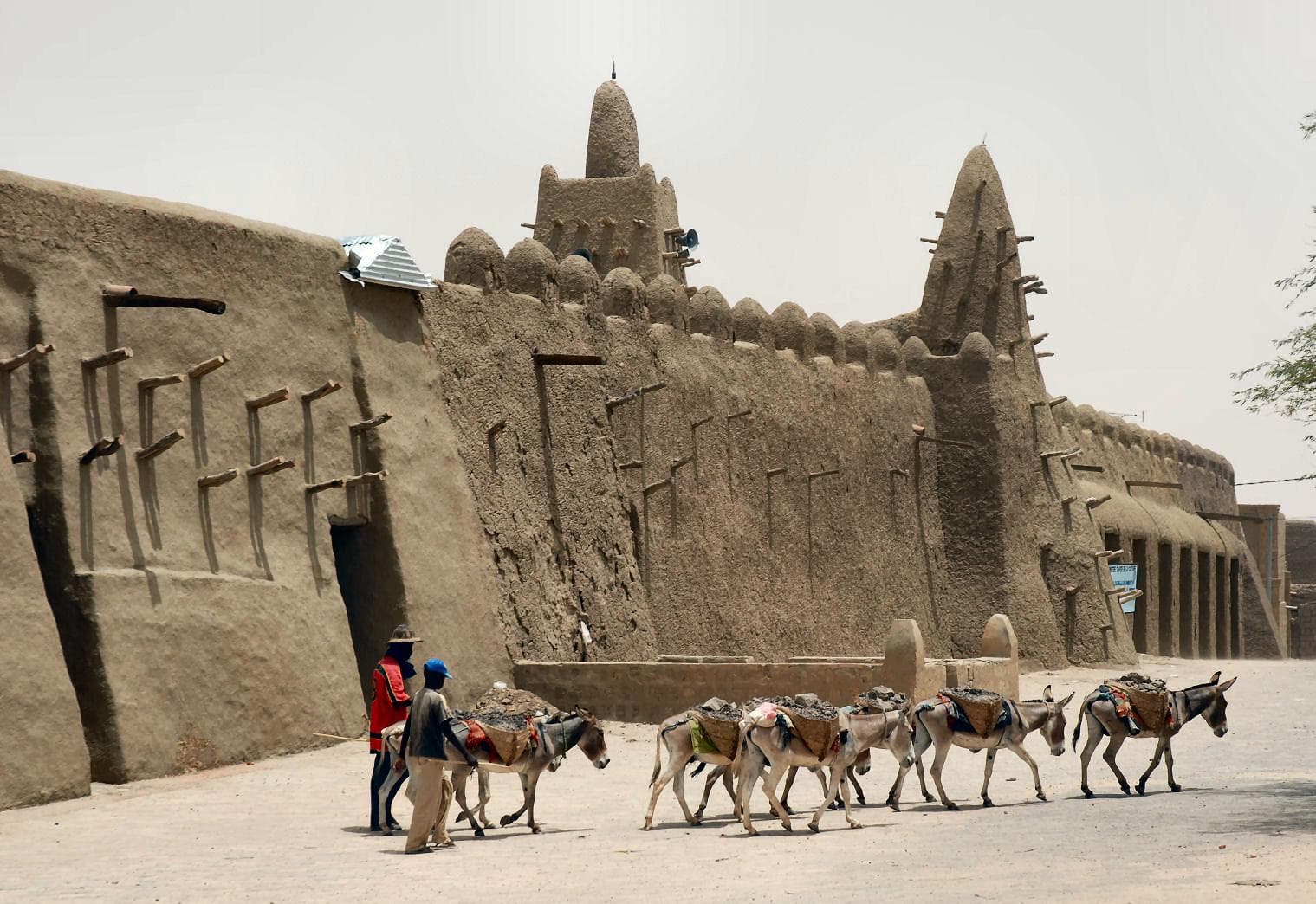
Arrive as the sky is still pink and the pyramidal minaret throws long geometric shadows across the sand — by 6:30am you'll likely have this 14th-century mudbrick giant nearly to yourself. Step into the cool interior and let your eyes adjust; the temperature drop after even a short walk in rising heat is its own small relief. This is the gentlest possible introduction to the city's scholarly soul, and an easy, low-energy way to ease into day one.

Shoot the minaret from the northeast at sunrise, when low light rakes across the mudbrick texture and the shadows are longest.
Uneven sandy ground and some steps; not wheelchair accessible, but the courtyard exterior can be appreciated without entering.
15 min walkA quiet 15-minute walk through waking streets, vendors just beginning to set out goods, sand still cool underfoot.
8:15 AM - 9:45 AM
Sankore Mosque (UNESCO) · morning · 90 min · Central Sacred Quarter

A short walk brings you to Sankore's steep, narrow stairways and intricate wooden window lattices — climb carefully, as the steps are worn smooth by centuries of scholars' feet. Before 8:30am the site is silent but for wind through the walls and your own footsteps on sand floors; go barefoot inside and feel the stone's coolness against the heat still building outside. This former center of Islamic learning pairs naturally with Djinguereber as a two-mosque morning without repeating the same experience twice.

The wooden lattice windows photograph best with backlight around 9am, when sun angles through the openings.
Steep, narrow stairways with no railings in places — not accessible for those with mobility limitations.
10 min walkA short walk past shopfronts opening for the day, the smell of bread and charcoal smoke drifting from nearby kitchens.
10:00 AM - 11:30 AM
Ahmed Baba Institute (Manuscripts) · midday · 90 min · Central Sacred Quarter

After two mosques, this shift to the manuscript institute offers a different kind of quiet — the hush of a library rather than a place of prayer. Yellowed parchment pages, some centuries old, hold calligraphy still vivid with ink; take time here, as the near-silence and careful page-turning invite slow looking rather than rushed photos. Arrive by 10am to beat the midday crowd and to align with cooler hours before the day's heat peaks.
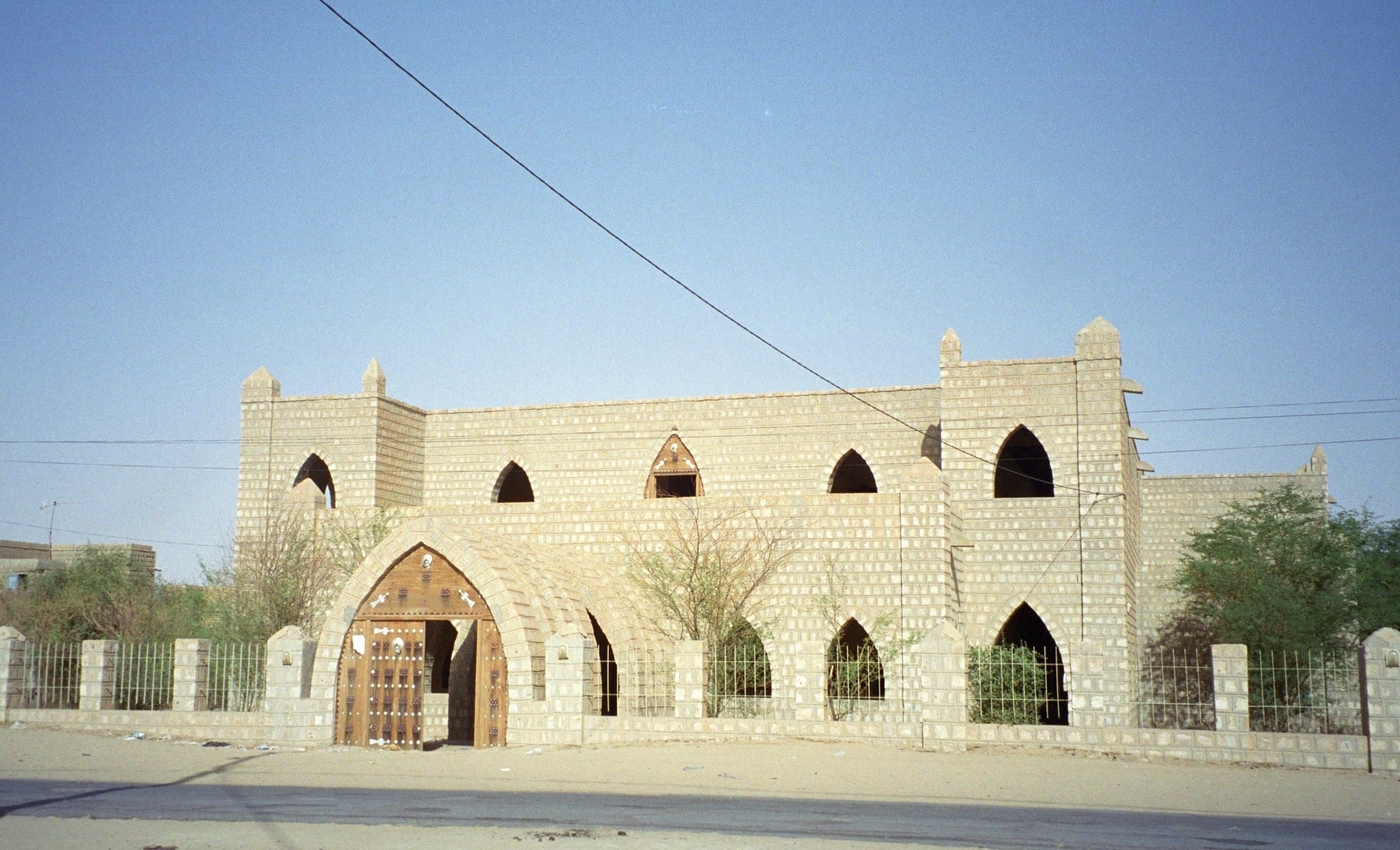
Ahmed Baba Institute (Manuscripts)
upyernoz from Haverford, USA, CC BY 2.0, via Wikimedia Commons
Photography of manuscripts themselves may be restricted — ask your guide; the building's exterior calligraphic details are fair game any time of day.
Closed weekends and after 5pm; check current hours with your guide before planning around it.
Lunch
Restau Maktage $
Local Malian · Near Ahmed Baba Institute
A simple, unpretentious local joint near the manuscript institute — good for solo diners wanting an easy, communal-table meal without fuss.
Restaurant Hollande $
Local · Near Ahmed Baba Institute
A relaxed spot favored by guides and locals alike, worth trying for a slow-cooked stew and a chance to chat with fellow diners.
Dinner
Patiserie Wadidjé $
Cafe/Bakery · Near Ahmed Baba Institute
A gentle, low-key choice for a light dinner or tea and pastry after a first, lower-energy day — good for winding down solo.
If it rains: Rain is rare here even in fall, but if a storm rolls through, all three Sacred Quarter stops remain viable as indoor-adjacent, low-exposure sites — simply extend time at the Ahmed Baba Institute.

Timbuktu's Sacred Quarter opens gently at dawn, the Djinguereber Mosque's minaret catching the day's first light while the streets are still nearly empty. This is the softest possible start to a trip here — no rush, no crowds, just cool air and old stone.

By late morning, the shift from mosque to manuscript institute offers a change of pace and texture, trading spiritual silence for scholarly quiet, before the heat of midday sends most activity indoors or to shaded rest.

With the first day's low-key pace, evening is for settling in — a simple meal, perhaps tea with your guide or host, and an early night ahead of two fuller days to come.

Medina & Trade Legacy

Day 2: Trade Winds and Ancient Streets

A moderate day of roughly 3-4 miles combining the Old Medina's mosque and salt trade history, with built-in rest during the midday heat.

Wear
Breathable long layers, a sturdy hat, sunglasses, closed shoes suited to uneven sandy terrain for the salt route walk, and a scarf for dust.
Budget
$35-50 (guide fee for salt route walk, two meals, tea)
8:00 AM - 9:30 AM
Sidi Yahia Mosque · morning · 90 min · Old Medina & Trade Legacy

Arrive by 8am for minimal crowds and good light, when the medina's narrow streets are still quiet and the mosque's carved wooden details are visible through open doorways without jostling for a view. The cool earthen walls offer welcome relief even this early, and the absolute quiet — broken only by distant prayer calls — makes this an easy solo stop for reflection before the day's more physical activity.

Morning light around 8-9am highlights the geometric patterns on the minaret through doorway framing.
Interior access may be limited for non-Muslims; exterior and courtyard views are generally accessible on foot only.
20 min walkA 20-minute walk from the medina's edge toward the open dunes, buildings giving way gradually to open sand.
9:45 AM - 11:45 AM
Salt Trade Route History · midday · 120 min · Old Medina & Trade Legacy

From the mosque, walk out toward the dunes where salt caravans once crossed the Sahara toward Timbuktu's markets, reshaping empires in the process. Fine sand works between your toes, salt dust lingers faintly on your lips, and the silence out here is vast — broken only by wind. Photography enthusiasts should budget the full two hours for multiple lighting passes; solo travelers will find the guide's narrative context essential to appreciating what looks, at first glance, like simply more desert.

The caravan gathering point on the northern approach is best at sunrise for backlit dunes, but mid-morning still offers strong texture in the sand; return in late afternoon for deepened shadows on the old trading post ruins.
Terrain is soft sand with no paved paths — limited accessibility for mobility-impaired travelers; allow 45-60 minutes only if assistance is needed.
Lunch
Dibitérie $
Barbecue · Near Salt Trade Route History
A no-frills grilled-meat spot near the salt route area, good for a hearty midday meal after a sandy morning walk.
Wadidjé $
Mixed local · Near Salt Trade Route History
A relaxed, mixed-menu option convenient to the trade route area — easy solo seating and quick service.
Dinner
Restau Maktage $
Local Malian · Near Old Medina cluster
Return here for a communal-table dinner and the chance to swap stories with other travelers or your guide over slow-cooked stew.
Optional detour: Sidi Yahia MosqueBefore the Salt Trade Route walk
Already included as the day's anchor morning stop for its quiet, contemplative start. Skip if: If time is tight or heat rises early, a brief exterior-only visit still captures the essence without the full 90 minutes.
If it rains: If rain makes the dune paths impassable, substitute a return visit to Djinguereber or Sankore Mosque, or extend time at the Ahmed Baba Institute manuscripts library.

The medina wakes slowly, Sidi Yahia Mosque's carved details emerging from shadow as the sun climbs — an intimate, quiet start before the day's more physically engaging walk.

The transition from mosque to open dune is a shift in scale entirely — from intimate stone interiors to the vast, wind-scoured openness where salt caravans once passed, best absorbed slowly with a knowledgeable guide narrating what the landscape alone won't reveal.

After a midday retreat from the heat, evening brings a return to the medina's local joints for a relaxed, communal dinner — an easy way for solo travelers to end the day in good company.

Desert Expedition

Day 3: Into the Sahara's Silence

A full but rewarding day (roughly 5-6 miles of movement, mostly camel-borne) venturing beyond the city into the open Sahara for a half-day camel trek, timed around the cooler morning or evening hours.

Wear
Layered clothing for temperature swings between dawn cool and midday heat, a shemagh or scarf for sun and blowing sand, sunglasses, sturdy closed shoes, and sun gloves if sensitive to sun exposure.
Budget
$50-80 (camel trek arrangement and guide, meals, tea)
6:00 AM - 10:00 AM
Camel Trek (Sahara) · morning · 240 min · Sahara Desert Expeditions

Book the early departure slot — 6:00-7:00am starts attract far fewer tourists and spare you the worst of the heat. Ride out into dunes that ripple gold to the horizon, Tuareg guides in indigo tagelmust riding wordlessly ahead; the only sounds are camel footfalls, wind, and occasional distant song. This is Timbuktu's most physically immersive experience and a genuinely social one for solo travelers, since treks are often shared with a small group and guides — an easy, low-pressure way to connect over the shared strangeness and beauty of the landscape.

Shoot toward the rising sun in the first hour for long shadows and warm light across the dune ridges; keep camera protected from blowing sand.
Requires reasonable physical fitness and comfort riding animals for extended periods; not suitable for those with mobility or balance limitations.
45 min driveA return to town and rest before heading back out by vehicle as evening falls, dust settling pink in the side mirrors.
7:00 PM - 10:30 PM
Festival au Désert (seasonal) · evening · 210 min · Sahara Desert Expeditions

If timing and current conditions align with this seasonal event, the evening offers something entirely different from the day's quiet trek — stage lights piercing the dark over dunes, amplified guitars and drums rolling across the sand, and a crowd united by firelight and desert wind. This is a genuinely social, communal experience well-suited to solo travelers looking to connect with fellow visitors and performers alike; note that the festival's occurrence and location vary by year and security conditions, so confirm with your guide well in advance.

Festival au Désert (seasonal)
Alfred Weidinger from Vienna, Austria, CC BY 2.0, via Wikimedia Commons
Evening performances are best photographed after dark using available stage lighting — avoid flash, which will wash out the atmosphere.
Uneven sand terrain and large crowds at night; solo travelers should stay near their guide group and agree on a meeting point in advance.
Lunch
Restaurant Hollande $
Local · Near Camel Trek departure point
A good post-trek stop for a filling, unfussy meal once back in town, popular with guides and travelers alike.
Dinner
Wadidjé $
Local · Near Festival au Désert grounds
Convenient near festival grounds if attending, or a solid dinner option back in town otherwise — casual and easy for solo diners.
Rotisserie $
Local grilled · Near Festival au Désert grounds
A simple grilled-food spot near the festival area, good for a quick, hearty bite between performances.
Optional detour: Festival au Désert (seasonal)After the Camel Trek and before end of day
A rare, high-energy communal event that offers solo travelers an unmatched social atmosphere and cultural immersion under the stars. Skip if: Skip entirely if it's not currently running in a given season or if security conditions advise against evening travel outside town — confirm with your guide well ahead of time.
If it rains: Desert rain is rare but if conditions turn, shelter with your guide group and reschedule the trek; back in town, the Ahmed Baba Institute or Djinguereber Mosque offer calm indoor-adjacent alternatives.

Dawn departure into the Sahara trades Timbuktu's stone and mudbrick for pure open space — dunes rolling to the horizon, the rhythm of the camel's gait settling into something almost meditative by the second hour.

Midday is for rest back in town, recovering from the trek's heat and physical demand with a slow lunch and perhaps a nap during the hottest hours, mirroring the pause the whole city takes.

If the Festival au Désert aligns with your visit, evening transforms into the trip's most communal, high-energy close — otherwise, a quiet dinner and early rest make a fitting, reflective end to three days steeped in Timbuktu's sand, stone, and silence.

Want to tweak this trip?

Our AI planner can customize this itinerary to your exact dates, interests, and travel style.

Customize This Itinerary
Good to Know

Restaurant details (hours, menus, availability) change frequently. Check current hours before visiting, especially in seasonal destinations.

Dietary compatibility tags are general guidance. If you have severe allergies, confirm directly with the restaurant.

Travel tips are general guidance, not professional safety advice. Check government advisories for latest information, and only travel to Timbuktu with an experienced, vetted local guide given current regional security conditions.

All prices are approximate and may vary seasonally.

We use cookies to improve your experience and analyze site usage. Essential cookies are always active. You can customize your preferences or accept all cookies. Cookie Policy