3 DaysSolo Traveler8 Stops

Galapagos Islands, Ecuador

3-Day Itinerary for Solo Traveler

Giants, Tides, and Fire: Three Days Alone in the Galápagos

Giants, Tides, and Fire: Three Days Alone in the Galápagos

Equatorial light falls flat and even here, and the islands reveal themselves slowly — a tortoise's unhurried blink, a sea lion's curious circle underwater, black lava fields still holding the memory of fire. This is a place that rewards solitude, where the days move at the pace of tides and the wildlife simply doesn't care that you've come alone.

At a Glance

Climate & Weather
Fall in the Galápagos falls within the cool/dry season (June–November): expect mild air temperatures, cooler ocean water, overcast 'garúa' mornings that burn off by midday, and calmer seas ideal for boat excursions. Pack breathable layers, a light rain jacket, a thin wetsuit or rash guard for snorkeling, and reef-safe sunscreen — the equatorial sun is strong even under cloud.
Getting Around
Puerto Ayora and San Cristóbal's town centers are walkable; getting to reserves, beaches, and outer islands requires organized day tours or water taxis booked a day ahead. Inter-island travel runs on small ferries (roughly 2 hours) or short local flights — book both directions in advance during shoulder season.
Budget
Budget roughly $70-120/day for a solo traveler covering meals, snorkel gear rental, and day-tour fees (park entrance fees and flights are separate, larger costs). Cash (US dollars — Ecuador's currency) is essential for smaller local eateries and water taxis.
Safety
The islands are exceptionally safe for solo travelers, with low crime and heavily regulated national park access. The real risks are environmental: dehydration, sunburn, and ocean currents around sites like Kicker Rock. Always snorkel with a guide or group, keep the mandated 2-meter distance from wildlife, and let someone (guide, hostel, hotel) know your day plan since mobile signal is patchy on outer excursions.
Connectivity
Wifi is available but slow and inconsistent in hotels and cafés in Puerto Ayora and Puerto Baquerizo Moreno; expect zero signal on boats and outer-island excursions. Download offline maps and let your accommodation know your return time before heading out.
Local Tips
Fall's calmer seas make this one of the best windows for snorkeling and boat comfort — but mornings can be overcast (locals call it garúa), so don't judge the day's potential by an 8am cloud. Solo travelers should book shared day-tours rather than private charters — it's cheaper and the shared boat rides are where you'll meet other travelers. Evenings are quiet everywhere; plan your one splurge dinner and don't expect nightlife.

Highlights

  • Giant tortoises moving like slow-motion boulders through misty highland pasture
  • Turquoise shallows where sea turtles glide past your mask, unbothered
  • Kicker Rock's sheer volcanic walls plunging into sea lion territory
  • The final scramble up Bartolomé's pinnacle for the archipelago's most iconic view
  • Black lava fields on Santiago that still look freshly cooled
  • Communal boat rides that turn strangers into trip companions by lunchtime
  • Early mornings that buy you empty beaches and clear water before the day boats arrive

Day-by-Day Plan

Orientation & gentle wildlife

Day 1: Settling In: Tortoises, Shoreline, and Slow Arrival

A low-key first day around Puerto Ayora — walkable, low-effort wildlife encounters and a beach sunset, covering roughly 3 miles on foot.

Wear
Breathable layers for cool morning cloud cover, closed walking shoes for the tortoise reserve's muddy trails, swimsuit under clothes for a beach dip, and a light rain jacket just in case.
Budget
$60-80 (reserve entry, lunch, dinner, beach snacks)
8:00 AM - 9:45 AM
Darwin Research Station (Santa Cruz) · morning · 105 min · Puerto Ayora & Santa Cruz Hub

Arrive by 8am and the paths are nearly empty, just you and the low rumble of tortoises shifting in their breeding pens before the school groups and cruise crowds show up around 9. The air smells of turned volcanic soil and dry brush, and the giants move with a patience that resets your internal clock immediately — a gentle, grounding way to start a trip alone.

Darwin Research Station (Santa Cruz)
Photo by Dallas Krentzel — CC BY 2.0
Morning cloud cover (garúa) gives soft, even light — ideal for close-up tortoise portraits without harsh shadows.
Paved and gravel paths throughout, manageable solo with good walking shoes; benches available for rest stops.
30 min driveA shared shuttle climbs from coastal scrub into cooler, greener highlands — watch the landscape change through the window.
10:15 AM - 12:15 PM
Tortoise Reserve (El Chato) · midday · 120 min · Puerto Ayora & Santa Cruz Hub

Here the tortoises roam wild and enormous in misty highland pasture — a different scale entirely from the research station's pens. Ferns drip, the ground is soft and volcanic, and you can hear shells scraping lava rock long before you spot the animal itself. Arriving before the 10-2 peak means fewer voices and more chances to simply stand still and watch.

Tortoise Reserve (El Chato)
Photo by David Adam Kess — CC BY-SA 4.0
Midday light is flat here, but the fog can create atmospheric, moody shots if it lingers — don't wait for full sun.
Trails are muddy and uneven after rain; sturdy shoes essential, and paths involve some walking on natural terrain.
35 min driveReturn shuttle back down from the highlands, dropping you at the trailhead near town.
3:00 PM - 5:30 PM
Tortuga Bay Beach · afternoon · 150 min · Puerto Ayora & Santa Cruz Hub

A 40-minute walk down a paved trail through cactus scrub delivers you to one of the most striking crescent beaches you'll likely ever see — white sand, marine iguanas basking mid-trail, and turquoise water framed by black lava points. Fall's shorter days mean sunset arrives earlier, so this window catches softer light and thinner crowds than the midday rush.

Tortuga Bay Beach
Photo by Pexels
Golden hour here (around 5-5:30pm in fall) turns the sand warm gold and the lava rocks deep black — arrive with time to walk to the quieter far end.
Access requires a 40-minute walk on a paved path (no vehicle access) — flat but long; bring water.
Lunch
Almar $$
Seafood/local · Near Darwin Research Station
Casual, laid-back spot with fresh catch plates — good bar seating if you're eating solo and want to chat with staff or other travelers.
Lemon & Coffee $$
Seafood · Near Darwin Research Station
Simple, fresh fish dishes in a no-frills setting — reliable and quick between morning stops.
Dinner
Angermeyer.Waterfront.Inn $$$
Seafood/diner · Near Tortuga Bay Beach
Waterfront setting with communal energy in the evening — a good first-night splurge with views over the bay.
De Sal y Dulce $
Cafe/coffee, cake, tea · Near Tortuga Bay Beach
Low-key cafe good for a lighter dinner or dessert after a beach day, casual enough for solo dining.
Optional detour: Glass-Bottom Boat ToursAfter Tortuga Bay Beach and before dinner
A low-effort way to see reef life without swimming, good for an easy first-day close and a chance for casual chat with other passengers. Skip if: Skip if you're already snorkeling later in the trip — the underwater views are more vivid in person than through glass.
If it rains: If garúa mist turns to real rain, shift the afternoon indoors at Darwin Research Station's interpretive center exhibits, or delay Tortuga Bay to the following clearer window — the reserve's breeding areas have some covered viewing structures.

The day opens gently at the Darwin Research Station, where early light and near-empty paths let the strangeness of these ancient tortoises settle in slowly — no rush, no crowd, just the low creak and shuffle of creatures that have been doing this for centuries.

The pace shifts uphill into misty highland pasture at El Chato, where the tortoises roam free and the air turns cool and green, before dropping back to the coast for the long, sandy walk out to Tortuga Bay — the day's one real stretch of exercise, rewarded by a crescent of white sand and turquoise water.

As the shorter fall daylight fades, settle into a waterfront dinner in Puerto Ayora — Angermeyer's bay views make for an easy, low-key first night alone, with enough ambient conversation around you to feel sociable without needing to be.

Snorkeling & marine wildlife

Day 2: Into the Water: Sea Turtles, Rays, and Kicker Rock

A high-energy, water-focused day split between Santa Cruz's coastal snorkel sites and a boat excursion to San Cristóbal's Kicker Rock, minimal walking but sustained swimming effort.

Wear
Swimsuit under quick-dry clothes, reef-safe sunscreen, a rash guard or thin wetsuit (rentable), water shoes, and a dry bag for electronics.
Budget
$90-140 (snorkel tour, Kicker Rock excursion, meals, gear rental)
10 min walkA short walk from town down to the dock, past fishermen unloading the morning's catch.
6:30 AM - 8:30 AM
Snorkeling with Sea Turtles & Rays · morning · 120 min · Puerto Ayora & Santa Cruz Hub

Book the earliest departure — 6:30am tours hit water that's still calm and clear before wind picks up, and you'll likely have turtles and rays largely to yourself. The sensation of a ray undulating beneath you in green-lit water, or a turtle drifting past close enough to see its ancient, unbothered eye, is the kind of moment solo travelers often say makes the whole trip worth it.

Snorkeling with Sea Turtles & Rays
Photo by John Cahil Rom
Underwater shots are best in the first hour of tours when the water's clearest — bring a waterproof camera or housing.
Requires comfortable swimming ability; guides provide flotation vests for less confident swimmers.
120 min ferryAn inter-island speedboat crossing to San Cristóbal — bring motion-sickness tablets if you're prone, and expect easy conversation with other travelers making the same crossing.
12:30 PM - 4:30 PM
Kicker Rock (San Cristóbal) · afternoon · 240 min · San Cristóbal Island

The rock itself rises sheer from the sea like a cracked cathedral, and the boat ride there is where solo travelers tend to end up chatting with fellow passengers about what's coming. In the water, sea lions circle with obvious curiosity, silvery fish scatter in sudden clouds, and the current runs cool and strong along the volcanic walls — arriving in the 6-11am window is ideal, so a midday tour trades a bit of visibility for logistics, but the drama of the rock formation itself doesn't fade with the hour.
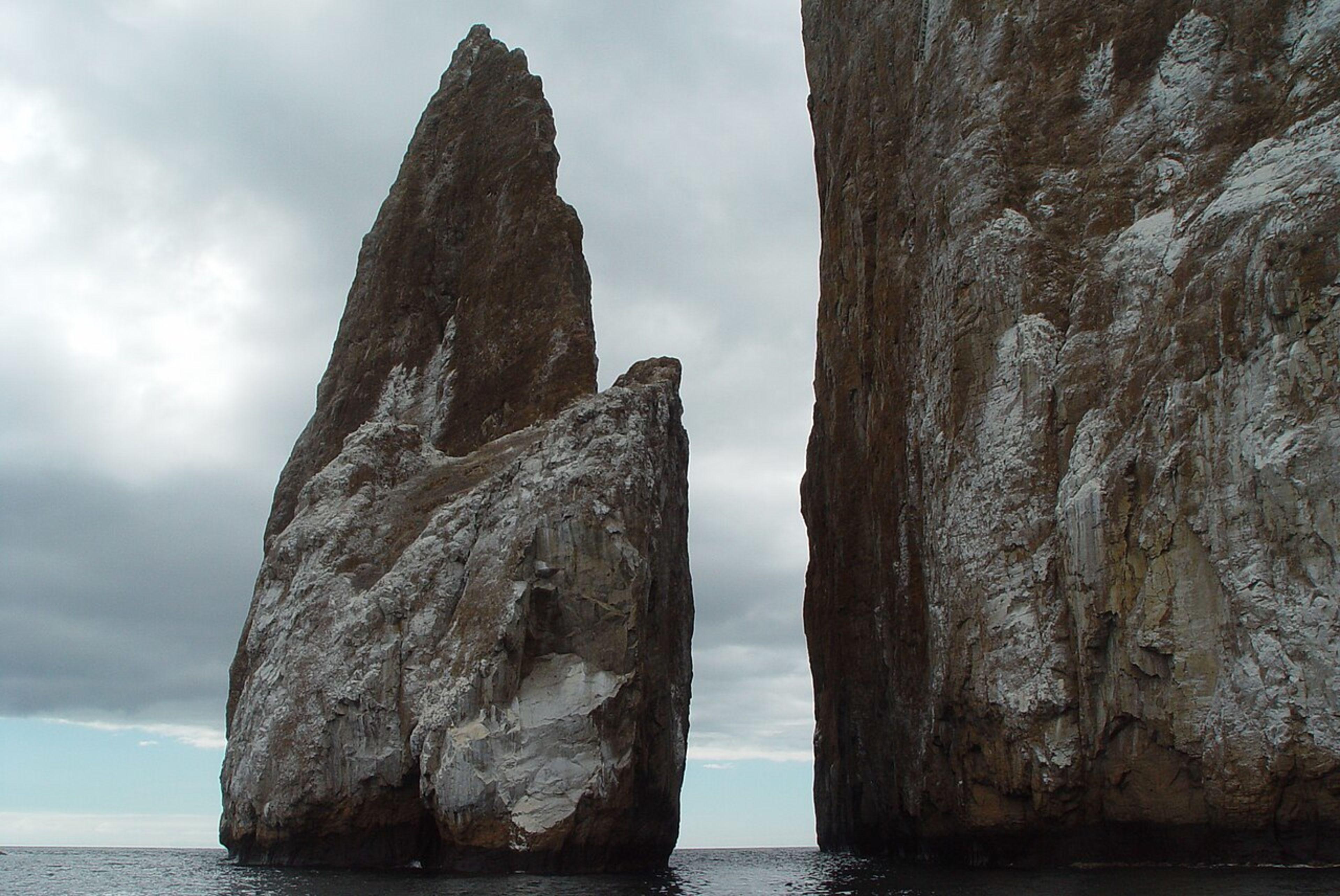
Kicker Rock (San Cristóbal)
Photo by Adavyd — CC BY-SA 4.0
Shoot the rock's silhouette from the boat on approach — the two towering formations are most dramatic against midday's high sun.
Snorkeling here involves stronger currents than Santa Cruz sites; only recommended for confident swimmers, and always stay within guide's sight line.
Breakfast
De Sal y Dulce $
Cafe/coffee, cake, tea · Near Puerto Ayora dock
Quick, casual coffee and pastry before an early snorkel departure — good grab-and-go option.
Lunch
Galápagos Cafe Roasters $
Cafe/coffee · Near Tortuga Bay / Puerto Ayora hub
Simple coffee and light bites near the waterfront, easy solo stop between morning swim and afternoon boat.
Optional detour: Glass-Bottom Boat ToursAfter Snorkeling with Sea Turtles & Rays and before the Kicker Rock transfer
A relaxing, low-energy way to fill a gap if your ferry departure is delayed, still delivering underwater color without more swimming fatigue. Skip if: Skip if you're already tired from the morning snorkel or tight on time before the San Cristóbal crossing.
If it rains: Rain rarely cancels water activities here, but if seas are too rough for the Kicker Rock crossing, operators typically reschedule or offer a Santa Cruz-based alternative snorkel site closer to Puerto Ayora — confirm with your tour operator the night before.

Before most of the island stirs, slip into calm, glassy water for a morning snorkel with sea turtles and rays — the kind of quiet, otherworldly swim that's easiest to fully absorb alone, without needing to narrate the experience to anyone else.

After a short boat crossing to San Cristóbal, the afternoon builds toward Kicker Rock's dramatic twin towers, where sea lions dart past and the current runs cool along ancient volcanic walls — the boat ride itself becomes a social interlude, with fellow solo travelers swapping stories on deck.

With the crossing and swim behind you, settle into an easy, unhurried evening back in Puerto Ayora or San Cristóbal — legs tired, skin salt-crusted, ready for an early night ahead of tomorrow's full-day excursion.

Volcanic wilderness

Day 3: Fire and Summit: Santiago's Lava Fields and Bartolomé's Pinnacle

A full-day boat excursion to the outer islands combining a stark lava-field walk with a steep climb to Bartolomé's iconic summit — the most physically demanding day, roughly 2-3 miles of hiking on uneven terrain.

Wear
Sturdy closed-toe shoes for lava rock, sun hat, long sleeves for sun protection on the exposed summit trail, swimsuit for optional snorkeling, and plenty of water.
Budget
$100-160 (full-day excursion typically bundles transport, guide, and lunch — confirm inclusions)
150 min ferryAn early departure by boat from Santa Cruz, cutting across open water as the sun rises — a good spot to spot dolphins if you're on deck.
8:00 AM - 10:00 AM
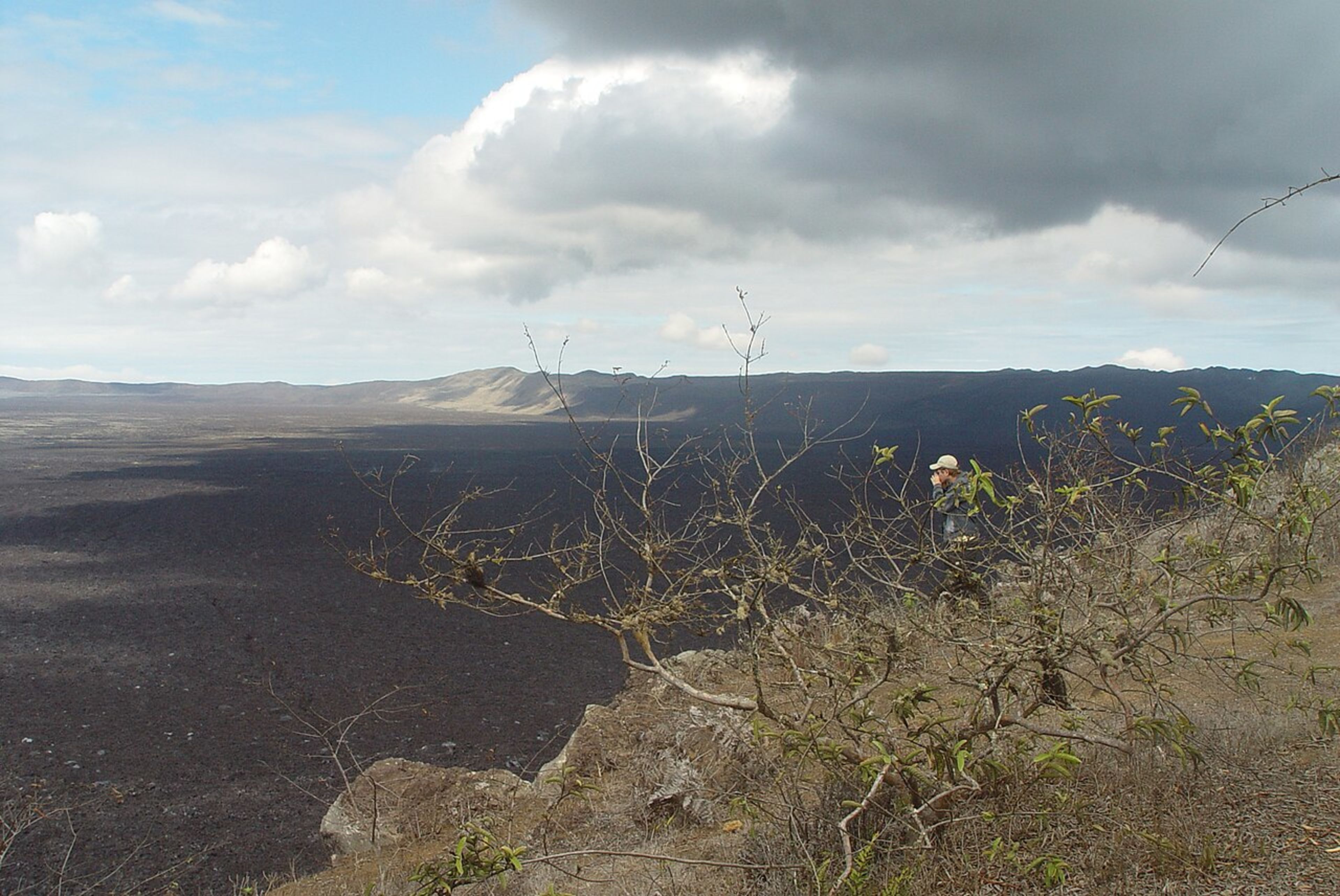
Sullivan Bay Lava Fields (Santiago) · morning · 120 min · Northern & Western Outer Islands

Stepping onto Sullivan Bay's frozen 'a'ā lava feels like walking across a landscape that cooled yesterday, not centuries ago — the black rock radiates heat, the terrain ripples in solidified waves, and there's a faint sulfurous smell in the air. Guides typically move the group through here early, before the sun climbs high enough to make the black rock genuinely uncomfortable underfoot.

Sullivan Bay Lava Fields (Santiago)
Photo by David Stanley from Nanaimo, Canada — CC BY 2.0
The textured lava reads best in low morning-angle light, which brings out the ridges and folds in the rock.
Terrain is sharp, uneven volcanic rock — sturdy closed shoes are non-negotiable; not suitable for those with mobility limitations.
40 min ferryA short hop by boat between Santiago and Bartolomé — a good stretch to rehydrate and rest legs before the climb.
11:00 AM - 1:00 PM
Pinnacle Rock (Bartolomé Island) · midday · 120 min · Northern & Western Outer Islands

The climb to the summit is short but steep, mostly boardwalk steps over red and black volcanic ash, and the reward at the top is the single most photographed view in the entire archipelago — Pinnacle Rock jutting from turquoise water, twin bays curving away on either side. Earlier departures (6-7am) get this view with almost nobody else around, but even at midday the payoff is dramatic enough to justify the sweat.

Pinnacle Rock (Bartolomé Island)
Photo by David Broad — CC BY 3.0
The summit view works in almost any light, but late morning sun brings out the deepest blues in the water below.
Wooden staircase with handrails covers most of the ascent, but it's steep and sun-exposed with no shade — pace yourself and carry water.
Lunch
Almar $$
Seafood/local · Back in Puerto Ayora, post-excursion
Note: full-day boat excursions typically include a packed or onboard lunch — confirm with your tour operator; Almar remains a solid dinner option back in Puerto Ayora.
Dinner
Lemon & Coffee $$
Seafood · Puerto Ayora town center
A relaxed, unfussy spot to close out the trip with fresh fish and quiet reflection after a physically full day.
Angermeyer.Waterfront.Inn $$$
Seafood/diner · Puerto Ayora waterfront
A fitting final-night splurge with waterfront views, good for toasting a solo adventure well spent.
Optional detour: Glass-Bottom Boat ToursAfter Pinnacle Rock and before the return crossing to Santa Cruz
If energy allows, a calm glass-bottom viewing extends the day's marine wildlife without requiring another swim. Skip if: Most travelers are tired from the lava walk and summit climb by this point — skip if you'd rather rest on the return boat.
If it rains: Outer-island excursions rarely cancel for light rain, but rough seas can delay departures — if so, operators often substitute a Santa Cruz-based snorkel or the Darwin Research Station as a lower-key backup for the day.

The day begins with an early boat crossing to Santiago Island, where Sullivan Bay's lava fields spread out like a landscape still cooling from some recent catastrophe — sharp black rock, faint sulfur in the air, and a stillness that makes the volcanic history feel immediate rather than ancient.

A short hop delivers you to Bartolomé, where the steep boardwalk climb to Pinnacle Rock's summit rewards tired legs with the archipelago's single most iconic view — turquoise bays curling around a spire of black rock, best appreciated in the unhurried quiet that comes with traveling solo.

Back in Puerto Ayora as the light fades early with fall's shorter days, wind down with a final seafood dinner — sun-tired, salt-skinned, and carrying the particular satisfaction of having covered fire, water, and ancient creatures in three unhurried days alone.

Want to tweak this trip?

Our AI planner can customize this itinerary to your exact dates, interests, and travel style.

Customize This Itinerary
Good to Know

Restaurant details (hours, menus, availability) change frequently. Check current hours before visiting, especially in seasonal destinations.

Dietary compatibility tags are general guidance. If you have severe allergies, confirm directly with the restaurant.

Travel tips are general guidance, not professional safety advice. Check government advisories for latest information.

All prices are approximate and may vary seasonally.

We use cookies to improve your experience and analyze site usage. Essential cookies are always active. You can customize your preferences or accept all cookies. Cookie Policy