San Luis Valley (Alamosa, Monte Vista), Colorado
4-Day Itinerary for Teen Families
“Dunes, Frost & Wingbeats: 4 Winter Days in the San Luis Valley”

Winter strips the San Luis Valley down to its bones — pale dunes crusted with frost, black ice glinting in Zapata Creek, cranes lifting off frozen wetlands in a roar of wings. This is a quieter, starker version of the valley, made for families who don't mind cold fingers in exchange for having the whole landscape to themselves.
At a Glance
Highlights
- Sunrise footprints across frost-hardened sand at Great Sand Dunes
- Ice-fringed Zapata Falls after a crisp uphill scramble
- Thousands of sandhill cranes lifting off the Monte Vista refuge at dawn
- Wide-open valley roads with almost no other cars in sight
- Hearty green chile dinners after cold, high-desert days
- Teen-friendly downtime built into every afternoon
- Big star-filled skies with virtually zero light pollution
Day-by-Day Plan
Day 1: Settling Into the Valley's Wide Quiet
A gentle arrival day with one light outdoor stop and easy town exploration, roughly 1.5 miles of walking total.
After the drive in, ease into the valley with a short, low-pressure walk toward the base of the dunes rather than a full summit push — save the big climb for tomorrow's fresh legs. Winter light rakes low across the sand by mid-afternoon, throwing long blue shadows across every ripple, and the cold keeps the usual crowds away entirely. Teens will likely want to run ahead onto the first dune ridge; let them — this is one of the few places in the trip built for that kind of solo exploring within eyesight.
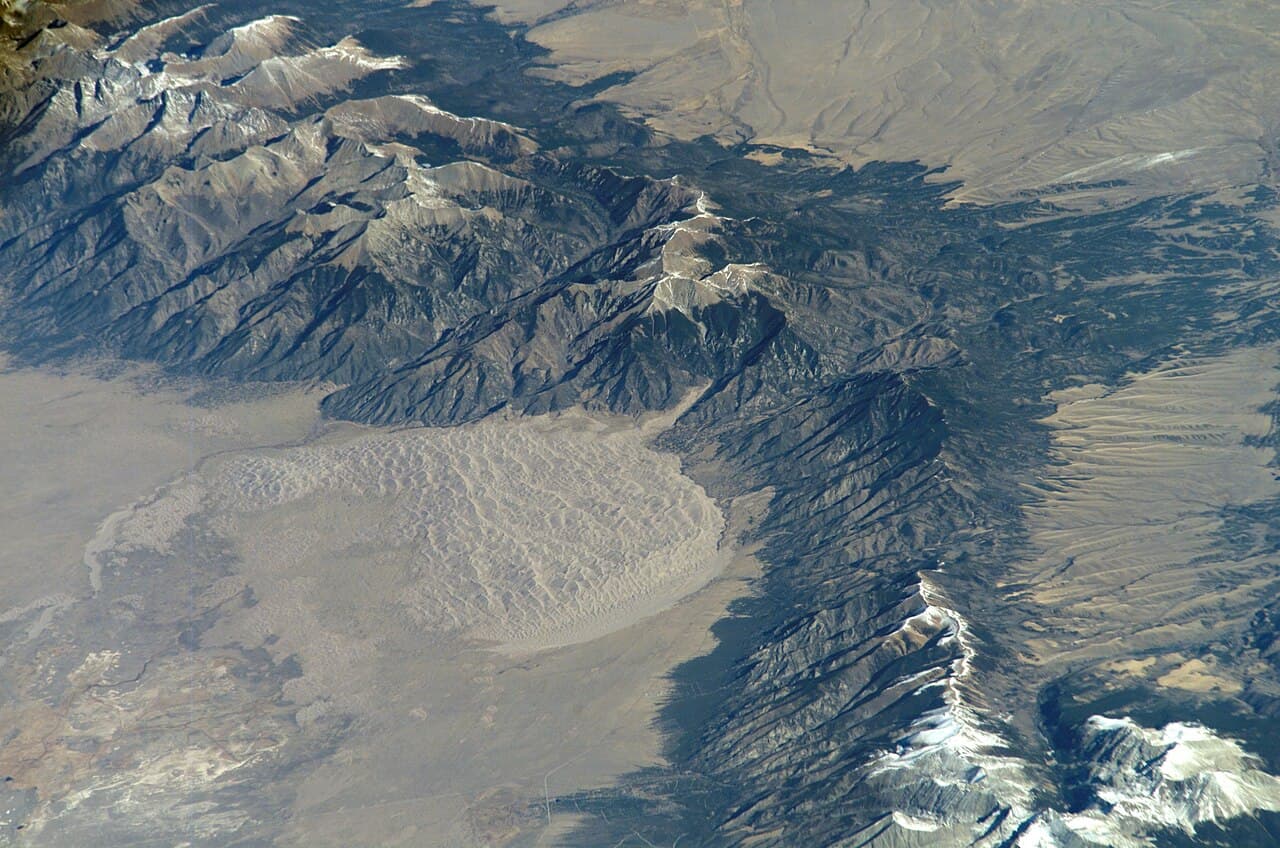
Day one is built around travel time — expect most of the morning to disappear into the drive from Denver or Albuquerque, with the valley slowly opening up as the mountains give way to flat, high desert plains.
By early afternoon, settle into the rhythm of the valley with a short, unhurried visit to the western edge of Great Sand Dunes. There's no pressure to summit anything today — this is about stretching legs after the drive, watching how the light changes on the sand, and letting teens range a little on their own across the first ridgeline.
As the sun drops fast behind the Sangre de Cristos, head back into Alamosa to check into lodging and get warm. Keep dinner simple and early, in step with the valley's own unhurried, early-to-bed pace — this is a good night for everyone to rest before the bigger dune hike tomorrow.
Day 2: Full Day on the Dunes
A full day centered on Great Sand Dunes with a moderate hike and a short waterfall detour, approximately 3–4 miles of walking with high energy output.
Arrive by 7:30 AM and the dunes belong to nobody but the family — footprints from the previous day already smoothed over by overnight wind, the whole landscape scoured clean and silent. The climb up the highest accessible ridge is the day's main event: legs burn in the soft, cold sand, but the payoff is a 360-degree view of dune fields meeting the jagged, snow-dusted Sangre de Cristo range. This is prime teen-autonomy terrain — let them choose their own line up the ridge while parents set the pace below.
The short, rocky trail up to Zapata Falls feels like a different world from the dunes below — pine-scented air, a narrow canyon, and a stream that's often crusted with ice at the edges in winter. The final approach requires a quick, cold ford across the creek to reach the base of the 30-foot cascade, half-frozen and roaring through a chute of dark rock; it's an easy, memorable payoff for a short scramble, and teens tend to treat the creek crossing itself as part of the adventure.
The day begins early and deliberately — arriving at the dunes before the sun is fully up means cold air, sharp shadows, and a dune field with no other footprints in sight. The climb to the highest ridge is the physical centerpiece of the trip, rewarding tired legs with sweeping views of sand meeting snow-capped peaks.
After a warming lunch break, the pace shifts from wide-open exhilaration to narrow, contained wonder at Zapata Falls — a short but rocky climb through a pine-scented canyon to a half-frozen cascade. The cold creek crossing adds a jolt of adventure that balances well against the morning's long, steady climb.
Head back into Alamosa as the light fades fast behind the mountains, ready for an early, hearty dinner in town — locals eat early here, and after a big physical day, the family will likely be ready to do the same.
Day 3: Dawn Wings Over Monte Vista
A dawn-focused day centered on the Monte Vista wildlife refuge with a relaxed afternoon in town, roughly 1–2 miles of easy, flat walking.
Arrive while it's still dark and the valley is silent except for wind moving through frozen grass — then, as the sky pales, the haunting bugle calls of sandhill cranes begin to rise from the wetlands. Thousands of birds lift off in a sudden roar of wings against the sunrise, an experience that tends to land as one of the trip's most memorable moments for both parents and teens, precisely because it can't be rushed or staged. The south dike viewing platform offers a quieter vantage than the main tower, with excellent crane activity and far fewer people.

Set an early alarm — the payoff for arriving in full darkness is having the wetlands nearly to yourselves as the sandhill cranes wake and begin their dawn ritual, culminating in a thunderous mass takeoff as the sun clears the horizon. The south dike platform offers an intimate, uncrowded vantage point away from the main observation tower.
With the refuge's cold, quiet intensity behind you, the afternoon shifts into a slower gear — a chance to warm up, refuel, and explore Monte Vista's small agricultural downtown at an easy pace, giving teens some low-key browsing time after the intensity of dawn wildlife watching.
Head back toward Alamosa or Monte Vista lodging for an early, relaxed dinner, keeping in step with the valley's early-to-bed rhythm — a good night to review the day's photos and rest ahead of the final day.
Day 4: Last Light on the Valley Floor
A lighter final day combining an optional return to the dunes or refuge with departure logistics, roughly 1–2 miles of walking.
For a final, lower-key farewell to the valley's signature landscape, a short return visit to the dunes' edge offers one more chance at quiet morning light without the commitment of a full ridge climb. Frost often clings to the lower dune faces this time of day, catching the early sun in a way that feels different from the earlier full-day visit — a nice, easy bookend rather than a repeat of day two's exertion.
Keep the final morning light and unhurried — a short, low-key return to the base of the dunes offers one last dose of that vast, otherworldly landscape without demanding another big physical effort before travel.
With bags packed and the rental car fueled up in Alamosa, the afternoon is largely given over to the drive back toward Denver or Albuquerque, the valley's flat expanse gradually giving way to the surrounding mountains in the rearview mirror.
Depending on flight or drive timing, the evening may be spent en route rather than in the valley itself — a fitting quiet close to a trip built around wide-open spaces and early mornings.
Want to tweak this trip?
Our AI planner can customize this itinerary to your exact dates, interests, and travel style.
Customize This ItineraryRestaurant details (hours, menus, availability) change frequently, and dining options in this remote valley are limited — check current hours before visiting, especially in winter.
Dietary compatibility tags are general guidance. If you have severe allergies, confirm directly with the restaurant.
Travel tips are general guidance, not professional safety advice. Check government advisories and local road condition reports for the latest information, especially in winter.
All prices are approximate and may vary seasonally.