Craters of the Moon NM (Arco), Idaho
2-Day Itinerary for Solo Traveler
“Black Rock Solitude: Two Days Alone on the Moon's Surface”
The lava here doesn't ask permission—it just spreads, black and jagged, all the way to a horizon that looks borrowed from another planet. Spring softens the edges with sage-green scrub and stray wildflowers pushing up through cinder, but the silence and scale remain entirely Craters of the Moon's own. This is a landscape built for slow, solitary wandering.
At a Glance
Highlights
- Climb Inferno Cone at golden hour for a 360-degree view of black lava sea
- Drive the 7-mile Loop Road with minimal crowds in shoulder season
- Hike into North Crater's alien ridgelines at dawn
- Descend into cool lava tube caves away from the midday sun
- Stargaze from the campground under some of Idaho's darkest skies
- Fuel up in Arco's no-frills diners before vanishing into the monument
Day-by-Day Plan
Day 1: Arrival and First Light on the Lava Sea
A lighter first day easing into the landscape with a scenic drive, an indoor orientation stop, and one moderate hike—roughly 2.5 miles of walking total.
Start here to get your bearings—the smell of dry sage drifts through the cool interior while a topographic relief model lays the whole lava field out before you like a dark, frozen ocean. Rangers are generous with trail condition updates this time of year, especially about which paths still hold snowmelt or mud. Arriving right at opening means you'll have the exhibits and the staff's attention almost to yourself.
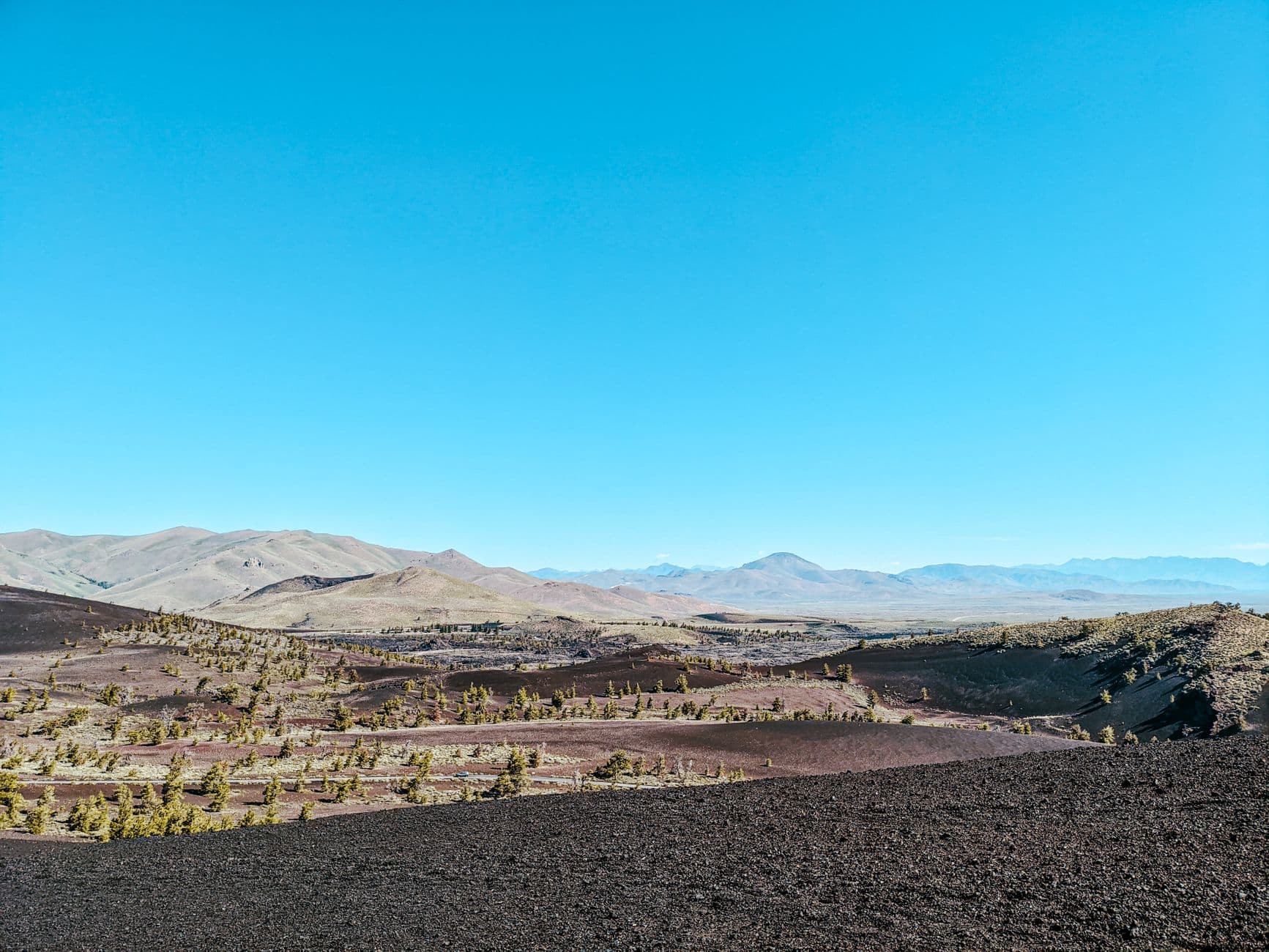
Ease into the landscape without demanding much of your legs—this seven-mile paved loop delivers maximum otherworldly drama for minimal effort. Pull over at Big Craters Pullout for a sweeping panorama, then linger at North Crater Flow overlook where the morning light rakes across intimate volcanic texture. The silence at each stop is its own kind of attraction; few places feel this untouched.

After lunch, duck into the cool shadow world of the lava tubes—a welcome contrast to the sunbaked surface above. The trail crunches underfoot through black rock before opening into cave mouths where wind whistles faintly and the smell of ancient stone hangs heavy. Bring a flashlight or headlamp; the deeper caves go properly dark, and that disorientation is part of the thrill when you're exploring solo.
The day opens gently at the Visitor Center, where the hush of climate-controlled air and the scent of sage dust ease you into the monument's strange logic before you ever set foot on lava rock. It's the right kind of soft landing—informative, unhurried, and a good chance to ask rangers about current trail conditions given spring's unpredictable moisture.
From there, the pace shifts outdoors but stays easy: the Loop Drive requires nothing more than short walks from the car, letting the landscape do the heavy lifting visually while your legs rest. By early afternoon, the Caves Trail offers a cooler, moodier counterpoint—dropping underground into lava tubes where the temperature drops and the silence deepens.
With no dining options mapped directly inside the monument, plan to head back toward Arco for dinner—pack a sandwich or snack for the drive if you're not ready to commit to town yet. Settle in early tonight; tomorrow's hikes call for a well-rested start.
Day 2: Climbing Into the Volcanic Heart
A more demanding day combining two moderate-to-intense hikes and a dramatic cinder cone climb—roughly 4 miles of walking with significant elevation change.
Arrive by 7:30am and the trailhead is yours—just you, the ravens, and the wind rushing across open crater ridges. The cinder crunches underfoot as the trail climbs into a landscape so stripped-down it feels like walking on a different planet entirely. By 9am this trail starts seeing moderate traffic, so the early start isn't just about light—it's about having the silence to yourself.

This is the day's most intense stretch—descending into a crater bowl walled with jet-black and rust-red lava, utterly devoid of vegetation. The absolute quiet down here is disorienting in the best way, broken only by wind whistling through stone formations. Solo hikers should pace themselves; footing is uneven and there's no shade, so this is best tackled before midday heat sets in.

Save the park's signature climb for golden hour—by late afternoon the crowds have thinned and the low sun throws long shadows across the cone's black flanks. The climb itself is short but strenuous on loose pumice; at the summit, the view opens into an endless, lifeless sweep of lava broken only by distant cone silhouettes. It's a fitting, quietly triumphant close to two days spent alone with this landscape.

The day begins before most visitors are awake, with North Crater Trail offering a rare, solitary hour on alien ridgelines lit by early sun. The cold air and crunch of cinder underfoot set a brisk, focused tone that carries into the next, more demanding stretch.
Big Craters Trail ramps up the intensity, dropping you into a crater bowl so stark it erases any sense of familiar scale—this is the day's physical and emotional peak, best tackled with full energy and plenty of water. After a slower midday break to rest and refuel, the pace shifts again toward golden hour.
Inferno Cone closes the trip on a high note, literally—climbing into the evening light for a 360-degree view that makes the whole two days feel earned. Afterward, with no mapped dining inside the monument, plan to drive back toward Arco for a simple, hearty dinner before an early night; tomorrow's exit drive deserves a clear head.
Want to tweak this trip?
Our AI planner can customize this itinerary to your exact dates, interests, and travel style.
Customize This ItineraryRestaurant details (hours, menus, availability) change frequently. Check current hours before visiting, especially in seasonal destinations.
Dietary compatibility tags are general guidance. If you have severe allergies, confirm directly with the restaurant.
Travel tips are general guidance, not professional safety advice. Check government advisories for latest information.
All prices are approximate and may vary seasonally.
Attractions in This Itinerary
More Itineraries for Craters of the Moon NM (Arco)
Explore Idaho