Gasconade River Hills, Missouri
2-Day Itinerary for Solo Traveler
“Underground Rivers & Limestone Light: Two Days Beneath the Gasconade Hills”

Underfoot, the Ozarks hide a second landscape — one carved slow and dark by water, glittering where the light finally reaches it. This two-day loop through the Gasconade River Hills trades crowds for quiet limestone cathedrals, river-bluff trails, and the unhurried rhythm of small Missouri towns waking up in spring rain.
At a Glance
Highlights
- Descending into Meramec Caverns' Cathedral Chamber as cave light first flickers on
- Tracing the Onyx Curtain's mineral drapery with a flashlight-steady gaze
- The hush of Onondaga Cave's Dome Room, lit only by guide lanterns
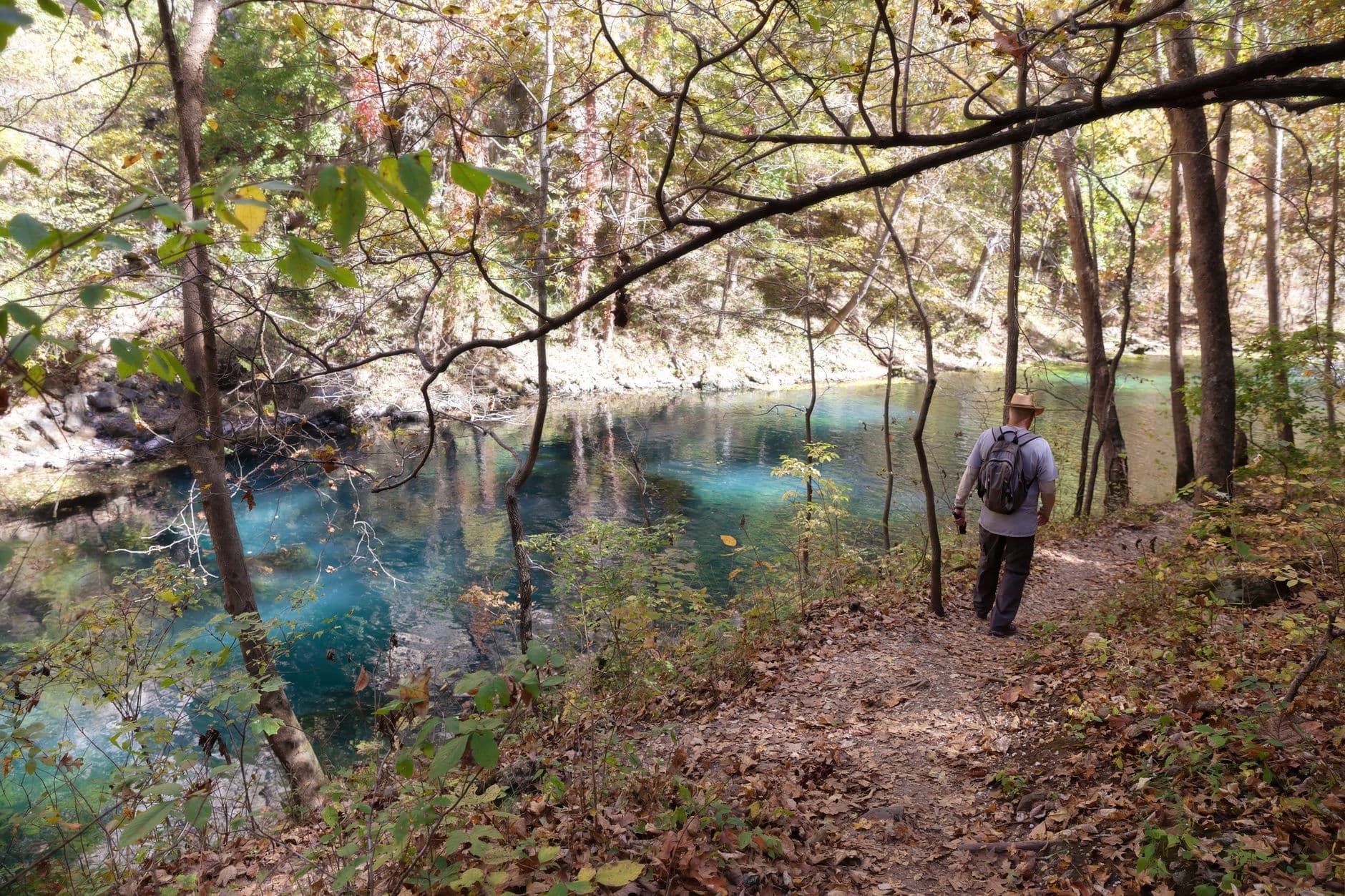
- Wildflower-flecked bluffs above the Gasconade River in spring mist
- Solo-friendly tour groups that turn strangers into trail companions
- Hearty diner pie and catfish after a day underground
- Rain or shine, the caves stay a constant, mineral-cool 55°F
Day-by-Day Plan
Day 1: First Light in the Limestone: Meramec Caverns & River Towns
A gentle orientation day with roughly 2 miles of walking, centered on the Meramec Caverns Area's two cave experiences with a relaxed small-town dinner to close.
Arrive by 8:30 and the lot is still half-empty — you'll have the entrance rotunda's natural skylight almost to yourself before tour buses roll in around 10. Inside, 4.6 miles of sculpted limestone unfold in cool, mineral-scented air, footsteps echoing off smooth stone as the guide walks the group through vintage Americana lore and the cave's famous Onyx Curtain. For a solo traveler, this is an easy, social first stop — small groups chat easily in the slower stretches between chambers.

A short drive deeper into the hills brings you to a quieter, more atmospheric cave — the sound of an actual underground river amplifies through the stone chambers here, a contrast to Meramec's polished show-cave feel. Dripstone formations glisten under guide flashlights, and the forested approach to the entrance, dappled with spring light, is worth lingering over before heading underground. It's a good midday pacing shift: same cool cave immersion, different mood — more contemplative, less crowded.
The day opens underground and unhurried — arrive at Meramec Caverns early enough to beat the mid-morning rush, and the entrance rotunda's skylight still holds a hush of quiet before the first big tour group arrives. Descending into the cave system, the air cools fast, footsteps echo off smooth stone, and the Onyx Curtain's mineral drapery catches the lights in slow, glowing folds. It's an easy, low-effort way to ease into the trip, with plenty of chances to chat with fellow solo travelers drifting along the same tour.
Midday shifts to something quieter at Blanchard Springs Cavern, a short scenic drive away through hills just starting to green. Here the cave feels more wild and less staged — an underground river hums through the stone, dripstone formations glisten, and the forest walk to the entrance is its own small reward. The mood softens from Meramec's showman energy into something more contemplative, a good rhythm shift for a solo afternoon.
As the caves close out the daylight hours, settle into one of the small river towns for an early, unhurried dinner — local diners here keep honest hours and serve the kind of hearty, farm-fresh comfort food that's fueled this region for generations. It's a good night to turn in early; tomorrow's cave is longer and deserves a fresh start.
Day 2: Deep Chambers & River Bluffs: A Slower Descent at Onondaga
A more immersive, single-cluster day centered on the long-form Onondaga Cave tour, with light walking (under 2 miles) and a relaxed pace built around one major underground experience.
This is the day's centerpiece — a longer, more immersive 3-hour tour through crystalline chambers carved by an ancient underground river. Arrive right at the 9 AM opening and tour groups stay small and personal, giving solo travelers real room to ask questions and linger over formations rather than shuffling along in a crowd. The Dome Room, lit only by guide lanterns, is the kind of hushed, cathedral-scale space that rewards patience — stand still a moment and just listen to the drip of water echoing off stone.

The day's centerpiece unfolds slowly at Onondaga Cave, where a 3-hour tour winds through chambers that feel less like a roadside attraction and more like genuine discovery. Cool mineral air settles on the skin almost immediately, the soft drip of water echoes constantly, and formations glimmer only where the guide's light falls — a quieter, more immersive register than yesterday's caves. Small tour groups here make it easy to strike up conversation with fellow travelers between chambers, a nice bit of social texture for a solo trip.
With the cave tour running long into midday, the afternoon opens up loose and unstructured — a chance to wander the spring run exterior if the weather cooperates, camera in hand for the wildflowers and native trees framing the water, or simply to sit by the Gasconade River and let the morning's underground hush settle before heading back toward lodging.
As the trip winds down, an early dinner in one of the nearby river towns closes things out at the region's own unhurried pace — hearty, unfussy food, friendly counter service, and the kind of quiet small-town evening that makes this corner of Missouri feel less like a tourist stop and more like a place that was always just there, waiting to be found.
Want to tweak this trip?
Our AI planner can customize this itinerary to your exact dates, interests, and travel style.
Customize This ItineraryRestaurant details (hours, menus, availability) change frequently, especially in small rural towns with limited staffing — check current hours before visiting, and be aware many local spots close Sundays or Mondays.
Dietary compatibility tags are general guidance. If you have severe allergies, confirm directly with the restaurant before ordering.
Travel tips are general guidance, not professional safety advice. Check current weather and flash flood advisories before river or bluff activities, especially in spring.
All prices are approximate and may vary seasonally; cave tour admission and local dining costs are subject to change.