2 DaysSolo Traveler4 Stops

Jemez Mountains (Los Alamos, Jemez Springs), New Mexico

2-Day Itinerary for Solo Traveler

“Steam, Stone, and Silence: 2 Days in the Jemez Mountains”

Steam, Stone, and Silence: 2 Days in the Jemez Mountains

Winter strips the Jemez down to its bones: steam rising off travertine in the cold air, elk tracks pressed into snow-dusted meadows, and a silence so complete you can hear your own breath. This is a landscape built for solitude—and for a solo traveler, that's the whole point.

At a Glance

Climate & Weather
Winter in the Jemez means cold, dry air at elevations between 7,000 and 8,500 feet—expect daytime highs in the 30s–40s°F and nights well below freezing. Snow and ice are likely on shaded trail sections and the Valles Caldera road; pack insulated layers, waterproof boots with good tread, a hat and gloves, and sunglasses for the intense high-altitude glare off snow.
Getting Around
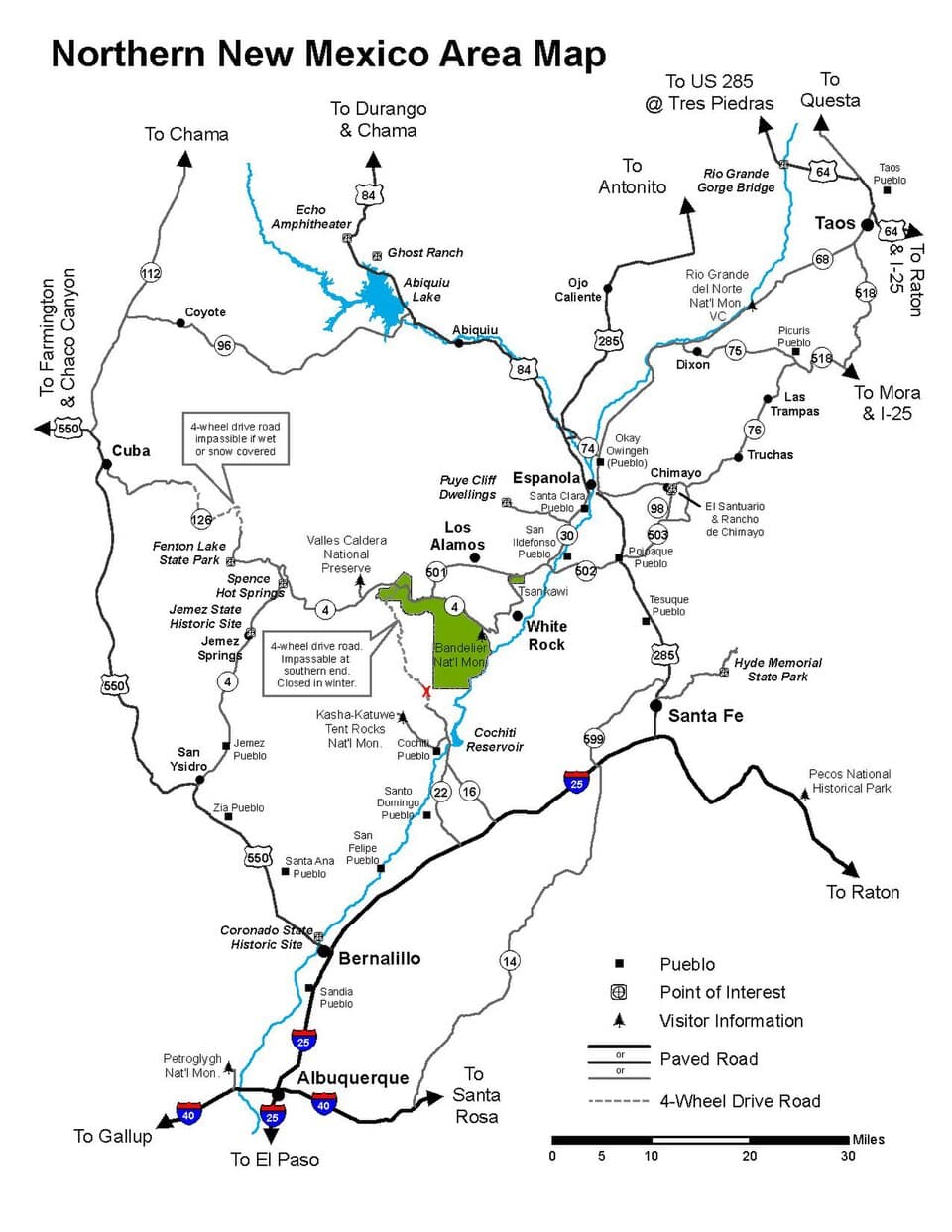
A car is essential—distances between clusters run 20–45 minutes on NM-4, a scenic but winding two-lane road that can be slow in snow. There's no public transit in the corridor, so budget extra time for winter driving and fuel up before heading into Valles Caldera, where services are nonexistent.
Budget
Budget roughly $60–90/day for a solo traveler covering meals, hot springs or park entry fees, and incidentals—lodging is separate and varies by where you base yourself.
Safety
This is quiet, low-crime terrain, but solo winter travelers should treat weather and road conditions as the real hazard—check NM-4 conditions before heading out, carry extra layers and water in the car, and let someone know your rough plan for the day. Trails can be icy even when roads look clear; microspikes are a smart add for Battleship Rock or Jemez Falls.
Connectivity
Cell coverage is spotty to nonexistent once you're off US-550 and into the canyon or caldera—download offline maps before you go. Jemez Springs village has limited Wi-Fi at a few inns; Los Alamos has reliable coverage and service if you need to reconnect.
Local Tips
Winter means the lowest crowds of the year at non-ski sites—arrive at Soda Dam or Battleship Rock by mid-morning and you may have the place entirely to yourself. Many small village businesses close or run reduced hours on Sundays and Mondays, so plan dining accordingly, and note that Valles Caldera's winter hours are shorter with earlier gate closures—call ahead or check the NPS site before committing to a full afternoon there.

Highlights

  • Steam rising off the mineral-streaked travertine at Soda Dam
  • Standing alone atop Battleship Rock with the whole volcanic range laid bare
  • Driving into the vast, snow-rimmed bowl of Valles Caldera at golden hour
  • Early-morning quiet at waterfalls that see almost no winter traffic
  • Volcanic geology that makes the whole region feel like a held breath
  • Short winter days that reward an early start and an easy pace

Day-by-Day Plan

arrival, hot springs, gentle orientation

Day 1: Settling Into the Canyon

A light, low-mileage day (under 2 miles walking) easing into the Jemez Springs Corridor with two unhurried stops built around thermal geology and a short waterfall walk.

Wear
Insulated waterproof boots, wool socks, a warm base layer under a windproof jacket, gloves, and a hat—canyon shade holds onto cold, and footing near the dam and falls can be icy.
Budget
$40-60 (mostly food; both stops are free to visit)
9:00 AM - 10:00 AM
Soda Dam · morning · 60 min · Jemez Springs Corridor

Arrive by 9am on a winter weekday and the travertine formation is yours alone—steam curling off the warm, mineral-streaked rock into air cold enough to fog your breath. Run gloved fingers along the calcified ridges, cream and rust layered like sediment frozen mid-pour, and listen to how canyon walls hold and bend the sound of trickling water. For a solo traveler this is a gentle, contemplative first stop—no crowds to navigate, just geology doing something strange and beautiful.

Soda Dam
Unknown / wikimedia (Public domain)
Shoot the main cascade from the parking area in flat morning light, then move in close for texture shots of the mineral banding—winter's low sun angle adds warmth to the cream and rust tones.
Uneven, unpaved terrain with no formal path—sturdy, grippy boots are essential in winter conditions.
20 min drive — A quiet stretch of NM-4 winding through pine forest, canyon walls closing in before opening again near the falls turnoff.
10:45 AM - 11:45 AM
Jemez Falls · midday · 60 min · Jemez Springs Corridor

The approach trail can be slick with ice this time of year, so take it slow—but the payoff is a hidden cascade tumbling through canyon walls dusted in snow, the roar of falling water sharpened by cold, dry air. Moss-covered rocks near the plunge pool wear a crust of frost, and the scent of wet stone and Douglas fir cuts through the chill. Midweek in winter, expect to have the viewing platform entirely to yourself—a good spot to simply stand still for a few minutes.

Jemez Falls
Manthey, G. Thomas United States. Bureau of Land Management. Socorro District Western Interstate Commission for Higher Education. Resources Development Internship Program / wikimedia (Public domain)
The main cascade viewing platform gives the cleanest waterfall framing; come slightly before noon when light reaches down into the canyon.
Trail is uneven and can be icy in winter—not recommended without traction aids; consider viewing from the main platform only if conditions look unsafe.
If it rains: If snow or ice makes the Jemez Falls approach trail unsafe, skip the walk and view the cascade from the main platform near the parking area only, or redirect the extra time to a slower, more thorough visit at Soda Dam instead.

Ease into the day with a short, unhurried visit to Soda Dam, arriving early enough that the steaming travertine formation feels like a private discovery rather than a tourist stop. The cold morning air makes the thermal steam dramatic against bare winter trees, and there's no itinerary pressure here—just time to look closely at something genuinely strange.

From Soda Dam, a short winter drive deeper into the canyon leads to Jemez Falls, where the trail demands a bit more care underfoot but rewards with a quieter, more physical kind of beauty—ice-rimmed rock, cold mist, and a cascade that feels wilder in winter than it ever would in summer crowds.

With no mapped dining options directly in this immediate stretch of canyon, plan your evening meal around wherever you're basing yourself for the night—Jemez Springs village or Los Alamos both have more established food options, so treat dinner logistics as flexible rather than tied to today's stops. Settle in early; winter days here are short, and an early night sets up tomorrow's longer push into Valles Caldera.

scenic drive, alpine vastness, solitude

Day 2: Volcanic Heights and Open Country

A moderate-effort day covering roughly 3-4 miles of walking across Battleship Rock and the Valles Caldera overlooks, trading canyon intimacy for wide-open volcanic terrain.

Wear
Full winter layering system—insulated jacket, wind-resistant outer shell, thermal base layers, waterproof pants if snow is active, plus traction devices for icy trail sections and sunglasses for glare off open snowfields.
Budget
$50-70 (park entry/fees, fuel, meals)
9:00 AM - 10:30 AM
Battleship Rock · morning · 90 min · Battleship Rock & Scenic Byway

Get here by 9am and the saddle approach is silent except for wind moving across exposed rock—no weekend crowds, just rust-colored volcanic stone against a hard blue winter sky. The trail is moderate and the footing can be icy in shaded sections, so take it slow; the reward is a panoramic sweep north toward Valles Caldera that feels earned rather than handed to you. Solo travelers should note this is a good spot to strike up conversation with the rare fellow early-morning hiker—there's a natural camaraderie in sharing an empty trail.

Battleship Rock
Tacoma Commercial Club and Chamber of Commerce / wikimedia (Public domain)
The saddle approach, looking north toward Valles Caldera, is strongest in early morning light before midday haze sets in.
Moderate difficulty trail, not recommended for those with mobility limitations—icy conditions in winter add further difficulty.
25 min drive — NM-4 climbs steadily through forest before the trees suddenly open onto the caldera's immense rim—a view that catches most people off guard the first time.
12:00 PM - 3:30 PM
Valles Caldera NPS · afternoon · 210 min · Valles Caldera

The drive in alone resets your sense of scale—a vast, snow-covered bowl ringed by 11,000-foot peaks, with elk herds sometimes visible as dark shapes moving across white meadow. Winter hours are shorter here, so plan your visit around an early afternoon arrival; the overlook near the visitor center and a short accessible walk along the scenic loop give you most of the experience without demanding a full-day backcountry trek. The quiet is total—just wind, distant elk calls, and the strange sensation of standing inside a collapsed volcano.
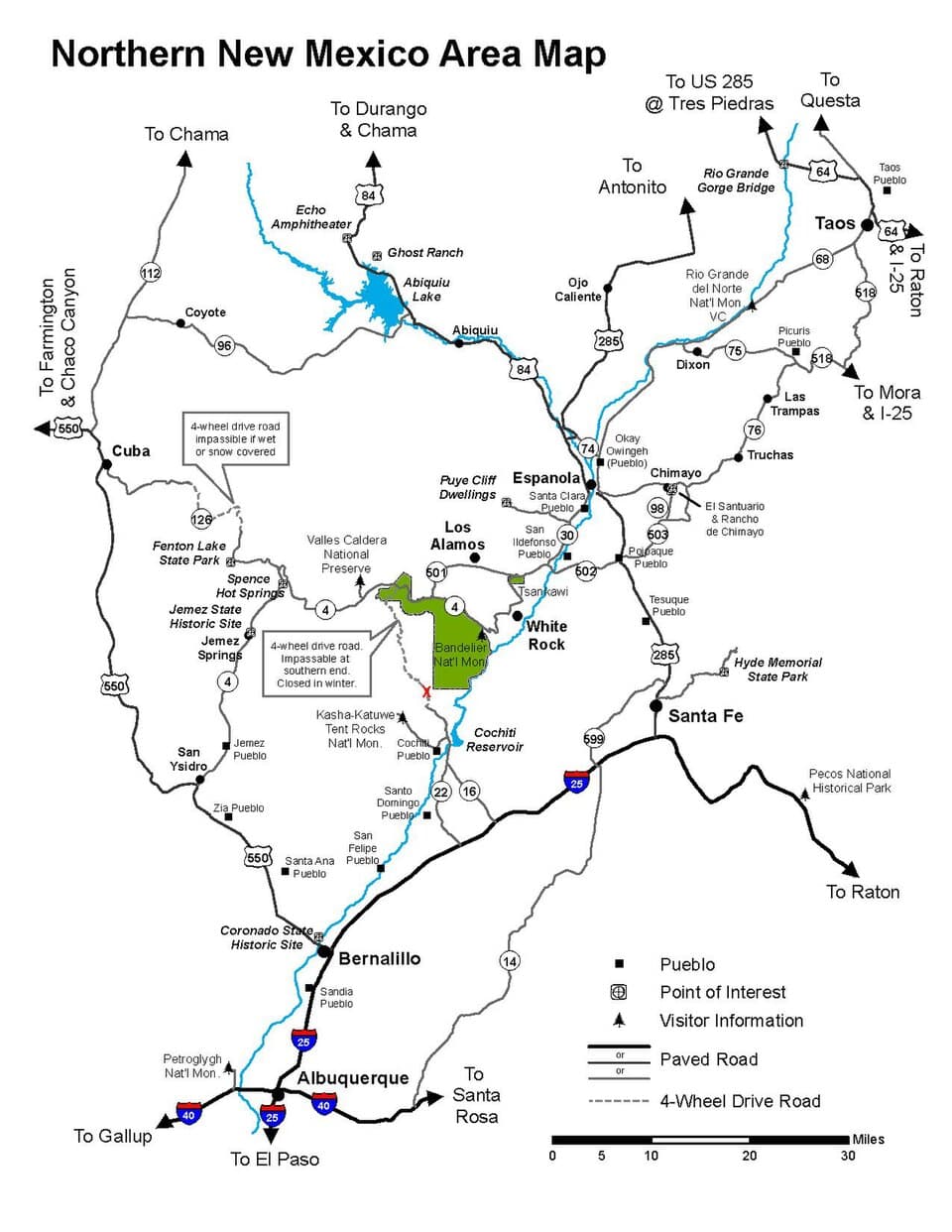
Valles Caldera NPS
U.S. National Park Service, restoration/cleanup by National Park Maps (https://npmaps.com) / wikimedia (Public domain)
The Valles Caldera overlook is best in the hour before sunset, when low winter light rakes across the snow and throws the ridgelines into sharp relief—but check posted winter closing times, as the gate may shut before true golden hour.
Visitor center and main overlook are wheelchair accessible; scenic loop drive remains passable in light snow, though benches and facilities are sparse.
Optional detour: Jemez Falls — Could be revisited after Battleship Rock and before Valles Caldera
If yesterday's visit felt rushed or icy conditions limited the trail walk, a second pass offers a chance to see the falls in different light. Skip if: Skip if you already had a full experience yesterday—better to conserve daylight hours for the longer Valles Caldera visit, especially given winter's early sunset.
If it rains: If a winter storm moves in, prioritize the Valles Caldera visitor center's indoor exhibits and interpretive programs, and postpone or shorten the Battleship Rock trail, which becomes genuinely hazardous in active snow or ice.

Start early at Battleship Rock while the trail is still empty and the light is flat and clean—this is solitude at its most complete, just you, wind-scoured rock, and a view north toward the caldera that sets up the rest of the day perfectly.

The drive north into Valles Caldera delivers one of the trip's biggest visual payoffs: an entire volcanic bowl opening up in white and gold, ringed by distant peaks. Winter's shorter hours mean a tighter window here, so treat the overlook and accessible loop as the priority rather than attempting a long backcountry push.

As winter dusk settles fast over the caldera rim, begin the drive back toward your base for the night—Los Alamos or Jemez Springs village, depending on where you're staying—and treat dinner as an open question rather than something tied to today's remote stops; both towns offer more reliable food options once you're off NM-4. Let the day's quiet linger a little before turning in early.

Want to tweak this trip?

Our AI planner can customize this itinerary to your exact dates, interests, and travel style.

Customize This Itinerary
Good to Know

Restaurant details (hours, menus, availability) change frequently, especially in small mountain villages during winter. Check current hours before visiting.

Dietary compatibility tags are general guidance. If you have severe allergies, confirm directly with the restaurant.

Travel tips are general guidance, not professional safety advice. Check road conditions and government advisories before winter travel in this region.

All prices are approximate and may vary seasonally.
We use cookies to improve your experience and analyze site usage. Essential cookies are always active. You can customize your preferences or accept all cookies. Cookie Policy