3 DaysSolo Traveler9 Stops

Rio de Janeiro, Brazil

3-Day Itinerary for Solo Traveler

Arms Wide Open: A Solo Wanderer's Rio de Janeiro

Arms Wide Open: A Solo Wanderer's Rio de Janeiro

The cable car sways over granite as Guanabara Bay unspools below in hammered gold; somewhere behind you, Christ the Redeemer keeps watch with open arms. This is Rio in fall — cooler air, thinner crowds, and just enough breathing room to actually feel the city's pulse instead of fighting through it.

At a Glance

Climate & Weather
Fall (April–June or September–November) in Rio brings cooling temperatures into the mid-70s°F, lower humidity, and thinning crowds — a sweet spot before summer's heat and rain arrive. Pack layers: a light jacket for breezy viewpoints and evenings, breathable clothes for midday sun, and swimwear for beach days. Days shorten slightly, so plan sunset activities for 5–5:30pm rather than later.
Getting Around
Rio's metro is clean, cheap, and connects Ipanema, Copacabana, and Centro efficiently — the safest and most solo-friendly way to move around. Uber and official taxis are reliable for late-night or cluster-hopping trips (like Corcovado or Sugarloaf, which sit outside metro reach). Walking is ideal within a single neighborhood but hilly zones like Santa Teresa require sturdy shoes and stamina.
Budget
Budget roughly $70–110 USD/day for a solo traveler covering meals, museum entries, cable car and cog train tickets, and a guided tour — more if you add the Pedra da Gávea hike or a favela tour with transport included. Cash is still useful for small vendors and tips; cards are widely accepted elsewhere.
Safety
Solo travelers should stick to well-touristed zones after dark (Copacabana, Ipanema, Lapa's main strip), keep phones and jewelry low-profile, and use official taxis or rideshare apps at night rather than walking alone through unfamiliar streets. Favela visits should only be done with licensed, community-vetted guides — never independently. Beaches have strong currents in places; swim near lifeguard posts (postos) and heed flag warnings.
Connectivity
4G/LTE coverage is strong throughout the South Zone and Centro; a local SIM or eSIM (Claro, Vivo, or TIM) is cheap and easy to set up at the airport. Most cafés, hotels, and even some beach kiosks offer free WiFi — handy for solo travelers coordinating tours or checking in with family.
Local Tips
Arrive at Christ the Redeemer and Sugarloaf before 9am — fall's clearer skies make for some of the best photography conditions of the year, and the crowds are dramatically thinner. Cariocas eat dinner late (8–9pm), so use early evening for a sunset stop before your meal. Solo travelers should consider group van tours to Corcovado and guided favela walks — both double as easy ways to meet fellow travelers.

Highlights

  • Sunrise-quiet moments atop Corcovado before the crowds arrive
  • Cable car ascent up Sugarloaf as the bay turns copper at dusk
  • Barefoot wandering along Ipanema's Calçadão at golden hour
  • Rainbow-tiled pilgrimage up the Selarón Steps
  • Cobblestone drifting through Santa Teresa's mural-lined alleys
  • Fossil halls and palm-lined gardens at the National Museum
  • A guided walk through a hillside favela community with a local guide

Day-by-Day Plan

Arrival & Orientation

Day 1: Open Arms and Ocean Air

A gentle first day pairing Rio's most iconic monument with an easy garden wander and a first taste of beach culture — roughly 3 miles of walking, low-to-moderate energy.

Wear
Light layers (cool at altitude on Corcovado, warm at sea level), comfortable walking shoes, sunscreen, a light jacket for the cog train breeze.
Budget
$60-80 (cog train ticket, garden entry, casual meals)
8:00 AM - 10:00 AM
Christ the Redeemer (Corcovado) · morning · 120 min · Christ the Redeemer & Corcovado

The cog train climbs through Atlantic Forest thick with eucalyptus and damp earth smell, and then the statue simply appears — arms flung wide against open sky. Arrive by 8am and the platform is nearly yours; by mid-morning, tour buses arrive in waves and the quiet dissolves into shutter-clicks and jostling. As a solo traveler, this is an easy place to strike up conversation with fellow early risers waiting for the same clear-sky moment.

Christ the Redeemer (Corcovado)
Photo by over_kind_man
Shoot from the eastern edge of the platform around 8:30am — soft morning light catches the statue's profile with Sugarloaf and the bay behind it, before the sun climbs too high and glares.
Elevator and escalator access available to the main platform; benches are frequent for rest breaks.
15 min driveA short taxi or rideshare down the mountain road, eucalyptus giving way to residential streets as the elevation drops.
10:30 AM - 12:30 PM
Parque Lage · midday · 120 min · Christ the Redeemer & Corcovado

Descend into a different register entirely — the mansion's neoclassical courtyard, framed by Corcovado rising behind it, feels hushed and green after Corcovado's crowds. Peacocks wander the lawns unbothered; the on-site café inside the mansion is a natural, low-pressure spot for a solo coffee break while people-watching under the arches.

Parque Lage
Photo by Rjcastillo — CC BY-SA 4.0
The mansion's front terrace, late morning light, with Corcovado rising directly behind the arches — arrive before 11am for fewer people in frame.
Main pathways are flat and paved, though the mansion's upper floors may have limited step-free access.
Lunch
Joaquina $$
regional · Near Parque Lage
Relaxed garden-adjacent spot serving Brazilian classics — good for a solo lunch with outdoor seating and easy people-watching.
Gula Gula $$
mixed · Near Parque Lage / Christ the Redeemer
Casual, healthy-leaning menu with salads and grilled plates — a dependable, unfussy option after a morning of walking.
Dinner
Siqueira Grill $$
barbecue · Near Copacabana Beach
Classic churrascaria-style grill near Copacabana — communal, lively, and easy to eat solo at the counter or bar.
If it rains: If clouds sock in Corcovado (common with fall drizzle), Parque Lage's mansion and covered grottos remain fully accessible — spend extra time exploring the interior galleries and café instead, then reschedule the summit for a clearer day if time allows.

The cog train hums upward through cool, damp forest air, and the city falls away beneath you piece by piece — favela rooftops, then the curve of the bay, then nothing but sky and the outstretched arms of the statue itself. Early arrival here isn't just a photography tip; it's the difference between a contemplative moment and a shoulder-to-shoulder scrum.

The pace downshifts entirely at Parque Lage, where formal gardens, trickling fountains, and free-roaming peacocks replace the mountaintop's intensity with something closer to a held breath. It's an easy, unhurried wander — ideal for settling into the trip's rhythm without overtaxing a body still adjusting to a new time zone.

As dusk settles, head toward Copacabana for a first taste of Rio's beachfront energy — the promenade's mosaic tiles catching the last light, vendors calling out, waves crashing steadily just beyond the sand. Dinner at a grill counter here is easygoing and solo-friendly, the kind of place where sharing a table with strangers feels natural rather than forced.

Iconic Views & Beach Culture

Day 2: Granite, Gold Light, and Golden Sand

A view-driven day linking Sugarloaf's cable car ascent with an afternoon and evening along Ipanema's iconic sands — roughly 4-5 miles of walking, moderate-to-high energy.

Wear
Breathable layers for the cable car's breezy summit, swimwear and a cover-up for the beach, sandals that transition easily from sand to street.
Budget
$70-100 (cable car ticket, beach snacks, dinner)
7:30 AM - 9:30 AM
Sugarloaf Mountain · morning · 120 min · Sugarloaf Mountain & Beaches East

Two cable cars lift you in stages over granite cliffs and Atlantic surf, the bay unfurling wider with each ascent. Arriving by 7:30am means near-empty platforms and clean morning light — by 10am, tour groups pack the summit shoulder to shoulder. The ride itself is a small social moment; strangers often trade cameras for photos at the top.

Sugarloaf Mountain
Photo by Yolanda
From the summit platform, face west toward Christ the Redeemer for the classic postcard shot — best light is early morning before haze builds.
Cable cars themselves are accessible, though the terrain at Morro da Urca has some uneven sections.
20 min driveA short taxi ride skirting the base of the mountains, ocean flashing between apartment blocks the whole way.
1:00 PM - 4:30 PM
Ipanema Beach · afternoon · 180 min · Sugarloaf Mountain & Beaches East

By afternoon, the energy shifts entirely — volleyball games thump along the shoreline, açaí vendors weave between towels, and the golden light starts its slow build toward sunset. This is prime solo-travel territory: rent a chair near Posto Nine, strike up conversation with beach neighbors, or simply drift and people-watch. The Calçadão promenade is an easy, safe stretch for an evening stroll afterward.
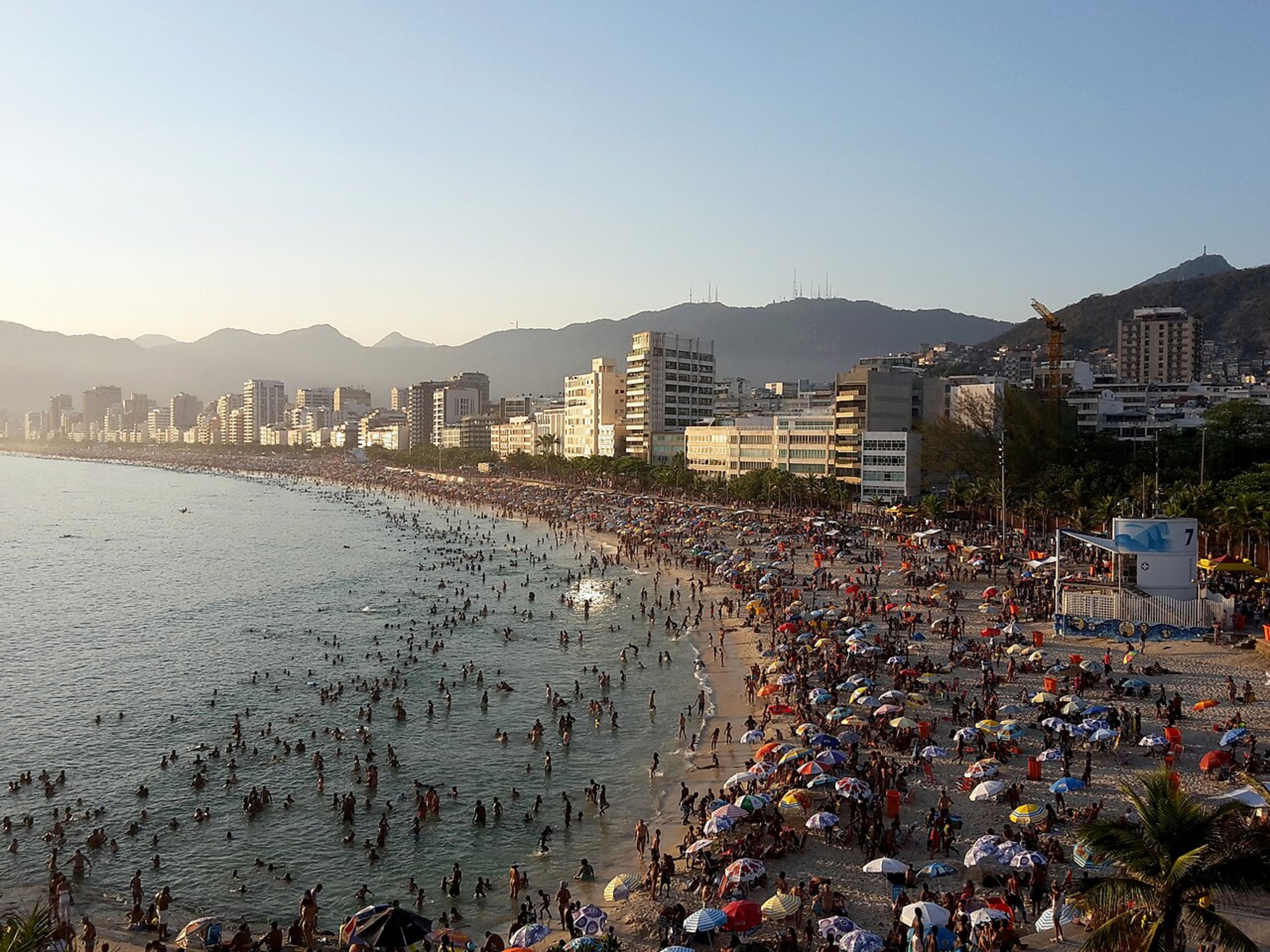
Ipanema Beach
Photo by acediscovery — CC BY 4.0
Arpoador Rock at the eastern end of the beach is the best perch for sunset — arrive by 5pm to claim a seat on the rocks before the crowd builds.
Flat promenade is wheelchair accessible; the sand itself requires mobility.
Lunch
Bar Urca $
drinks/snacks · Near Sugarloaf Mountain
A local institution near the base of Sugarloaf — order a cold drink and pastel, then join the crowd sitting seaside on the wall, a classic Rio social scene.
Urca Grill $$
grilled/brazilian · Near Sugarloaf Mountain
Simple grilled plates with harbor views, a solid sit-down option before or after the cable car.
Dinner
Siri Mole & Cia. Praia $$$
seafood · Near Ipanema Beach
Bahian-style seafood near the sand — moqueca here is rich and communal, best shared but satisfying solo at the bar.
O Caranguejo $$
seafood · Near Ipanema Beach
Long-running, unpretentious seafood spot popular with locals — good energy for solo diners who like people-watching.
Optional detour: Copacabana BeachBetween Sugarloaf Mountain and Ipanema Beach
If you want a second beach for contrast, Copacabana's wider crescent and capoeira circles offer a livelier, more tourist-buzzing energy than Ipanema. Skip if: Skip it if you'd rather avoid beach fatigue — Ipanema alone offers plenty of golden-hour payoff and keeps the afternoon unhurried.
If it rains: If rain rolls in, Sugarloaf's cable cars still run but views vanish into cloud — consider swapping to an afternoon visit to Museu de Arte Moderna instead, whose indoor galleries and rooftop garden hold up well in wet weather, then catch the beach on a clearer day.

The cable car sways gently as granite walls rush past close enough to touch, salt air needling through the open-air platform. At the summit, the whole bay opens in one dizzying sweep — Christ the Redeemer small and distant, the city sprawled in every direction. Early arrival here rewards you with a summit nearly to yourself, a rare thing at one of Rio's most-visited sites.

The shift from mountain air to beach heat is immediate and welcome — Ipanema's sand is warm underfoot, the ocean a steady percussion of waves, and the afternoon stretches out with nowhere urgent to be. This is Rio's social beach par excellence: easy to settle in solo, easy to end up in conversation with a neighbor over a shared thermos of mate.

As the sun drops toward Arpoador's silhouette, the beach crowd thickens for golden hour before dispersing into dinner plans. A seafood dinner nearby — moqueca simmering in its clay pot — makes a fitting, unhurried close to a day defined by big views and open water.

Bohemian Rio & Culture

Day 3: Cobblestones, Color, and Community

A culturally rich final day through Lapa's colonial arches, Santa Teresa's artistic streets, and an afternoon favela tour — roughly 3-4 miles of walking, moderate energy with some hills.

Wear
Sturdy walking shoes for cobblestones and hills, layers for temperature shifts between shaded alleys and open plazas, a small daypack for water and camera.
Budget
$60-90 (favela tour fee, café stops, dinner)
8:00 AM - 8:45 AM
Lapa Arches · morning · 45 min · Lapa & Santa Teresa Historic Core

Early morning is the arches' quietest hour — no samba spilling from bars yet, just the yellow stone catching soft light and a handful of joggers passing beneath. It's a striking, almost solemn contrast to the nightlife energy this same spot holds after dark.

Lapa Arches
Photo by Photograph by Mike Peel (www.mikepeel.net). — CC BY-SA 4.0
Shoot from Rua da Lapa street level for the classic frontal postcard angle — the low morning sun avoids the harsh midday glare.
Uneven cobblestone streets around the arches; limited wheelchair access.
5 min walkA short uphill stroll from the arches, Lapa's quiet morning streets slowly waking around you.
9:00 AM - 9:45 AM
Escadaria Selarón (Selaron Steps) · morning · 45 min · Lapa & Santa Teresa Historic Core

The tiled staircase is a riot of color even at this hour — cobalt, sunset-orange, forest-green tiles from over 60 countries climbing steeply uphill. Arriving before 9am means clear shots without the midday tour groups; it's also an easy spot to chat with fellow solo travelers doing the same photo pilgrimage.

Stand at the base looking upward — the tiles frame the sky like stained glass, especially striking in soft morning light.
Steep stairs throughout; not wheelchair accessible.
10 min walkAn uphill walk from the steps into Santa Teresa's quieter lanes, the street noise of Lapa fading behind you.
10:00 AM - 12:30 PM
Santa Teresa Neighborhood · midday · 150 min · Lapa & Santa Teresa Historic Core

Wandering Santa Teresa's cobbled hills feels like stepping into a different city entirely — faded pastel facades, vintage trams clanging past, murals bursting from unexpected corners. This is prime territory for a long, leisurely wander with a café stop midway; the neighborhood's galleries and studios make natural points to strike up conversation with local artists or fellow travelers.

Santa Teresa Neighborhood
Photo by Fabricio_Macedo_Photo
Rua Almirante Alexandrino offers colonial facades framing sudden glimpses of the bay — best captured in the soft, diffuse light of late morning.
Steep, uneven streets throughout; not recommended for those with mobility limitations.
20 min driveA pre-arranged van pickup from Santa Teresa, winding through city streets toward the community entrance.
2:00 PM - 5:00 PM
Favela Walking Tours · afternoon · 180 min · Lapa & Santa Teresa Historic Core

A guided walk through a hillside community reframes the whole trip — murals in electric blues and pinks, the smell of açaí and street snacks, residents genuinely engaging with visitors on their own terms. Solo travelers should book only through licensed, community-vetted operators; the small-group format makes this one of the easiest, most natural ways to connect with fellow travelers on the tour.

Favela Walking Tours
Photo by heibe
Elevated viewpoints mid-tour offer sweeping shots of pastel rooftops cascading downhill with Christ the Redeemer visible in the distance — midday light works best here.
Steep terrain and uneven surfaces; not recommended for those with mobility limitations.
Lunch
Confeitaria Colombo $$
café, pastries, Brazilian · Near Lapa Arches / Selarón Steps
A century-old Belle Époque café with stained glass and marble counters — a memorable, easy solo lunch spot with counter seating.
Cereja Café $
café · Near Santa Teresa
Cozy, casual café good for a light lunch or coffee break between neighborhood wandering.
Dinner
Bistrô da Lapa $$
regional · Near Lapa Arches
Relaxed bistro serving Brazilian regional dishes — a comfortable, low-key spot to close out the trip solo.
Tratto $$
italian · Near Santa Teresa
Casual Italian spot with a warm, communal feel — good option if you want a break from Brazilian cuisine on your last night.
Optional detour: Museu Nacional de Belas ArtesBetween Santa Teresa Neighborhood and Favela Walking Tours
If art history appeals, five centuries of Brazilian painting and sculpture in a hushed Beaux-Arts building offers a quiet counterpoint to the day's outdoor wandering. Skip if: Skip it if the day already feels full — the favela tour is the emotional and cultural centerpiece of the day and shouldn't be rushed to fit in another stop.
If it rains: If rain sets in, the favela tour may be rescheduled by the operator for safety on slick hillside paths — use the window instead to explore Confeitaria Colombo's interior at length or duck into the Museu Nacional de Belas Artes, both fully indoors and unaffected by weather.

The Lapa Arches stand hushed and golden in early light, a rare quiet before the neighborhood's nightlife machinery wakes. From there, the Selarón Steps climb in a blaze of tile-color, and Santa Teresa unfolds beyond them — narrow, cobbled, and thick with the kind of unhurried charm that rewards slow wandering rather than a checklist pace.

The tone shifts deliberately in the afternoon: a guided walk through a hillside community trades postcard views for something more textured and human — murals, music, conversation with residents who call this place home. It's the day's emotional high point, and one best absorbed without rushing toward the next stop.

As the light fades over Lapa's colonial rooftops, a relaxed dinner at a neighborhood bistro closes out the trip with the same unhurried warmth that's defined the whole visit — good food, easy conversation with whoever's at the next table, and one last look at the arches lit up for the night ahead.

Want to tweak this trip?

Our AI planner can customize this itinerary to your exact dates, interests, and travel style.

Customize This Itinerary
Good to Know

Restaurant details (hours, menus, availability) change frequently. Check current hours before visiting, especially in seasonal destinations.

Dietary compatibility tags are general guidance. If you have severe allergies, confirm directly with the restaurant.

Travel tips are general guidance, not professional safety advice. Check government advisories for latest information.

All prices are approximate and may vary seasonally.

We use cookies to improve your experience and analyze site usage. Essential cookies are always active. You can customize your preferences or accept all cookies. Cookie Policy