3 DaysSolo Traveler6 Stops

San Pedro de Atacama, Chile

3-Day Itinerary for Solo Traveler

Salt, Silence, and Stars: 3 Days Alone in San Pedro de Atacama

Salt, Silence, and Stars: 3 Days Alone in San Pedro de Atacama

The desert here doesn't announce itself gently — it arrives in mineral color and total silence, in air so thin and dry it makes you conscious of every breath. This is a landscape built for solitude, where fall's cooling nights and thinning crowds mean the ruins, salt flats, and star fields feel like they've been left out just for you.

At a Glance

Climate & Weather
Fall (April–May) brings cooling days around 20-24°C and genuinely cold nights that can drop near freezing, especially on stargazing excursions — pack a windbreaker or fleece for evenings, high-SPF sunscreen and sunglasses for the relentless daytime sun, and layers you can add or shed quickly. Rain is essentially a non-issue here, but dehydration and sunburn are the real daily risks at this altitude.
Getting Around
The town itself is compact and entirely walkable, with sandy, unpaved streets radiating from Plaza de Armas. For the outlying clusters — Valle de la Luna, Salar de Atacama, ALMA, and the observatories — you'll need a tour van, rental vehicle, or bicycle (rentals are common and popular with solo travelers who want more independence).
Budget
Budget roughly $45-70 USD per day for food and activities as a solo traveler, factoring in one guided excursion (salt flat or stargazing tours typically run $35-60), casual lunches, and one nicer dinner. Cash is still preferred at smaller local eateries; card acceptance is inconsistent.
Safety
San Pedro's town center is very safe to walk alone, day or night, with the plaza staying lively into the evening. The bigger concerns are altitude (give yourself a slow first day before anything strenuous), sun exposure, and remote terrain — always book desert, salt flat, and stargazing excursions through established operators, and tell someone your return time if venturing out independently.
Connectivity
Cell coverage is reliable in town but drops off quickly once you're out in the desert clusters — download offline maps before heading to Valle de la Luna or the salt flats. Most hostels, cafés, and restaurants around the plaza offer decent WiFi.
Local Tips
Book your stargazing tour for your second or third night once you've acclimatized — the altitude combined with a very late, very cold outing hits harder on day one. Solo travelers should ask hostel staff about communal dinner nights or shared excursion groups, since many tours mix solo travelers into small groups that make natural conversation starters. Fall's shorter days mean sunset at Valle de la Luna comes earlier than peak summer — check that day's exact time and arrive with margin.

Highlights

  • Sunset over Valle de la Luna's rippled purple-and-ochre dunes
  • Flamingos wading turquoise lagoons at Salar de Atacama
  • 3,000-year-old mummies and textiles at the Museum of Atacama
  • Climbing the ancient defensive walls of Pukarà de Quitor
  • A guide-led night beneath one of the clearest skies on Earth
  • Solo-friendly communal dinners around Plaza de Armas
  • Standing among ALMA's 66 antennas on the high plateau

Day-by-Day Plan

Orientation & History

Day 1: Arrival, Adobe Streets, and Ancient Ghosts

A gentle acclimatization day mixing a slow town wander with the Museum of Atacama and the nearby ruins at Pukarà de Quitor, covering roughly 3 miles on foot at a relaxed pace.

Wear
Breathable layers for daytime heat, a hat and high-SPF sunscreen, sturdy walking shoes for uneven adobe streets, and a light jacket for the cooler evening.
Budget
$35-50 USD (museum entry, ruins entry, lunch, dinner)
9:00 AM - 11:00 AM
Museum of Atacama (Padre Le Paige) · morning · 120 min · Central San Pedro & Archaeological Foothills

Arrive right at opening and the cool adobe rooms are nearly silent — just you, the mummies with hair and skin astonishingly preserved after three millennia, and hand-woven textiles in reds and blues that haven't faded with time. It's an ideal first stop for a solo traveler still adjusting to altitude: low physical exertion, high reward, and a quiet space to get oriented in Atacameño history before the desert overwhelms you with scale.

Interior lighting is dim and photography may be restricted in some rooms — check signage, but the courtyard outside offers good natural light for photos of textile displays near the entrance.
Flat, easy walking throughout; a gentle, low-altitude-strain start to the trip.
25 min walkA flat, dusty walk out of town along the river road, watching the adobe buildings thin out into open desert.
3:30 PM - 5:00 PM
Pukarà de Quitor (Pre-Inca Ruins) · afternoon · 90 min · Central San Pedro & Archaeological Foothills

The 12th-century fortress walls climb a rocky outcrop above the Rio San Pedro valley, and by mid-afternoon the worst of the tour groups have cleared out, leaving the wind and the thin, dry air as your main company. Climbing among the layered stone defenses gives a visceral sense of scale that the museum's artifacts only hinted at — go slow given the altitude, and pause often to take in the valley 300 meters below.
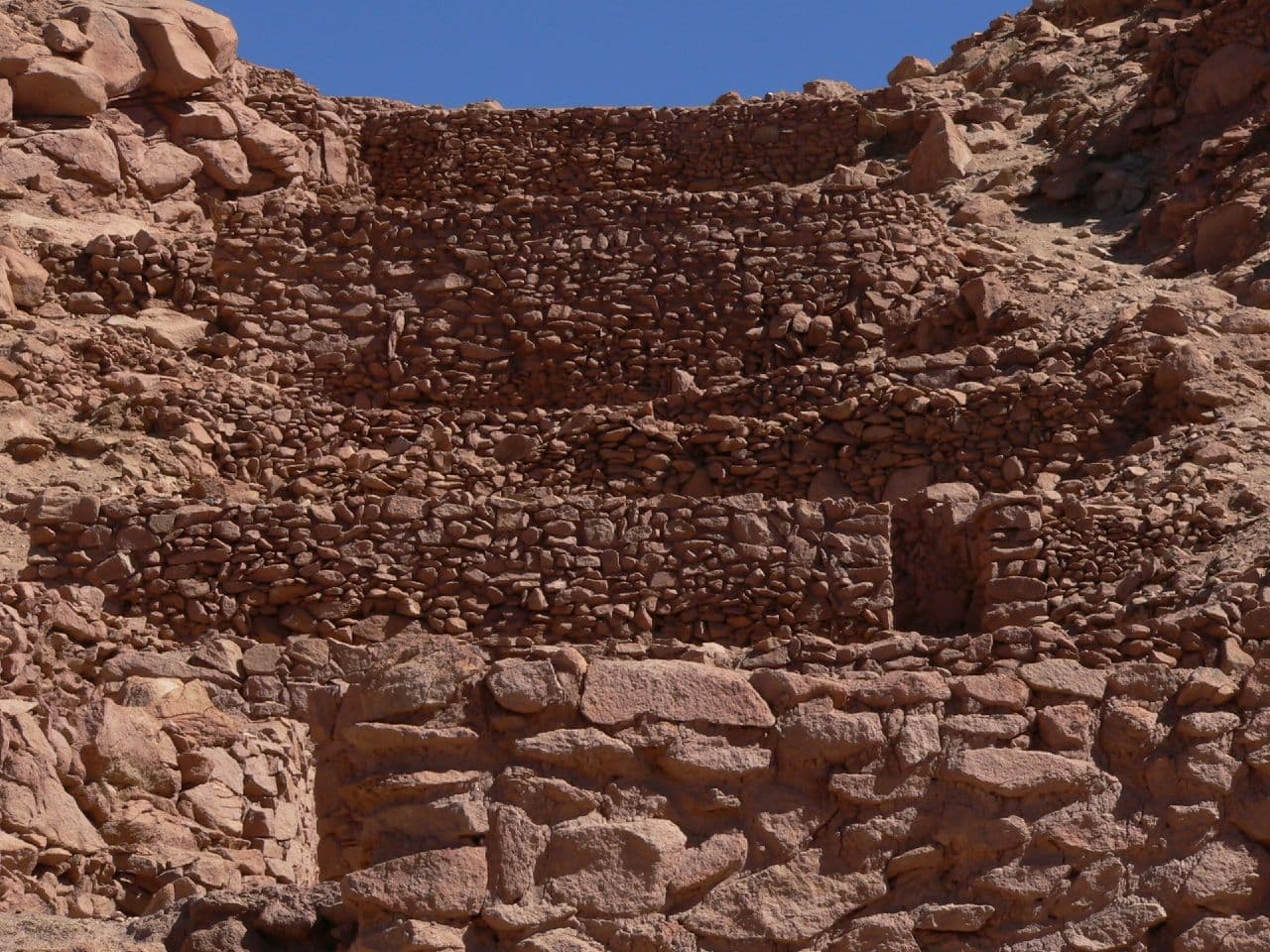
Pukarà de Quitor (Pre-Inca Ruins)
bitacoreta, CC BY 2.0, via Wikimedia Commons
Late afternoon light rakes across the stonework and valley — arrive by 3:30 PM for warm tones before the wind picks up near sunset.
Uneven, rocky terrain with some incline; move at an easy pace to manage the altitude and afternoon wind.
Lunch
Peregrino $$
Breakfast, Cafe, Crepes, Local · Near Museum of Atacama
A relaxed cafe near the museum with communal-friendly seating — good for solo travelers wanting an easy, unhurried lunch after a morning of quiet contemplation.
Dinner
Tahira $$
Local · Near Museum of Atacama
A laid-back local spot near the museum area serving Andean staples — a good low-key first dinner while you're still settling into the altitude.
Optional detour: Aldea de Tulor (Ancient Village)After Museum of Atacama and before Pukarà de Quitor
The circular stone foundations of this 2,400-year-old settlement offer an even quieter, more haunting counterpoint to the fortress at Quitor, especially rewarding for those drawn to archaeology. Skip if: It sits a bit further out and adds another ruins visit on a day already anchored by Quitor — skip if you'd rather conserve energy for acclimatization.
If it rains: Rain is exceptionally rare here, but if skies turn, the Museum of Atacama's indoor galleries can easily absorb an extra hour of unhurried browsing.

Ease into the trip with the Museum of Atacama's cool, quiet halls — arriving at opening means you'll likely have the mummies and ancient textiles almost to yourself, a gentle, low-exertion way to get your bearings before the desert's heat and altitude test you further. Take your time; this is a day for absorbing context, not covering ground.

After a lingering lunch, the pace shifts outdoors as you walk the flat river road out to Pukarà de Quitor. The climb up the fortress walls is short but the thin air makes it feel longer than it looks — go slow, drink water often, and let the 300-meter valley view below reward the effort.

Back in town as the light softens, settle into a local dinner at a spot that won't rush you — this is the town's rhythm, after all. The plaza starts filling with the evening's slow social energy, a good first taste of San Pedro's after-dark character before tomorrow's bigger desert day.

Desert & Salt Flats

Day 2: Salt, Flamingos, and the Color-Shifting Valley

A full desert day covering the Salar de Atacama's flamingo lagoons and the sunset spectacle of Valle de la Luna, with moderate walking (around 2-3 miles) across sandy, uneven terrain.

Wear
Sun hat, sunglasses, high-SPF sunscreen, moisture-wicking layers for daytime heat, and a warm windbreaker for the sharp temperature drop at sunset.
Budget
$55-75 USD (tour or transport costs, park entries, lunch, dinner, snacks/water)
50 min driveA tour van ride south through open desert, the town shrinking in the rearview mirror as volcanic peaks rise ahead.
8:00 AM - 11:00 AM
Salar de Atacama (Salt Flat & Flamingos) · morning · 180 min · Desert & Salt Flats South

Arrive before 8 AM and the lagoons are calm, the crowds absent, and the light still soft enough to catch flamingos — pink, Andean, and James species — wading through impossibly turquoise water rimmed in white salt crust. This is prime social territory too: most visitors join small group tours here, and the shared awe of the landscape makes easy conversation with fellow travelers.

Salar de Atacama (Salt Flat & Flamingos)
Photo by falco
Morning light before 9 AM brings out the sharpest contrast between the turquoise water, white salt, and pink flamingo plumage — by midday the light flattens and glares.
Flat salt-crusted paths, but sun exposure is intense with little shade — bring water and reapply sunscreen.
45 min driveA midday return toward town before backtracking west into the valley, with a good stretch of open desert road to decompress and rehydrate.
4:00 PM - 6:30 PM
Valle de la Luna (Moon Valley) · afternoon · 150 min · Desert & Salt Flats South

As the sun drops, the valley's wind-carved rock ignites — yellows, reds, and purples bleeding across the landscape in a slow chromatic shift that feels almost engineered for drama. Fall's earlier sunset means the show starts sooner than peak summer, so arrive by 4 PM to claim a good vantage point before the tour buses converge for the final light.

Valle de la Luna (Moon Valley)
Photo by TravelCoffeeBook
The last 30 minutes before sunset produce the most saturated color on the rock formations — position yourself at a dune crest facing west for the full gradient.
Sandy, uneven terrain with some dune climbing; scorching underfoot in direct sun, so proper footwear matters.
Lunch
Cafe esquina $
Breakfast, coffee, local, sandwich · Near Valle de la Luna
A casual, unfussy spot near Valle de la Luna good for a quick, solo-friendly bite before the afternoon's main event.
Dinner
Chiloe $$
Local · Near Valle de la Luna
A relaxed local restaurant near the valley cluster serving hearty regional dishes — a satisfying way to close out a long desert day.
Bendito Desierto $$
Local · Near Valle de la Luna
Another solid local option nearby with a warm, unpretentious atmosphere well-suited to dining alone.
If it rains: Rain is virtually nonexistent in this desert, but if conditions ever turn, the Museum of Atacama back in town offers a worthwhile indoor fallback to revisit or explore further.

Set out early, before the sun fully claims the sky, for the Salar de Atacama — the salt flat's turquoise lagoons and wading flamingos are at their most vivid and least crowded in these first hours. It's also a natural place to strike up conversation with other solo travelers on the same small-group tour, all equally stunned by the scenery.

After a relaxed lunch near the valley, the day's rhythm shifts from stillness to spectacle as you head to Valle de la Luna ahead of sunset. Arriving by 4 PM — earlier than you might in summer, given fall's shortened days — secures a quiet vantage point before the crowds arrive for the final light show.

As the valley's colors fade into dusk, head back toward town for a hearty local dinner — you've earned it after a day of heat, altitude, and walking. The evening cools quickly, so layer up as you wind down at a table that welcomes solo diners without a second glance.

Cosmos & High Desert

Day 3: Antennas on the Plateau, Stars Over the Desert

A quieter, awe-focused day visiting the ALMA observatory plateau followed by an evening stargazing excursion, with minimal walking (under 2 miles) but significant altitude exposure.

Wear
Warm layers for the high plateau's cool temperatures and thin air, plus a heavy jacket, gloves, and hat for the after-dark stargazing session when temperatures drop sharply.
Budget
$50-70 USD (stargazing tour, ALMA visit if permitted, dinner, snacks)
10:30 AM - 12:30 PM
Atacama Large Millimeter Array (ALMA – nearby) · midday · 120 min · High Desert Observatory & Stargazing

Sixty-six massive white antennas stand scattered across the barren Chajnantor plateau, and the isolation up here is profound — thin air demands conscious, deliberate breathing, and the sky is so clear you can sometimes spot stars even at midday. Visitor access is limited and often requires advance registration, so confirm current visiting arrangements before setting out; the observation platform itself rarely feels crowded even when it's open.

The antennas against deep blue plateau sky photograph best in the clear late-morning light before midday haze sets in.
High altitude here is significant — move slowly, stay hydrated, and consider skipping if you're still feeling altitude effects from earlier days.
30 min driveAn evening tour van ride out past the last lights of town, the darkness deepening with every kilometer until even the dashboard glow feels intrusive.
9:00 PM - 11:00 PM
Atacama Desert Stargazing · evening · 120 min · High Desert Observatory & Stargazing

By the time full darkness settles in — arrival after 8:30 PM ensures it — the Milky Way stretches overhead like a river of light, and a guide's telescope brings planets into sharp, startling focus. This is one of the best solo-traveler experiences in San Pedro: small groups gather shoulder to shoulder in the cold and quiet, swapping quiet gasps and easy conversation under skies unlike almost anywhere else on Earth.

Tripod and long exposure recommended if you're bringing a camera; otherwise, simply let your eyes adjust for the first 10-15 minutes for the fullest effect.
Cold night temperatures and extended standing/sitting outdoors — dress in serious layers regardless of how mild the day felt.
Lunch
Grado 6 $$
Regional · Near Atacama Desert Stargazing / ALMA area
A solid regional restaurant convenient to the observatory cluster's return route, good for refueling after a morning at altitude.
Dinner
Petro Pizza $
Pizza · Near Atacama Desert Stargazing
A casual, low-key pizza spot near the stargazing departure point — an easy, sociable pre-tour dinner that won't weigh you down before a cold night outdoors.
Salón de Té O2 $
Cafe/Tea · Near Atacama Desert Stargazing
A cozy tea and cafe option for a lighter pre-tour meal or warm drink before heading into the cold desert night.
Optional detour: PeregrinoBetween ALMA and the evening stargazing tour
A relaxed cafe stop for coffee and a light bite to bridge the long midday gap before the evening excursion. Skip if: Skip if you're prioritizing rest at your accommodation to conserve energy for the late, cold stargazing session.
If it rains: Clear skies are the norm here, but if clouds roll in and obscure stargazing, the Museum of Atacama remains a worthwhile indoor option to revisit for a deeper second look at the exhibits.

Spend the late morning out on the Chajnantor plateau among ALMA's antennas, a strange and humbling landscape where the silence and thin air make the scale of the place sink in slowly. Move deliberately here — the altitude is higher than town, and this is not a day to push through discomfort.

Use the afternoon to rest, eat well, and let your body recover ahead of tonight's main event — a lighter regional lunch and some downtime back in town will serve you far better than cramming in another stop.

As night falls, head out into the desert darkness for the stargazing tour, where the absence of light pollution turns the sky into something almost unbelievable. It's a fitting, quiet-awe finale to the trip — cold, communal, and a reminder of just how far from everything you've traveled.

Want to tweak this trip?

Our AI planner can customize this itinerary to your exact dates, interests, and travel style.

Customize This Itinerary
Good to Know

Restaurant details (hours, menus, availability) change frequently. Check current hours before visiting, especially in seasonal destinations.

Dietary compatibility tags are general guidance. If you have severe allergies, confirm directly with the restaurant.

Travel tips are general guidance, not professional safety advice. Check government advisories for latest information.

All prices are approximate and may vary seasonally.

We use cookies to improve your experience and analyze site usage. Essential cookies are always active. You can customize your preferences or accept all cookies. Cookie Policy