4 DaysCouples8 Stops

San Pedro de Atacama, Chile

4-Day Itinerary for Couples

Salt, Silence, and Stars: 4 Days in San Pedro de Atacama

Salt, Silence, and Stars: 4 Days in San Pedro de Atacama

The desert here doesn't whisper, it hums — a dry, mineral silence broken only by wind combing over salt crust and the occasional flamingo's wingbeat. At 2,400 meters, colors saturate strangely and the sky at night turns almost solid with stars, making San Pedro one of the rare places where slowing down feels less like a choice and more like the only option.

At a Glance

Climate & Weather
Spring brings mild days, cool nights, and a slightly higher chance of rain than the bone-dry summer, plus early wildflower blooms in sheltered pockets. Pack breathable layers, a warm layer for after sunset, a windbreaker, high-SPF sunscreen, sunglasses, and a light rain shell just in case.
Getting Around
The town center is entirely walkable in 10-15 minutes end to end. Excursions to Valle de la Luna, the Salar, Tulor, and ALMA require a vehicle — join a small-group tour or hire a private driver, as distances and permit requirements make independent access impractical.
Budget
Budget roughly $90-140 USD per person per day for a couple, covering intimate dinners, one upscale meal, and mid-range guided excursions, excluding lodging.
Safety
San Pedro is very safe for couples walking at night around the plaza; the real risks are altitude and sun. Take it easy on day one, hydrate constantly, and book desert and stargazing excursions only through established operators given the remote terrain.
Connectivity
Cell signal is reliable in town but drops off quickly in the desert clusters and disappears entirely near ALMA and the stargazing sites. Most hotels and cafes offer WiFi; treat excursion time as a deliberate digital detox.
Local Tips
Book the ALMA visitor center slot and any stargazing tour well ahead — spring shoulder season fills quickly on weekends. Many restaurants and shops close for siesta in the early afternoon, so plan lunch before 1:30 PM or after 4 PM. Bring cash, as card acceptance is inconsistent outside the main plaza.

Highlights

  • Sunset over the wind-carved ridgelines of Valle de la Luna
  • Flamingos wading turquoise lagoons on the Salar de Atacama
  • Ancient fortress walls of Pukarà de Quitor at golden hour
  • 3,000-year-old mummies preserved in desert silence at the Padre Le Paige museum
  • A night sky so dense with stars it looks lit from within
  • ALMA's 66 antennas listening to the cosmos on a barren plateau
  • Slow adobe-town evenings around the Plaza de Armas

Day-by-Day Plan

Arrival & Orientation

Day 1: Arrival & the Slow Hum of the Oasis

A gentle half-day of settling into altitude and the town's adobe rhythm, with roughly 2 miles of easy walking.

Wear
Loose breathable layers, sunhat, sunglasses, closed walking shoes, and a light jacket for the evening chill.
Budget
$60-90 per person
11:00 AM - 1:00 PM
Museum of Atacama (Padre Le Paige) · midday · 120 min · Central San Pedro & Archaeological Foothills

Cool adobe walls hold back the desert heat while glass cases reveal mummies with hair and skin still intact after three millennia — a hush settles over the room that feels almost reverent. This is an easy, low-exertion introduction to Atacameño history that suits a body still adjusting to altitude, and the dim, climate-controlled interior is a welcome contrast to the glare outside. Arrive by 9:30 if possible; by midday small tour groups begin filtering through, though it rarely feels crowded even then.

Photography of the mummies is typically restricted — instead, focus your camera on the textile displays near the entrance, lit softly from the side.
Flat, air-conditioned interior with paced walking — ideal for an easing-in first day.
10 min driveA short hop out of town on a dusty unpaved road, the museum's quiet giving way to open desert almost immediately.
3:30 PM - 5:00 PM
Pukarà de Quitor (Pre-Inca Ruins) · afternoon · 90 min · Central San Pedro & Archaeological Foothills

Stone walls stack up the rocky outcrop like the desert's own skeleton, and from the top the Rio San Pedro threads through the valley 300 meters below. The afternoon wind picks up here, cool against sun-warmed skin, and the thinness of the air makes each switchback feel earned. Go after 3:30 and the light turns low and gold across the fortress walls, with the worst of the midday tour crush already gone.
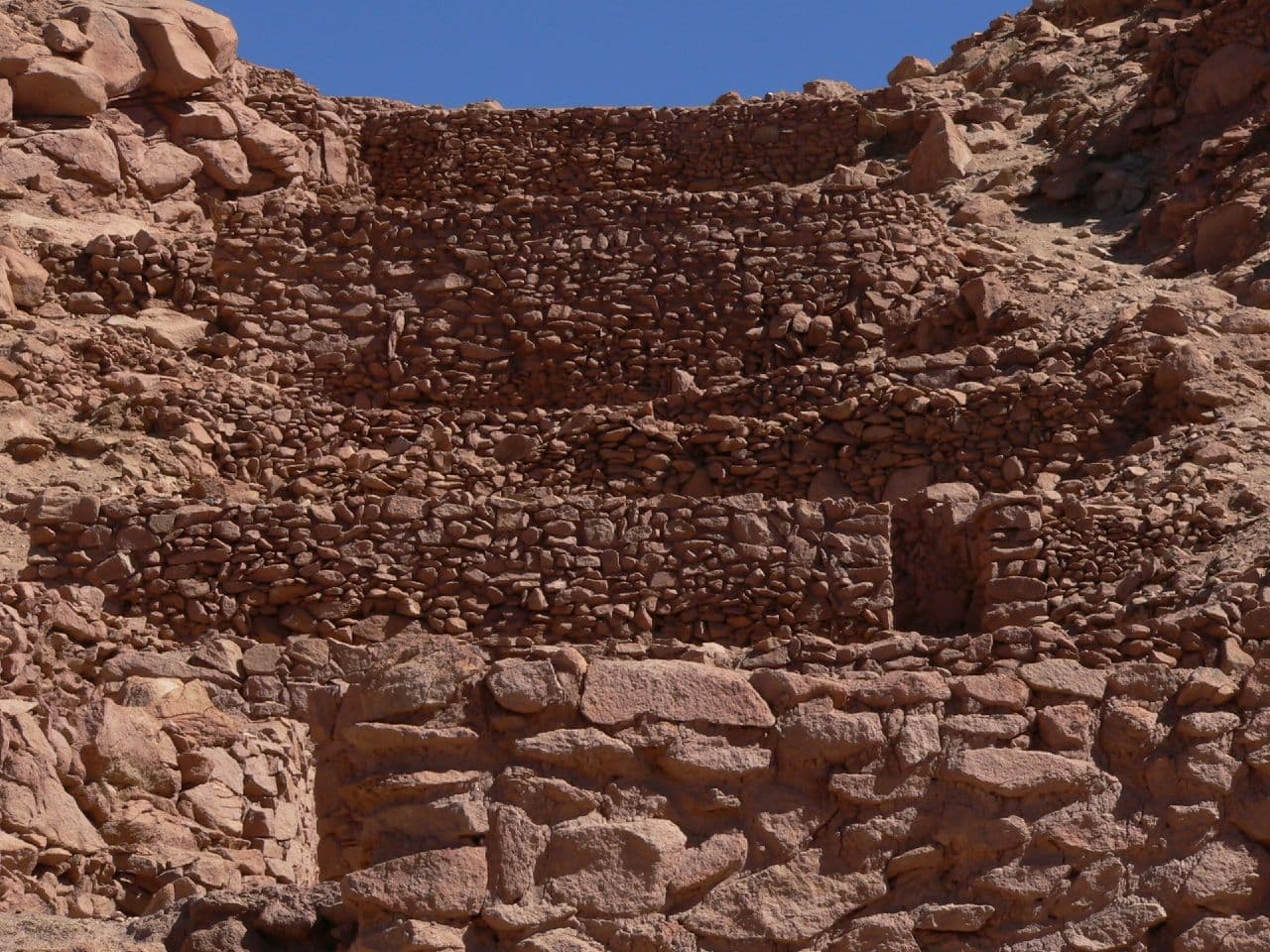
Pukarà de Quitor (Pre-Inca Ruins)
bitacoreta, CC BY 2.0, via Wikimedia Commons
Climb to the upper terraces for a wide shot of the valley and river — best light around 4:30-5:00 PM as the walls turn amber.
Uneven, rocky terrain with some incline; moderate effort recommended only after a few hours of acclimatization.
Lunch
Peregrino $$
Breakfast, Cafe, Crepes, Local · Near Museum of Atacama
A relaxed spot for crepes and coffee after the museum, with a laid-back pace that suits a first, jet-lag-easing day.
Dinner
Tahira $$
Local · Near Museum of Atacama / town center
Quiet, unfussy local cooking near the plaza — a gentle first dinner without the fuss of a reservation-heavy splurge.
Optional detour: Aldea de Tulor (Ancient Village)After Museum of Atacama and before Pukarà de Quitor
Its circular stone foundations against ochre desert are hauntingly quiet and rarely crowded, a meditative counterpoint to the museum. Skip if: Two ruin-adjacent history stops back-to-back on an arrival day risks overloading a body still adjusting to the altitude — save it for another day if energy is low.
If it rains: If it rains, extend time at the Museum of Atacama (Padre Le Paige) — its indoor exhibits cover the same cultural ground as Tulor and Quitor without exposure to the elements.

The first hours in San Pedro are best spent slowly — check in, drink water, and let the body adjust before doing much of anything. A short stroll through the plaza area gets you oriented without taxing lungs still adapting to elevation.

The Museum of Atacama offers a low-key, air-conditioned introduction to the region's deep past before the afternoon shifts outdoors to Pukarà de Quitor, where the desert wind and golden light replace the museum's hush with something more elemental.

Dinner stays close to town and unhurried — this is a night for settling in, not sightseeing, with an early return to accommodation to rest ahead of tomorrow's fuller day.

Desert & Salt Flats

Day 2: Salt, Sky, and Flamingo Light

A full day in the southern desert cluster, covering salt flats and mineral lagoons with roughly 1.5 miles of walking across uneven terrain.

Wear
Sun-protective layers, brimmed hat, sunglasses, sturdy closed shoes for salt crust, and a warm layer for the cooler morning hours.
Budget
$100-150 per person including guided excursion
50 min driveA quiet pre-dawn drive south, the town's lights fading behind as the desert opens into pale morning color.
7:30 AM - 10:30 AM
Salar de Atacama (Salt Flat & Flamingos) · morning · 180 min · Desert & Salt Flats South

Arrive before 8:00 and the salt flat is nearly silent, three species of flamingo — pink, Andean, James — wading through impossibly turquoise lagoons against a backdrop of distant volcanoes. The thin air makes movement feel deliberate, but the reward is watching the birds catch the low morning light before tour buses arrive en masse by mid-morning. It's a slow, romantic scene best absorbed rather than rushed.

Salar de Atacama (Salt Flat & Flamingos)
Photo by falco
Shoot low, wide angles just after sunrise when the water mirrors the volcanoes and the flamingos are most active.
Mostly flat salt-crust walking, but uneven in places — comfortable, closed-toe shoes recommended.
Lunch
Chiloe $$
Local · Near Valle de la Luna
A relaxed local spot near Valle de la Luna, good for refueling with regional flavors before the afternoon's dramatic landscape.
Dinner
Grado 6 $$$
Regional · Near town center
An upscale regional menu worth booking ahead for — a good candidate for the trip's splurge dinner, with wine pairings suited to a slow evening.
If it rains: If it rains, shift focus to the Museum of Atacama in town for an indoor afternoon, saving Valle de la Luna's sunset for a clearer evening later in the trip if the itinerary allows flexibility.

Pre-dawn departure trades a little sleep for flamingos catching first light on the Salar's turquoise lagoons — an experience that rewards the early start tenfold, with the crowds arriving just as you're ready to move on.

After a long, unhurried lunch back toward town, the pace eases into a rest window before the day's second act: the dramatic color-shifting rock formations of Valle de la Luna, timed for late afternoon.

Valle de la Luna's sunset is the day's emotional high point, followed by a well-earned splurge dinner back in town — reserve ahead, especially for a coveted table with good wine to close out the evening slowly.

Canyon Light & Color

Day 3: Moonscapes and Golden Hour

An afternoon-focused day centered on Valle de la Luna's shifting light, with light walking of under 2 miles across sandy, wind-carved terrain.

Wear
Layered clothing for a temperature drop after sunset, closed shoes for loose sand, and a scarf or buff against blowing dust.
Budget
$70-110 per person
25 min driveA short drive west from town, the road rising gently into a landscape that looks increasingly lunar with every mile.
4:00 PM - 7:00 PM
Valle de la Luna (Moon Valley) · afternoon · 180 min · Desert & Salt Flats South

The rock here doesn't just catch light, it seems to generate its own — yellows, deep reds, purples bleeding across wind-carved ridges as the sun drops. Arriving around 4:00 PM beats the sunset rush and gives time to wander the dunes and overlooks before finding a quiet perch for the main event. The scorching daytime heat has eased by then, though the ground still holds warmth underfoot, and the whole valley seems to exhale as the light softens.

Valle de la Luna (Moon Valley)
Photo by TravelCoffeeBook
Position yourself at one of the higher overlooks by 6:15 PM — the last twenty minutes before sunset produce the most saturated color shifts across the ridgelines.
Loose sand and some scrambling on viewpoint trails; manageable but not ideal for limited mobility.
Lunch
La Esquina del Sol $$
Local · Near Valle de la Luna
An easygoing local lunch spot near Valle de la Luna, well suited to a slow midday before the afternoon's main event.
Dinner
Bendito Desierto $$
Local · Near Valle de la Luna
A warm, unpretentious dinner option after sunset, close enough to Valle de la Luna to avoid a long drive back before eating.
Optional detour: Cafe esquinaBefore entering Valle de la Luna in the early afternoon
A relaxed coffee and light bite stop to ease into the afternoon before the valley's more intense sensory experience. Skip if: Skip if lunch already ran long — no need to double up on café stops before a substantial dinner.
If it rains: If it rains, the Museum of Atacama makes a suitable indoor substitute for the afternoon, with Valle de la Luna's sunset rescheduled if the itinerary has any flexible days remaining.

The morning is left deliberately open and slow — a late breakfast, a wander through the plaza's shops, and time to simply rest after two active days, honoring the pace couples tend to want on a desert getaway.

The afternoon belongs entirely to Valle de la Luna, arriving early enough to explore the dunes and rock formations before the crowds gather for sunset, then settling in for the valley's slow-motion light show.

Dinner afterward is unhurried and close by, letting the golden-hour glow linger in memory before an early return to rest ahead of the next late-night stargazing excursion.

Cosmos & High Desert

Day 4: Antennas, Altitude, and a Sky Full of Stars

A day split between the remote high-altitude plateau and a late-night stargazing finale, with minimal walking under 1 mile.

Wear
Heavy layers for the high plateau's cold and wind, plus a very warm coat, hat, and gloves for the after-dark stargazing session.
Budget
$90-140 per person including stargazing tour
90 min driveA long, climbing drive up onto the plateau, the vegetation thinning to nothing as the road gains altitude — a good stretch for a scenic midpoint pause given the distance.
9:30 AM - 12:00 PM
Atacama Large Millimeter Array (ALMA – nearby) · morning · 150 min · High Desert Observatory & Stargazing

Sixty-six white antennas stand scattered across a barren plateau so high and clear that stars are sometimes visible even in daylight — a strange, almost eerie sight for a stargazing plateau visited by daylight. The thin air here demands slow, conscious breathing, and the isolation is profound even with other visitors nearby. Reserve well ahead, as visitor center slots are limited and fill quickly, especially on weekends in shoulder season.

The observation platform's wide shot of the antenna array against the sky is best in the crisp, clear light of late morning, before any afternoon cloud buildup.
High altitude requires slow movement and deep breathing; not recommended immediately after strenuous activity.
20 min driveA short evening drive out from town, headlights carving the only light through an already-darkening desert.
9:00 PM - 11:00 PM
Atacama Desert Stargazing · evening · 120 min · High Desert Observatory & Stargazing

Out here, darkness itself seems to glow — the Milky Way spills across the sky like a river of light, and the desert's absolute silence is broken only by a guide's hushed voice pointing out planets bright as small moons. This is the trip's quiet, splurge-worthy centerpiece for couples: warm blankets, hot drinks, and an unobstructed view of the cosmos rarely matched elsewhere on Earth. Arriving after 8:30 PM ensures full darkness and the clearest possible sky.

Bring a tripod if photographing the night sky — long exposures here capture detail invisible to the naked eye, best framed low with a horizon silhouette.
Cold night temperatures and standing for periods outdoors — dress warmer than feels necessary.
Lunch
Salón de Té O2 $$
Cafe/Tea · Near town center
A calm midday stop back in town after the plateau visit, good for warming up with tea and a light meal.
Dinner
Petro Pizza $$
Pizza · Near town center
An easy, low-key dinner before the late-night stargazing tour — simple, satisfying, and quick to finish before departure.
If it rains: If clouds roll in and stargazing conditions are poor, most operators will reschedule or offer a planetarium-style indoor briefing instead — confirm cancellation policy when booking.

The morning heads up onto the high plateau to ALMA, a strange and rarefied landscape of white antennas against thin blue sky — a slower, contemplative counterpoint to the earlier days' more visually dramatic stops.

The afternoon is intentionally light after the altitude exposure of the plateau — a return to town, an easy meal, and rest ahead of the night's main event.

After dark, the desert delivers its final and most memorable scene: a stargazing session under one of the clearest skies on the planet, a fittingly quiet, awe-filled close to the trip before an early return for the night.

Want to tweak this trip?

Our AI planner can customize this itinerary to your exact dates, interests, and travel style.

Customize This Itinerary
Good to Know

Restaurant details (hours, menus, availability) change frequently. Check current hours before visiting, especially in seasonal destinations.

Dietary compatibility tags are general guidance. If you have severe allergies, confirm directly with the restaurant.

Travel tips are general guidance, not professional safety advice. Check government advisories for latest information.

All prices are approximate and may vary seasonally.

We use cookies to improve your experience and analyze site usage. Essential cookies are always active. You can customize your preferences or accept all cookies. Cookie Policy