3 DaysSolo Traveler12 Stops

Kyoto, Japan

3-Day Itinerary for Solo Traveler

Golden Gates & Quiet Groves: 3 Days in Kyoto

Golden Gates & Quiet Groves: 3 Days in Kyoto

Kyoto in autumn moves at the pace of falling leaves — unhurried, golden, and quietly dramatic. This three-day arc traces the city's western bamboo groves, northern gilded temples, and eastern lantern-lit lanes, timed for the solo traveler who wants both solitude at dawn and easy conversation by dusk.

At a Glance

Climate & Weather
Fall in Kyoto (September–November) brings crisp, cooling air with daytime highs around 18-22°C (64-72°F) dropping to 8-12°C (46-54°F) at night by late November. Foliage peaks mid-to-late November in the city, earlier in the mountains around Kurama. Pack breathable layers, a packable insulated jacket for evenings, and comfortable broken-in walking shoes — temple floors and gravel paths are unforgiving in anything stiff.
Getting Around
Kyoto's bus and rail network covers nearly everything; a Kansai ICOCA card (tap-to-pay) makes local trains, buses, and even some convenience stores frictionless. Walking is the best way to experience each cluster once you arrive — most days here involve 3-5 miles on foot. Taxis are safe, metered, and easy to flag if fatigue sets in.
Budget
Budget roughly ¥6,000-9,000 ($40-60 USD) per day for food and activities at a standard pace, including temple entry fees (¥400-600 each), one sit-down meal, and casual bites. Cash is still preferred at smaller temples, markets, and family-run restaurants — carry ¥10,000-15,000 in cash and withdraw from 7-Eleven ATMs, which reliably accept foreign cards.
Safety
Kyoto is exceptionally safe for solo travelers, including at night in central districts like Gion and Kawaramachi. Standard precautions apply: keep valuables secure in crowded market and shrine areas, watch footing on wet stone paths (especially after fall rain in Kurama's mountain trails), and note that some temples close entry 30 minutes before posted closing time.
Connectivity
4G/5G coverage is reliable citywide; pocket WiFi rental or a local eSIM (available at Kansai Airport or online before arrival) is recommended since public WiFi is inconsistent. Many cafes and konbini offer free WiFi as backup.
Local Tips
Arrive at major temples 30-45 minutes before official opening in fall — foliage season draws heavier crowds than summer, and the light is best in the first hour. Sunset arrives by 5-5:30 PM in November, so front-load outdoor sightseeing and save markets, izakayas, and covered attractions for after dark. Solo diners should seek out counter seating at ramen shops and market stalls, where conversation with neighbors flows easily.

Highlights

  • Sunrise stillness inside Arashiyama's bamboo corridor before the crowds arrive
  • Golden Pavilion mirrored in still water at opening hour
  • Thousands of vermillion torii gates climbing Fushimi Inari's mountain
  • Silver Pavilion's raked gravel waves and the Philosopher's Path in fall color
  • Sake tasting in Fushimi's centuries-old brewery lanes
  • Communal counter dining where solo travelers strike up easy conversation
  • 1,001 golden Kannon statues in hushed, reverent silence

Day-by-Day Plan

Arrival & Arashiyama

Day 1: Bamboo Whispers and Riverside Light

A gentle first day easing into Kyoto's rhythm through Arashiyama's bamboo groves, riverside temples, and scenic rail — roughly 4 miles of walking at a relaxed pace.

Wear
Layered breathable clothing, a light jacket for cool morning air, sturdy walking shoes that slip off easily for temple interiors.
Budget
¥7,000-9,000 (~$47-60 USD) including temple fees, lunch, dinner, and the scenic railway ticket.
7:00 AM - 8:15 AM
Arashiyama Bamboo Grove · morning · 75 min · Arashiyama & Sagano

Arrive before 7:30am and the grove belongs to you — thin bamboo stalks creak and sway overhead in a hypnotic green rhythm, gravel crunching underfoot the only other sound. By 9am this path fills shoulder-to-shoulder; the early light filtering through the stalks is also simply better for photos. A gentle, low-effort start that eases you into Kyoto's pace without overwhelming a jet-lagged first morning.

Arashiyama Bamboo Grove
Photo by darkness_s
Shoot straight up the path around 7:15am when the sun angles low through the stalks — no crowds to edit out.
Flat gravel path, easy for solo walkers of any fitness level.
5 min walkA short stroll along the bamboo grove's southern exit, the path narrowing into temple approach stone.
8:25 AM - 9:40 AM
Tenryu-ji Temple · morning · 75 min · Arashiyama & Sagano

This UNESCO Zen masterpiece rewards the unhurried — the pond mirrors sky and mountain with startling clarity, and by arriving before 8:30am you'll share the raked gravel paths with only a handful of monks and early risers. Cypress and moss scent the air; temple bells occasionally mark the hour. Solo travelers often find a bench here simply to sit and let the quiet settle in.

Tenryu-ji Temple
Photo by Odd Roar Aalborg — CC BY-SA 4.0
The pond-and-mountain reflection is best around 9am when the water is still and the light hits the far ridge.
Some uneven stone paths in the garden; main hall is flat and wheelchair-passable.
10 min walkA gentle walk past riverside shops toward Torokko Saga Station, vendors setting up for the day.
10:15 AM - 11:15 AM
Sagano Scenic Railway · midday · 60 min · Arashiyama & Sagano

Open-sided carriages rattle through the Hozu Gorge, bamboo blurring at arm's length and the river's mineral scent rising up from below. It's a low-effort, high-reward hour — perfect after two temple stops, and a great icebreaker moment since seating is communal and fellow solo travelers often end up chatting about the view.
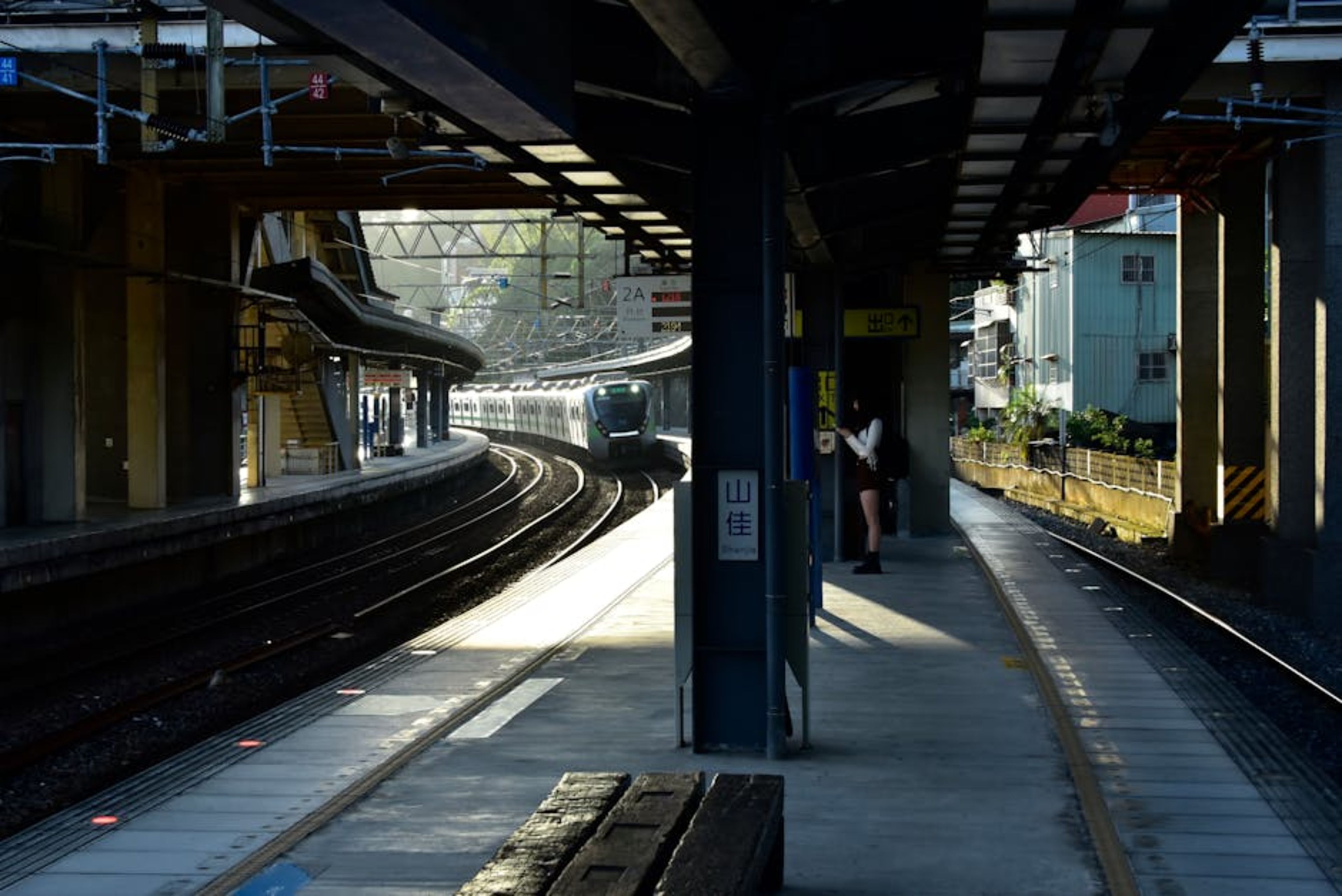
Sagano Scenic Railway
Photo by ShulinMark Lee
Sit on the river side (right-hand seats northbound) for the best gorge views.
Some steps to board; station staff can assist if needed.
15 min walkA riverside walk crossing Togetsukyo Bridge, pausing for lunch before the climb (see dining below).
1:00 PM - 2:30 PM
Monkey Park Iwatayama · afternoon · 90 min · Arashiyama & Sagano

A short, steep climb rewards you with macaques who largely ignore visitors, foraging freely against a backdrop of distant temple bells and valley views. October-November is the quietest window for this stop, and the elevated overlook doubles as one of the better panoramic photo spots in Arashiyama. Energy shifts from contemplative to playful here — a nice contrast after a morning of temples.
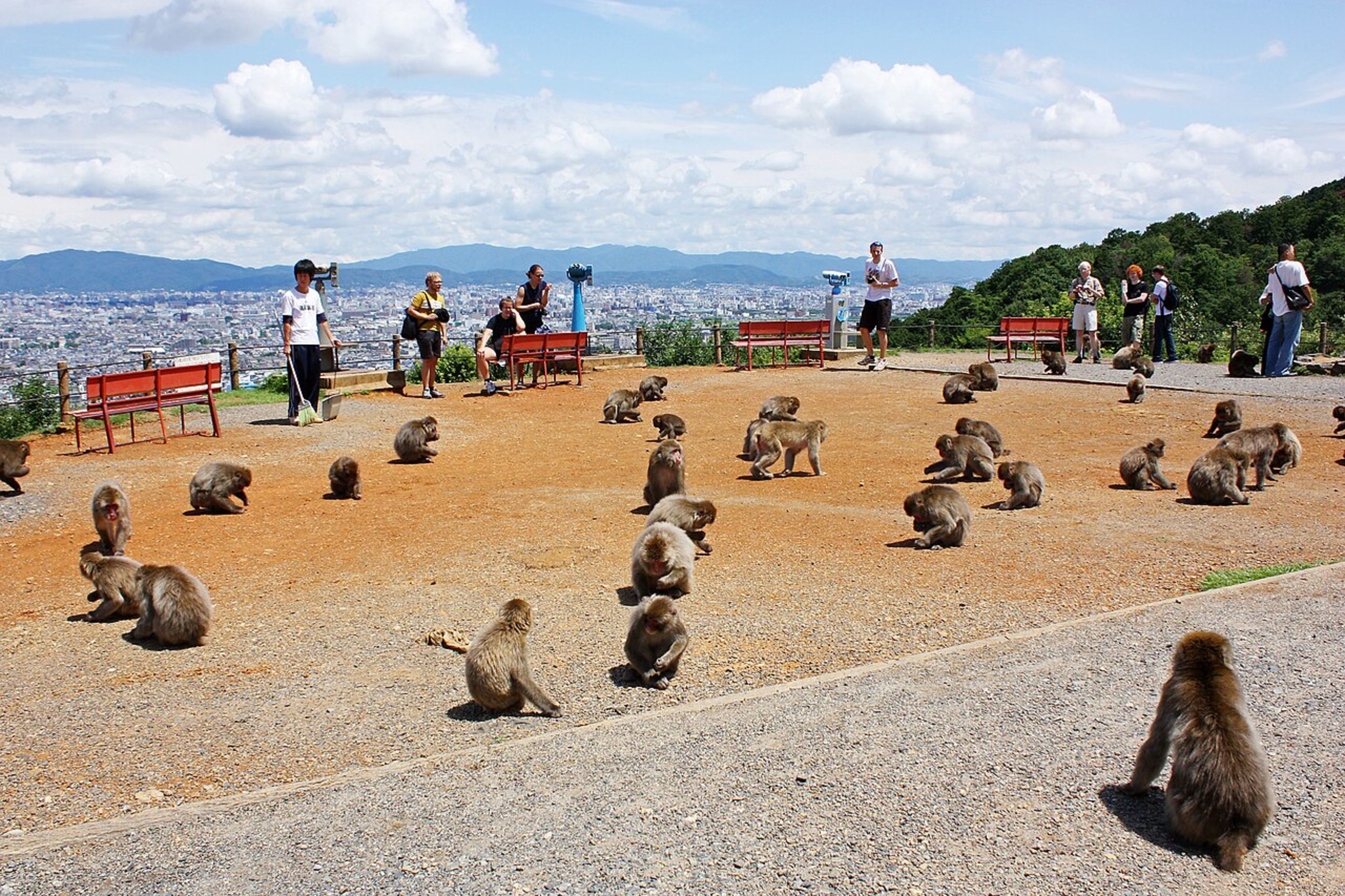
Monkey Park Iwatayama
Photo by Andrea Schaffer from Sydney, Australia — CC BY 2.0
The summit viewpoint over the Kyoto basin is best in early-to-mid afternoon light.
Steep 20-minute uphill hike with steps — not wheelchair accessible; wear supportive shoes.
Lunch
mon pot $$
Local · Near Arashiyama Bamboo Grove
A casual, unfussy spot near the bamboo grove exit — easy solo seating and a good pause before the afternoon climb.
Dinner
CoCo壱番屋 $
Curry, Japanese · Near Monkey Park Iwatayama
A reliable, solo-friendly curry chain with counter seating and endless customization — comforting after a full day of walking.
Optional detour: Katsura Imperial VillaAfter Monkey Park Iwatayama and before dinner
A serene, reservation-only garden almost never crowded, offering a masterclass in Japanese landscape design. Skip if: Requires advance reservation through the Imperial Household Agency, which makes it impractical to add spontaneously on a first day.
If it rains: If rain moves in, shift the day toward Tenryu-ji's covered temple halls and the Sagano Scenic Railway's enclosed carriages (available on rainy days), saving the Monkey Park hike for a drier afternoon.

The day begins in near-silence: bamboo stalks swaying and creaking overhead in the grove's cool morning air, the gravel path leading you deeper into green shadow before the crowds arrive. From there, Tenryu-ji's mirror-still pond and moss-scented gardens offer a slower, more contemplative register — a gentle way to acclimate without overloading a travel-weary first day.

After the scenic railway's open-air rattle through the Hozu Gorge, energy shifts upward — literally — as the climb to Monkey Park Iwatayama trades temple hush for macaques going about their business against sweeping valley views. It's playful, physical, and a welcome contrast to the morning's stillness.

Dinner leans simple and warm — a curry counter near the park entrance, easy for solo diners and open to quiet conversation with neighboring tables. An early night is well-earned; tomorrow's golden pavilion awaits before dawn crowds descend.

Northern Temples & Sacred Gates

Day 2: Gold, Stone, and Mountain Air

A full day spanning Kyoto's golden pavilion, introspective temple courtyards, and the thousand-gated mountain shrine of Fushimi Inari — roughly 5 miles of walking with moderate intensity.

Wear
Comfortable hiking-capable shoes for Fushimi Inari's stone steps, a warm layer for cool morning temple visits, and a hat for midday sun on open shrine paths.
Budget
¥8,000-10,000 (~$54-67 USD) including temple entry, lunch, and dinner.
8:00 AM - 9:00 AM
Kinkaku-ji (Golden Pavilion) · morning · 60 min · Northern Temples & Mountains

Arrive right at opening and the Golden Pavilion floats above mirror-still water in near solitude — burnished gold, incense drifting past polished railings, the air tasting clean and mineral. By 9:30am the chaos begins; this early window is the entire difference between a meditative encounter and a shuffling crowd.

Kinkaku-ji (Golden Pavilion)
Photo by Acres of Film
The classic reflection shot is best just after opening when the pond is undisturbed by wind or crowds.
Paved paths throughout, gently sloped in sections.
15 min transitA short bus ride north through residential Kyoto streets, temple rooftops passing beyond the window.
9:45 AM - 11:15 AM
Daitoku-ji Temple · midday · 90 min · Northern Temples & Mountains

Kyoto's most introspective temple compound rewards slow wandering through successive courtyards — weathered gates, raked gravel patterns catching the light, wind through bamboo the only sound. This is deliberately paired after Kinkaku-ji's intensity: a quieter, more solitary counterpoint before the day's climb at Fushimi Inari.
Daitoku-ji Temple
Photo by Rory Hyde — CC BY-SA 2.0
The gravel courtyards photograph best in soft midday light without harsh shadows.
Some sub-temples require separate entry and have uneven stone thresholds.
35 min transitA train transfer south across the city, watching Kyoto's rooftops give way to Fushimi's wooded hills.
1:00 PM - 3:00 PM
Fushimi Inari Shrine · afternoon · 120 min · Southeast: Fushimi & Momoyama

Thousands of vermillion torii gates stack up the mountainside, cedar and dew scenting the air as bells echo from below. Midday brings real crowds, but the climb thins them out fast — push past the first viewpoint and the gates quiet considerably, rewarding solo hikers willing to go further. This is Kyoto's most photographed pilgrimage, and walking it alone at your own pace is part of its appeal.
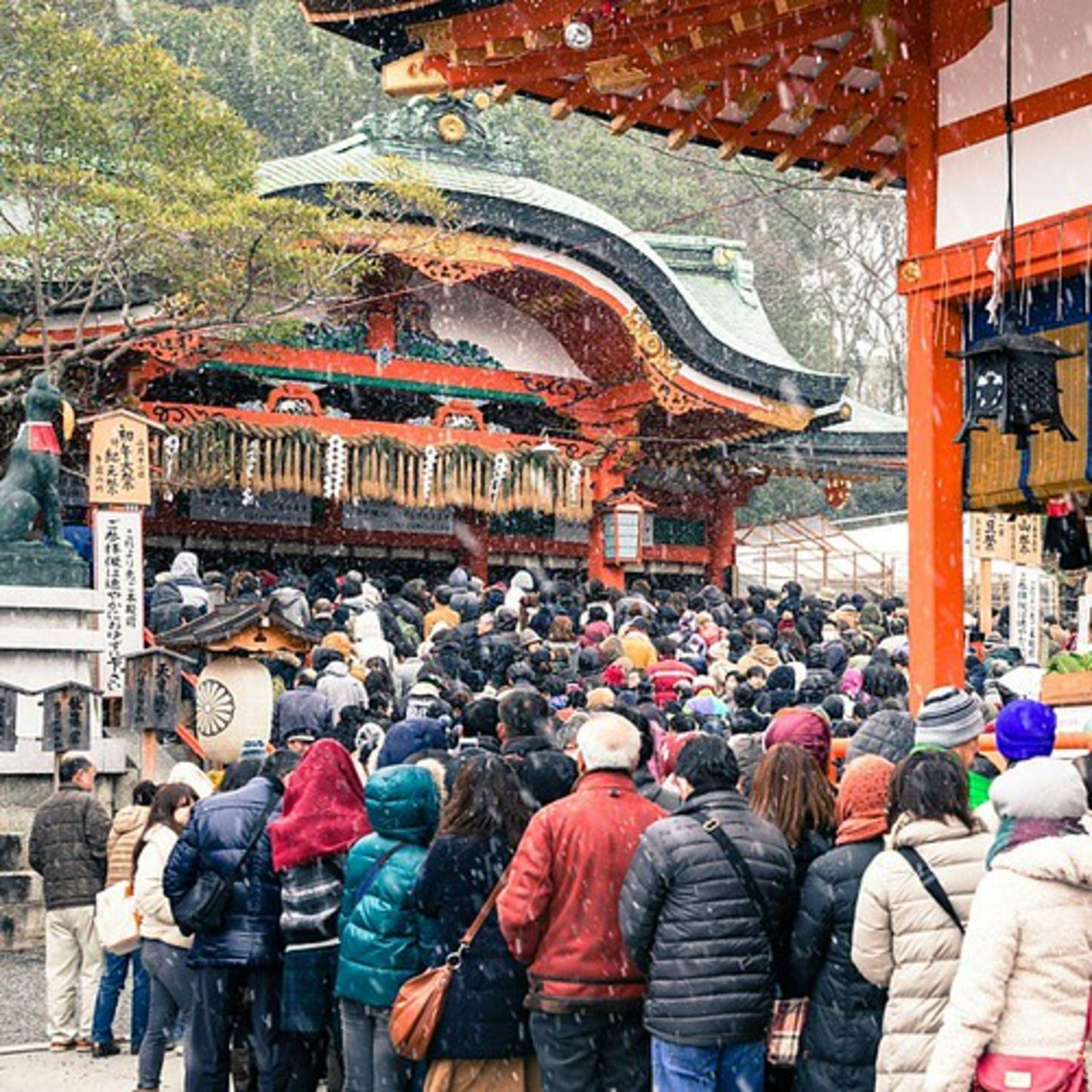
Fushimi Inari Shrine
Photo by ヘザー heza
The tunnel-like gate corridors near the base are iconic, but the upper viewpoints offer sweeping city views with far fewer people.
Full summit hike involves significant stairs and uneven terrain; the lower gate sections are accessible to most fitness levels.
20 min walkA descent from the shrine's lower gates into flat canal-side streets, temple bustle fading into quiet water channels.
4:00 PM - 5:30 PM
Fushimi Sake District · evening · 90 min · Southeast: Fushimi & Momoyama

The yeast-and-koji tang of fermentation fills these narrow lanes as wooden brewery doors frame glimpses of dark cellars. Weekday late afternoon is the sweet spot — quieter than midday, and several tasting rooms welcome solo visitors at shared counters, an easy way to strike up conversation over a sake flight after a long day on your feet.
Fushimi Sake District
Photo by Edited by Yama'imo Group (やまいも会). Published by Shigetoshi Kura'oka (倉岡繁利); located at Kami-Ukawa Village, Takeno Region, Kyoto Prefecture. — Public domain
Golden hour light on the canal-side wooden facades around 5pm is especially warm in fall.
Flat, walkable streets throughout the district.
Lunch
CoCo壱番屋 $
Curry, Japanese · Near Kinkaku-ji
A dependable counter-seating curry stop near Kinkaku-ji, good for solo diners wanting a quick, filling midday meal.
Vertigo $$
Italian · Near Daitoku-ji Temple
A relaxed change of pace near Daitoku-ji if you want something lighter than another rice-bowl lunch.
Dinner
cafe BLUE $$
Italian · Near Fushimi Sake District
A cozy spot in the sake district for unwinding after the shrine climb, with a relaxed pace suited to solo dining.
Kiriyama Coffee $
Cafe/Coffee · Near Fushimi Sake District
A quiet coffee stop if you'd rather wind down slowly before heading back into central Kyoto.
Optional detour: Daigo-ji TempleAfter Fushimi Inari Shrine and before Fushimi Sake District
A mist-shrouded pagoda amid ancient forest offers a deeply peaceful contrast to Fushimi Inari's crowds, especially beautiful in fall foliage. Skip if: It adds significant travel time and a second temple-heavy stop in one day — better suited to travelers with an extra half-day to spare.
If it rains: If rain arrives, prioritize Daitoku-ji's covered temple interiors and consider shifting Fushimi Inari to late afternoon when rain often lightens — the gates are genuinely atmospheric in mist, just watch footing on wet stone steps.

The day opens with gold: Kinkaku-ji's pavilion floating above still water in the first hour of light, before the crowds arrive to shatter the calm. From there, Daitoku-ji's quiet courtyards offer a deliberate slowdown — gravel, shadow, and wind through bamboo replacing the golden spectacle with something more introspective.

The mood shifts entirely at Fushimi Inari, where thousands of vermillion gates climb the mountainside and the pace turns physical. Crowds thin dramatically the higher you climb, rewarding solo hikers willing to push past the first viewpoints for quieter gates and sweeping views back toward the city.

Descending into Fushimi's sake district, the day winds down over shared tasting counters and canal-side lanes glowing amber in the fall dusk — an easy, low-pressure way to end a physically full day, with plenty of opportunity to chat with fellow travelers over a sake flight.

Higashiyama & Gion

Day 3: Lantern Light and a Thousand Golden Faces

A culturally rich final day through Kyoto's eastern temple district, the Philosopher's Path, and Gion's lantern-lit lanes — roughly 4.5 miles at a relaxed, wandering pace.

Wear
Comfortable walking shoes for cobblestones, a warm layer for the cooler evening in Gion, and clothing you don't mind removing shoes over repeatedly.
Budget
¥7,500-9,500 (~$50-64 USD) including temple fees, lunch, and dinner.
8:30 AM - 9:30 AM
Sanjusangendo Hall · morning · 60 min · Higashiyama & Gion

Arrive right at opening and the 120-meter hall is nearly empty — 1,001 gold-leafed Kannon statues catch soft filtered light in serene rows, footsteps on polished wood feeling almost reverential in the silence. By mid-morning tour groups arrive in numbers; this is a stop best experienced alone and early.
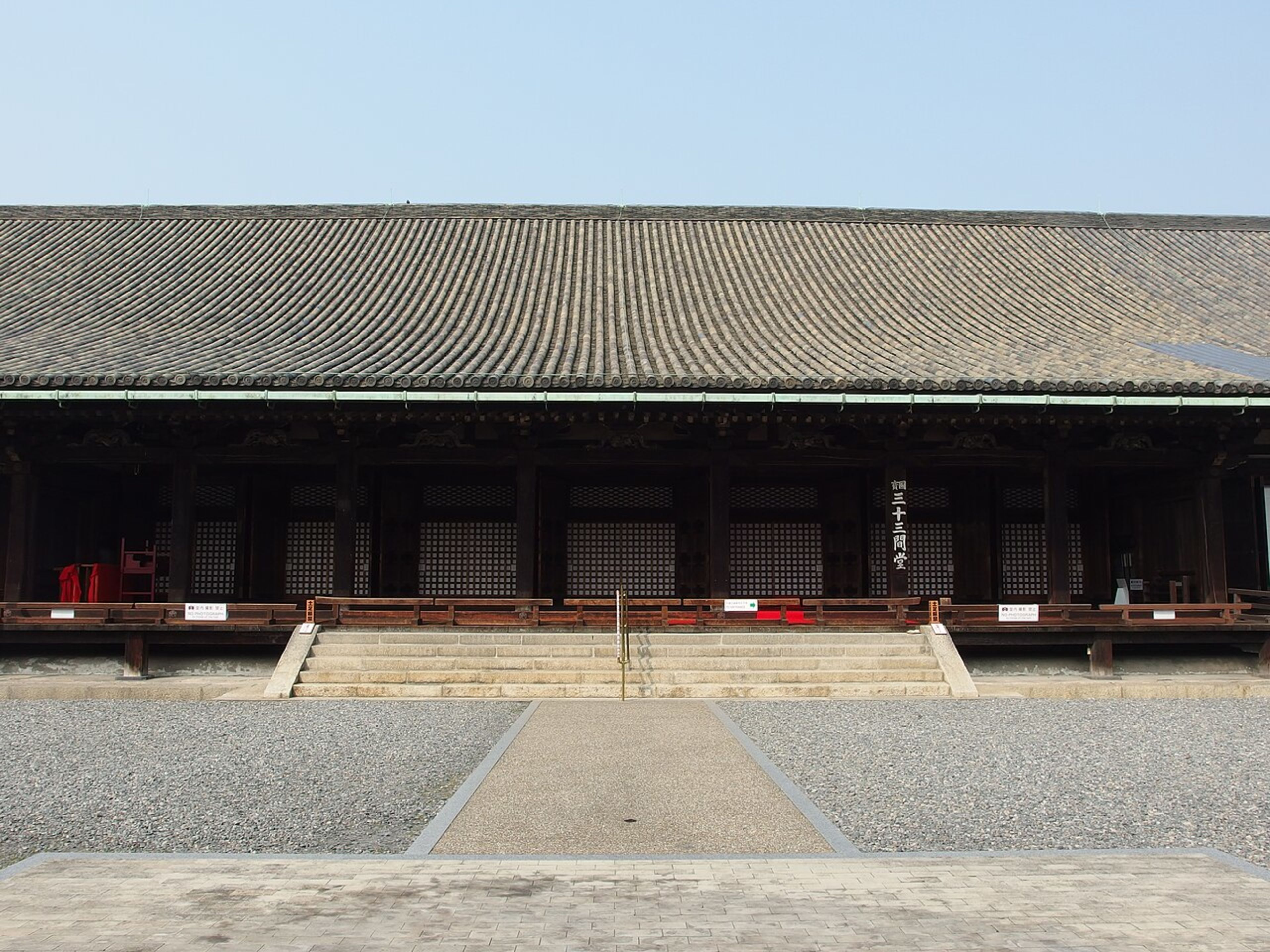
Sanjusangendo Hall
Photo by Guilhem Vellut from Annecy, France — CC BY 2.0
Photography is restricted inside the hall — instead, capture the exterior garden and approach in the quiet morning light.
Flat wooden floors throughout, though shoes must be removed at entry.
15 min walkA walk through narrow lanes lined with traditional shopfronts, the temple's pagoda rising into view ahead.
10:00 AM - 11:30 AM
Kiyomizu-dera Temple · morning · 90 min · Higashiyama & Gion

Wooden floorboards echo underfoot as Kyoto unfolds below in layers of green and rooftop — arriving before 9am would be ideal, but even mid-morning offers striking views once you push past the entrance crowds toward the pagoda's edges. Incense and ancient cedar scent the air; the vertigo-inducing veranda is worth the crowds.

Kiyomizu-dera Temple
Photo by Ivo Stirling
The classic veranda-and-valley shot works best in the softer light of late morning before midday haze sets in.
Significant stairs and slopes throughout; wooden floors can be slippery when wet.
20 min walkA walk downhill from Kiyomizu-dera through quieter residential streets toward the canal's northern end.
12:30 PM - 1:30 PM
Philosopher's Path · midday · 60 min · Higashiyama & Gion

This two-kilometer canal-side walk turns meditative even at midday, wooden homes and trickling water offering a gentler pace after two temple stops. Fall foliage lines the canal in reds and golds; it's an easy, low-effort stretch that solo travelers often use to simply think, unhurried.

Philosopher's Path
Photo by devinedsel
Midday light filters through canal-side trees nicely in November when foliage peaks.
Flat, paved path suitable for all fitness levels.
15 min transitA short bus or taxi ride west across the river as the afternoon light turns golden.
5:00 PM - 7:00 PM
Gion District (Geisha District) · evening · 120 min · Higashiyama & Gion

As lanterns flicker on and shadows dance across lattice screens, Gion transforms — quiet footsteps on stone, the occasional distant shamisen note, incense and aged cedar in the air. Early evening (5-7pm) is peak time to glimpse geisha en route to appointments, though the district rewards quiet observation over pursuit — solo travelers blend in easily here, camera down, simply watching.

Gion District (Geisha District)
Photo by Acres of Film
Shoot the lantern-lit lanes just after sunset, around 5:30-6pm in fall, for the best warm light without flash.
Stone lanes can be uneven; wear low-profile, comfortable shoes.
Lunch
World Coffee $
Cafe/Coffee · Near Philosopher's Path
A relaxed café near the Philosopher's Path good for a light lunch and people-watching after the morning's temple crowds.
Sujata $$
Indian · Near Philosopher's Path
A flavorful change of pace near Ginkaku-ji and the canal path if you want something heartier than a café lunch.
Dinner
Amazake $$
Japanese · Near Gion District
A cozy option near Gion's lantern-lit lanes, well suited to solo diners wanting an intimate end to the trip.
DRAGON BURGER $
Burger · Near Gion District
A casual, unpretentious counter spot if you'd rather close the trip with something simple and easy.
Optional detour: Ginkaku-ji (Silver Pavilion)Before Philosopher's Path
The raked gravel wave patterns and restrained pavilion make an elegant bookend to the Philosopher's Path, especially in fall color. Skip if: Adding a third temple stop before midday risks temple fatigue — better swapped in for Kiyomizu-dera if you prefer quieter grounds.
Optional detour: Ponto-cho AlleyAfter Gion District, as a late-evening wind-down
Lantern-lit riverside alley with charcoal-grilling aromas, good for an after-dinner stroll or nightcap. Skip if: Very crowded 6-10pm in peak season, and solo dining here rates lower than Gion's quieter counter spots.
If it rains: If rain sets in, Sanjusangendo's covered hall and Kiyomizu-dera's covered temple structures remain fully accessible; save the Philosopher's Path for a drier window or shorten it substantially, as canal-side paths can get slick.

The day opens in hushed reverence: 1,001 golden Kannon statues catching soft light in near-total silence at Sanjusangendo, followed by Kiyomizu-dera's dramatic wooden veranda suspended above a sea of autumn rooftops. Both reward the early arrival — quieter halls, softer light, fewer elbows.

The pace eases along the Philosopher's Path, canal water trickling beside fall-colored trees in a stretch built for unhurried walking and quiet reflection — a deliberate contrast to the morning's temple crowds, and a good moment to simply process three days of golden gates and gravel courtyards.

Gion closes the trip on its most atmospheric note: lanterns glowing on wooden lattice, the distant hint of shamisen, and the quiet thrill of glimpsing a geisha's silk kimono disappear around a corner. Dinner at a small counter spot nearby makes for an intimate, easy final evening — solo travel at its most rewarding, unhurried and complete.

Want to tweak this trip?

Our AI planner can customize this itinerary to your exact dates, interests, and travel style.

Customize This Itinerary
Good to Know

Restaurant details (hours, menus, availability) change frequently. Check current hours before visiting, especially in seasonal destinations.

Dietary compatibility tags are general guidance. If you have severe allergies, confirm directly with the restaurant.

Travel tips are general guidance, not professional safety advice. Check government advisories for latest information.

All prices are approximate and may vary seasonally.

We use cookies to improve your experience and analyze site usage. Essential cookies are always active. You can customize your preferences or accept all cookies. Cookie Policy