2 DaysSolo Traveler5 Stops

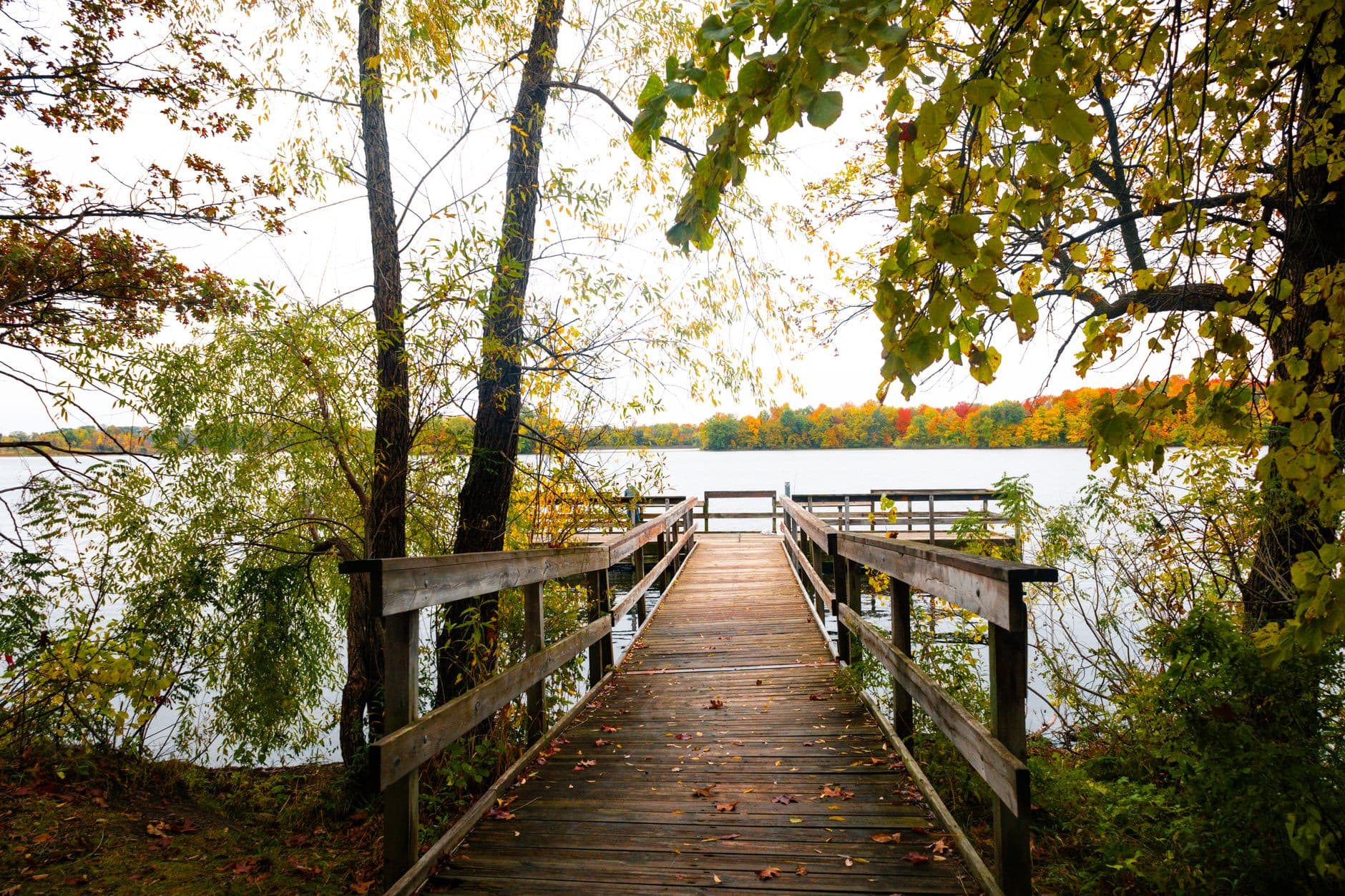
Itasca State Park (Fall), Minnesota

2-Day Itinerary for Solo Traveler

β€œWhere the River Begins: Two Days Solo at Itasca”

Where the River Begins: Two Days Solo at Itasca

At Itasca, the Mississippi River is just a whisper you can step across, and the forest around it holds a cathedral hush broken only by loon calls and your own footsteps. This is a park built for solitude β€” for the traveler who wants to walk slow, watch light change on still water, and not have to explain any of it to anyone.

At a Glance

Climate & Weather
Summer at Itasca means warm, sometimes hot days (upper 70s–80sΒ°F) with high humidity, long daylight (sunrise before 6 AM, sunset after 9 PM), and the season's highest visitor numbers. Pack breathable layers, a sun hat, insect repellent for mosquitoes near water and forest, a light rain shell for sudden afternoon storms, and broken-in hiking shoes.
Getting Around
A car is essential β€” the park's clusters are connected by park roads, and Wilderness Drive itself is the connective spine. Parking lots at major trailheads fill by mid-morning in summer, so early starts aren't just about light, they're about finding a spot.
Budget
Budget roughly $50–75/day for a solo traveler β€” this covers a couple of casual meals, coffee, park entrance/vehicle permit, and small trail snacks; most spending here is time, not money.
Safety
This is bear and moose country β€” store any food in your vehicle or provided lockers, never in a tent, and keep a respectful distance if you spot wildlife on the trail. As a solo hiker, stick to marked trails, let someone know your rough route and return time, and carry a charged phone even though signal is patchy; the long summer daylight gives you a wide margin, but afternoon thunderstorms can move in fast.
Connectivity
Cell service is unreliable to nonexistent inside much of the park; download offline maps before you arrive. The Visitor Center and lodge area typically have the most reliable signal and any available WiFi.
Local Tips
Arrive at the Headwaters before 9 AM β€” summer crowds build fast and by midday you'll be sharing the shoreline with dozens of visitors; early morning also means calmer water for reflection photos. Bring your own lunch or snacks for trail days, since dining options inside the park itself are sparse. Loons are most vocal at dawn and dusk β€” time your lake loop accordingly if that's a priority.

Highlights

  • Stand at the exact source of the Mississippi before the crowds arrive
  • Walk the moss-muffled Schoolcraft Trail through old-growth pine
  • Loop the mirror-still Itasca Lake at golden hour
  • Drive the Wilderness Drive with windows down and no schedule
  • Duck into the Visitor Center's dioramas when the sky turns gray
  • Catch loon calls echoing across the lake at dusk

Day-by-Day Plan

Arrival & Orientation

Day 1: First Light at the Source

A gentle first day centered on the Mississippi Headwaters cluster, with roughly 2–3 miles of easy walking and low-to-moderate energy output to ease into the park's rhythm.

Wear
Light layers, sun hat, comfortable walking shoes that can get a little wet at the headwaters crossing, and a light rain shell just in case afternoon clouds build.
Budget
$40–55 (park entrance, casual lunch, coffee)
7:30 AM - 8:30 AM
Mississippi Headwaters Β· morning Β· 60 min Β· Mississippi Headwaters β€” Sacred source, crystalline moment

Arrive while the lake is still glass and the air still carries the night's chill β€” this is the moment to stand where the Mississippi takes its first breath, stepping-stones underfoot and cool northern water lapping at the sand. By 9 AM this shoreline fills with visitors; before then, it's just you, the mirrored birches, and the quiet weight of standing at the start of something enormous.

Mississippi Headwaters
United States. Army. Corps of Engineers. St. Paul District / wikimedia (Public domain)
Face east at sunrise for soft light on the outlet stream, or catch the north shoreline when the water is at its stillest just after dawn.
Path to the water is uneven and not wheelchair accessible; benches are sparse, so pace yourself if standing for long periods is difficult.
10 min walk β€” A short stroll along the lakeshore path, the water still catching morning light to your left.
9:00 AM - 10:00 AM
Itasca State Park Visitor Center Β· midday Β· 60 min Β· Mississippi Headwaters β€” Sacred source, crystalline moment

After the open air of the headwaters, step into the cool hush of the Visitor Center, where dioramas and watershed maps make sense of the river you just touched. It's an easy, low-effort stop that pairs naturally with the outdoor high of the morning, and a good place to strike up conversation with a ranger or fellow solo traveler over the exhibits.
Itasca State Park Visitor Center
Photo by Kanishk Gabel on Pexels
The diorama displays are lit for dramatic backlighting β€” good for detail shots rather than wide scenes.
Fully wheelchair accessible with flat paths and frequent benches β€” the most accessible stop in the park.
Optional detour: Wilderness Drive β€” After Itasca State Park Visitor Center and before Day 2's forest stops
A relaxed, low-effort scenic drive to close out a light first day if you have extra afternoon energy. Skip if: Skip if you'd rather save the drive's golden-hour light for Day 2, when it pairs more naturally with the forest trails.
If it rains: The Itasca State Park Visitor Center is fully indoor and weatherproof β€” extend your time there with the watershed exhibits and dioramas if rain rolls in over the headwaters.

The day begins at the edge of Lake Itasca, where the Mississippi River takes its first steps south. Arriving early rewards you with near-total solitude β€” just the cool mineral smell of the lake, the soft crunch of sand, and stepping-stones daring you across the infant river. This is the kind of quiet moment solo travel is made for: no one to rush, no one to explain the feeling to.

With the morning's big emotional beat behind you, the pace eases into something more contemplative. The Visitor Center offers a low-key, air-conditioned complement to the outdoor high β€” a chance to sit, read the story of the watershed, and let the morning settle before deciding how much more ground to cover.

Keep the evening unstructured and easy β€” a light dinner near your lodging, perhaps in Park Rapids or at the park lodge, and an early night. Summer's long daylight means sunset lingers past 9 PM, so there's no rush; let the day close slowly, the same way it opened.

Forest & Reflection

Day 2: Deep Woods and Still Water

A fuller day exploring the Wilderness Drive & Old Growth Forest cluster, covering approximately 5–6 miles on foot with moderate energy demands across scenic drive, trail, and lake loop.

Wear
Sturdy hiking shoes, moisture-wicking layers, insect repellent, a hat for sun exposure on the lake loop, and a light rain shell for unpredictable summer afternoons.
Budget
$45–65 (casual meals, coffee, trail snacks)
15 min drive β€” A short morning drive north from the headwaters area, mist still clinging low over the forest floor.
7:00 AM - 8:30 AM
Wilderness Drive Β· morning Β· 90 min Β· Wilderness Drive & Old Growth Forest β€” Deep woods, cathedral silence

Start early while the gravel road is empty and the forest still holds its nighttime cool β€” this scenic loop through boreal pine and birch feels almost private at this hour, windows down, the earthy smell of pine resin and damp leaves drifting in. By mid-morning, weekend traffic picks up considerably, so this is the drive's best window for solitude and unhurried photo stops.
Wilderness Drive
Committee on Resources / wikimedia (Public domain)
West-facing overlooks catch the canopy best in early light; the turnout near the Ozawindib Trail junction offers layered forest depth.
Limited accessible pull-outs; most viewpoints require walking on uneven ground.
10 min drive β€” A brief hop deeper into the forest loop, gravel crunching under tires as the canopy thickens overhead.
9:00 AM - 10:30 AM
Schoolcraft Trail Β· midday Β· 90 min Β· Wilderness Drive & Old Growth Forest β€” Deep woods, cathedral silence

Leave the car behind and walk where Henry Schoolcraft once did, through moss-thick old growth where footsteps go nearly silent and the green-woodsmoke smell of conifers fills the air. It's a moderate walk well-suited to a solo pace β€” slow down at the birch-and-aspen junction where light breaks through the canopy, and take the quiet as a rare gift rather than something to rush through.

Schoolcraft Trail
Photo by Tom Fisk on Pexels
The loop junction where birch and aspen brighten the understory is best photographed mid-morning when light angles through the canopy.
Not recommended for those needing accessible terrain β€” roots, uneven ground, and limited accessible sections throughout.
15 min drive β€” A short late-afternoon drive back toward the lake, the forest thinning to open water views.
4:30 PM - 6:30 PM
Itasca Lake Loop Trail & Scenic Overlook Β· afternoon Β· 120 min Β· Wilderness Drive & Old Growth Forest β€” Deep woods, cathedral silence

Return to the lake in late afternoon when the water turns to still glass and reflects the surrounding trees like a painting β€” this is the park's most photogenic stretch, and a solo traveler's dream for unhurried, contemplative walking. Loons often call across the water as the light softens toward evening, and the eastern peninsula viewpoint is worth timing for sunset if energy allows.

Itasca Lake Loop Trail & Scenic Overlook
Photo by Virooshan Theva on Pexels
The eastern peninsula viewpoint at sunset is the standout shot; the north shore overlook works well for reflected maples earlier in the golden hour.
Uneven trail with sparse benches; not wheelchair accessible.
Midday
Caribou Coffee $
Cafe/Coffee Β· Near Wilderness Drive
A reliable, casual stop for coffee and a light bite near Wilderness Drive β€” good bar-style counter seating for solo travelers to linger.
Jersey Mike's Subs $
Sandwich Β· Near Wilderness Drive
Quick, satisfying sandwiches for a trailside lunch β€” easy to grab and eat solo without ceremony.
Dinner
DQ Grill & Chill $
Ice cream, burger, chicken Β· Near Wilderness Drive
A low-key, casual finish to a long day of hiking β€” communal, unpretentious, and easy for solo diners.
Optional detour: Itasca State Park Visitor Center β€” After Schoolcraft Trail and before Itasca Lake Loop Trail & Scenic Overlook
A good midday retreat from sun and bugs if the forest walk left you wanting shade and a break before the lake loop. Skip if: Skip if you already visited on Day 1 and want to conserve time for the lake loop's golden hour.
If it rains: If rain moves in, retreat to the Itasca State Park Visitor Center for its weatherproof exhibits, or wait out light showers in the car along Wilderness Drive, which remains passable and moody in mist β€” save the lake loop and Schoolcraft Trail for clearer conditions since both become slick and muddy.

The second day shifts into deeper immersion, starting with an early, nearly empty drive through Wilderness Drive while the forest still holds its overnight cool. From there, the Schoolcraft Trail invites a slower, more physical engagement with the old growth β€” moss underfoot, birdsong overhead, and long stretches where the only sound is your own breathing.

After the trail's physical effort, the pace shifts toward something more contemplative. A midday break for coffee or a quick sandwich near Wilderness Drive gives legs a rest before the day's final push β€” the Itasca Lake Loop, saved deliberately for late afternoon when the water stills and the light turns gold.

As the sun lowers, the lake loop rewards patience β€” reflected maples, loon calls, and a quiet that feels earned after a full day of walking. Close with a simple, unhurried dinner nearby, letting the long summer evening stretch out before an early night ahead of departure or further exploration.

Want to tweak this trip?

Our AI planner can customize this itinerary to your exact dates, interests, and travel style.

Customize This Itinerary
Good to Know

Restaurant details (hours, menus, availability) change frequently. Check current hours before visiting, especially in seasonal destinations.

Dietary compatibility tags are general guidance. If you have severe allergies, confirm directly with the restaurant.

Travel tips are general guidance, not professional safety advice. Check government advisories for latest information.

All prices are approximate and may vary seasonally.
We use cookies to improve your experience and analyze site usage. Essential cookies are always active. You can customize your preferences or accept all cookies. Cookie Policy