3 DaysSolo Traveler6 Stops

Arbuckle Mountains, Oklahoma

3-Day Itinerary for Solo Traveler

Old Rock, Cold Air: 3 Solo Days in the Arbuckle Mountains

Old Rock, Cold Air: 3 Solo Days in the Arbuckle Mountains

In winter, the Arbuckles empty out and go quiet — the falls run cold and clear, the springs steam faintly in the chill, and you can stand on billion-year-old granite without another soul in sight. This is a trip for solitude, layered clothing, and the particular pleasure of having ancient landscapes almost entirely to yourself.

At a Glance

Climate & Weather
Winters in the Arbuckles run cool to cold, generally 30–50°F with occasional snow or ice, especially in shaded canyons. Pack thermal base layers, a windproof outer shell, waterproof boots with good tread (rocks near the falls and springs get slick), gloves, and a warm hat — mornings and evenings will bite.
Getting Around
A personal vehicle is essential — there is no public transit. Roads between clusters are well-paved two-lane highways, but watch for ice on shaded curves and bridges in winter mornings. Google Maps coverage is generally reliable here, though double-check park hours before driving out.
Budget
Budget roughly $40–60/day for a solo traveler — modest park entrance fees, gas between clusters, and casual meals (barbecue plates, diner breakfasts, fish shack dinners run $8–18 per meal). Bring cash as a backup; some rural stands and smaller vendors don't take cards.
Safety
This is a low-crowd, low-crime region, which is exactly why solo travelers should double down on basics: tell someone your daily route, carry a charged phone (though signal is patchy in the canyons), avoid wet rock edges near Turner Falls in cold weather when ice can form, and don't push past marked trails — search-and-rescue response in this rural area is slower than in a national park with rangers stationed nearby.
Connectivity
Cell coverage is decent in Ardmore and along major highways but drops to weak or nonexistent in canyon interiors and around Turner Falls Park. Download offline maps before setting out each day, and let your lodging know your rough itinerary.
Local Tips
Arrive at Turner Falls and Chickasaw NRA before 9am for near-total solitude — even on weekends, winter crowds are thin, but the golden hour light is worth the early alarm regardless. Most restaurants close by 9pm, so plan dinner accordingly. Weekdays offer noticeably more solitude than weekends, when regional day-trippers from Dallas and OKC still show up even in the cold.

Highlights

  • Standing alone at the base of Turner Falls before the day's first visitors arrive
  • Steam rising off Travertine Creek's mineral springs in the cold morning air
  • Empty limestone canyon trails with only birdsong for company
  • Sunset over Lake of the Arbuckles with no boats, no crowds, just water and light
  • Winter light raking low across billion-year-old rock formations
  • Small-town Oklahoma diners where a solo traveler is never out of place
  • Crisp, star-clear nights perfect for quiet reflection at your cabin or lodge

Day-by-Day Plan

orientation, waterfall, gentle immersion

Day 1: Arrival & First Light on the Falls

A light arrival day centered on Turner Falls with minimal driving between stops and generous photography time — roughly 1.5 miles of walking at an easy pace.

Wear
Thermal base layers, waterproof hiking boots with solid tread, a windproof jacket, gloves, and a warm hat; the mist near the falls makes the air feel colder than the thermometer suggests.
Budget
$35–50 (park entry, lunch, dinner)
9:00 AM - 11:00 AM
Turner Falls · morning · 120 min · Turner Falls & Park

Arrive by 9am and the 77-foot cascade is yours alone — no shoulder-to-shoulder crowds, just the roar of falling water echoing off limestone walls and cold mist drifting across the trail. In winter the swimming pool below turns a deep, still turquoise-green, too cold for swimming but stunning to sit beside with a coffee. Take the elevated trail for a wide view of the entire cascade before descending to the pool's edge for the classic base-of-falls shot.

Turner Falls
Nowacki, Gregory J. (Gregory Jay) / wikimedia (Public domain)
Shoot from the elevated trail viewpoint mid-morning when soft winter light rakes across the cliff face — avoid midday glare bouncing off the water.
Trail is uneven with wet rock sections near the pool; not wheelchair accessible and benches are sparse, so pace yourself on cold mornings when rocks may be icy.
If it rains: If rain moves in, view the falls from a distance along the upper trail rather than the pool's edge — heavy rain swells the current and makes footing near the water genuinely hazardous, though the waterfall itself becomes even more dramatic to watch from a safe vantage.

Ease into the region with an early, quiet visit to Turner Falls — the crown jewel of the Arbuckles and an easy way to get your bearings without overexerting on day one. Winter strips away the usual summer crowds, leaving just you, the roar of the cascade, and cold mist settling on your jacket. Take it slow: this is arrival day, not a hiking marathon.

Spend the afternoon wandering the park's lower trails at a relaxed pace, letting your body adjust to the cold mountain air and the quiet rhythm of this small corner of Oklahoma. There's no rush — settle into your lodging near Turner Falls Park or head into Ardmore for creature comforts before evening.

Dinner options directly at Turner Falls Park are limited this time of year — consider driving into nearby Ardmore for a proper meal, or pack a simple dinner if you're staying at a rustic cabin near the park. Either way, let the day end early; the shortened winter daylight and quiet surroundings make for an easy, restorative first night.

mineral springs, canyon trails

Day 2: Steam, Stone, and Solitude at Chickasaw NRA

A full day exploring Chickasaw National Recreation Area's springs and trails, covering an estimated 3–4 miles of moderate walking with ample time for photography and quiet reflection.

Wear
Layered clothing you can shed as you warm up on trails, waterproof boots for creek-side paths, gloves, and a hat — cave and canyon air stays notably cooler than open ground.
Budget
$30–45 (lunch, snacks, incidentals; park entry is typically free)
35 min driveA quiet highway drive south through rolling ranchland, the road nearly empty at this hour, with the Arbuckles rising gently on the horizon.
8:30 AM - 10:30 AM
Chickasaw NRA · morning · 120 min · Chickasaw NRA & Sulphur Springs

Get here by 8:30am and the mineral springs along Travertine Creek are wrapped in a thin veil of steam rising off warmer spring water into cold winter air — one of the most striking sights in the park, and one almost no one else is awake for. The path crunches with gravel and frost, birdsong carries sharply through bare limestone canyons, and the turquoise spring pools seem almost otherworldly against the winter-brown forest floor. This is a solo traveler's dream: paved sections near the main springs, but you can wander further into quieter side trails without needing a companion.

Chickasaw NRA
Jared Brotman / pexels (Pexels License)
Shoot the main spring pool right at sunrise or shortly after — the steam effect is strongest in the first hour of cold morning light and fades as temperatures climb.
Main spring areas are paved and wheelchair accessible with frequent benches; upper trails are uneven and not accessible.
10 min walkA short walk from the springs up toward the visitor center and upper trailhead, gravel crunching underfoot.
1:00 PM - 3:00 PM
Chickasaw NRA · afternoon · 120 min · Chickasaw NRA & Sulphur Springs

Return in early afternoon to explore the upper limestone trails and the visitor center exhibits on the park's cultural and geological history — a good pace-shift from the sensory immersion of the springs to a quieter, more contemplative stretch of the day. Wildlife sightings pick up as the afternoon warms slightly; watch and listen for birds along the canyon rim.

Chickasaw NRA
Jared Brotman / pexels (Pexels License)
Late afternoon light hits the upper limestone cliffs at a dramatic angle — worth the climb for a wide canyon shot before the sun drops.
Upper trails involve elevation changes and loose rock; not accessible, but the visitor center itself is fully accessible.
Optional detour: Chickasaw NRABetween the morning spring visit and the afternoon trail walk
The visitor center's exhibits add helpful cultural and geological context if you want a break from outdoor walking to warm up indoors. Skip if: Skip it if you'd rather maximize trail time while the winter light is good — the exhibits will keep, the light won't.
If it rains: Most Chickasaw NRA facilities, including the visitor center and covered pavilions, stay open in rain; stick to the paved paths near the main springs rather than the muddier upper trails, and treat this as an indoor-history-plus-short-walk day instead.

Rise early for Chickasaw NRA's mineral springs, where steam curls off the water into the cold morning air — a genuinely surprising, almost meditative sight that rewards the early alarm. Solo travelers will appreciate the accessible paved paths near the main pools paired with quieter side trails for those wanting more solitude and a longer walk.

After a midday break, shift into the park's upper limestone trails and visitor center for a change of pace — less sensory drama, more quiet contemplation and context. The afternoon light on the canyon walls is worth timing your walk around, so don't rush lunch.

Dining options directly within the park are limited — plan to head back toward Ardmore or Sulphur for dinner rather than expecting much right at the trailhead. Let the evening wind down early; the cold and the day's walking will have earned you a quiet night.

lakeside leisure, golden hour, departure

Day 3: Stillwater at Lake of the Arbuckles

A lighter final day centered on the lake's shoreline and golden-hour photography, with about 2 miles of easy, flat walking before departure.

Wear
Warm layers with a windproof outer shell for the lakeside breeze, comfortable walking shoes (paths here are flat and accessible), and sunglasses for the low winter sun over open water.
Budget
$25–40 (lunch, coffee, incidentals)
40 min driveA relaxed highway drive east, the Arbuckle peaks receding gently in the rearview mirror as the road flattens toward open water.
8:00 AM - 10:00 AM
Lake of the Arbuckles · morning · 120 min · Lake of the Arbuckles

Arrive between 8 and 10am for the quietest window at the lake — the water lies still, mist occasionally rising off the surface in the cold, and the only sound is the gentle lap of water against sandy banks. This is an easy, flat walk along accessible paths, ideal for a slower final morning; the eastern shoreline coves framed by bare oak branches make for a strikingly minimalist winter scene compared to summer's greenery.

Lake of the Arbuckles
United States. Bureau of Agricultural Economics United States. Bureau of Agricultural Economics / wikimedia (Public domain)
Shoot the eastern shoreline coves in the first hour after sunrise, when low winter light skims across the water and through the bare oak branches.
Fully wheelchair accessible with flat paved paths and frequent benches — the most accessible stop of the entire trip.
15 min walkAn easy shoreline walk south toward the main boat ramp, gravel and packed dirt underfoot, red-clay scent rising faintly from the banks.
11:00 AM - 12:30 PM
Lake of the Arbuckles · midday · 90 min · Lake of the Arbuckles

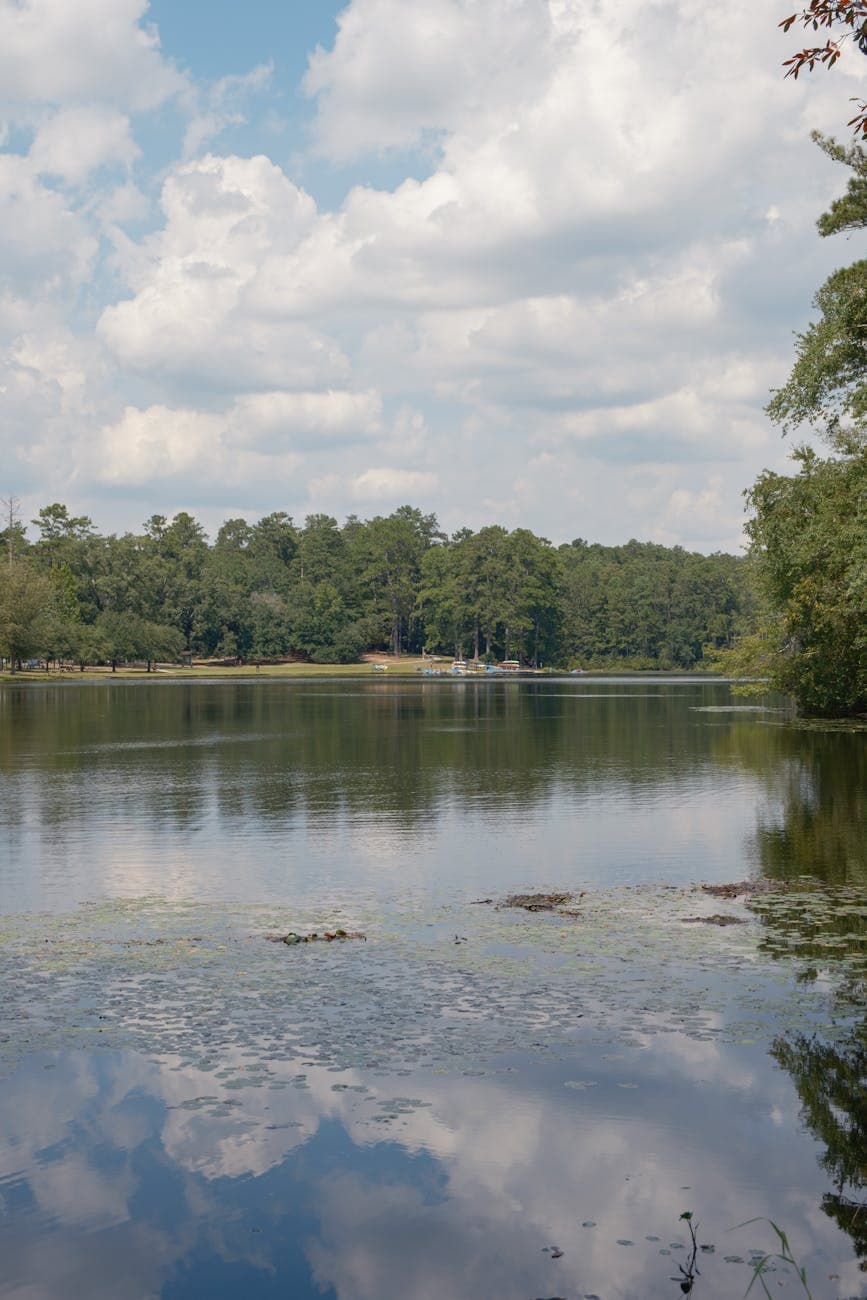
Spend a slower midday stretch near the main boat ramp area, where the Arbuckle peaks form a soft backdrop across the water — a fitting, quiet close to the trip. Winter keeps the boat traffic minimal, so it's easy to find a bench and simply sit with the view before heading out.

Lake of the Arbuckles
United States. Bureau of Agricultural Economics United States. Bureau of Agricultural Economics / wikimedia (Public domain)
Midday light is flatter here, but it's the best time to capture the full sweep of the Arbuckle peaks reflected across calm water.
Paved and flat throughout this section; suitable for all mobility levels.
If it rains: Light rain is manageable along the paved shoreline paths with a waterproof layer; if rain intensifies, retreat to the covered picnic shelters at the lake or treat this as a shortened visit before heading toward Ardmore for indoor options.

Close out the trip gently at Lake of the Arbuckles, where the water lies still and quiet in the cold morning air — a deliberate contrast to the drama of the falls and the springs earlier in the trip. The flat, accessible paths make this an easy final morning, good for reflection as much as photography.

Linger near the main boat ramp through midday, taking in the Arbuckle peaks across the water one last time before beginning the drive out. There's no need to rush — this is a wind-down day, built for slow appreciation rather than another big push.

With travel plans likely shaping the evening, this is a good point to grab a simple meal in Ardmore on the way out rather than lingering lakeside after dark — the shortened winter daylight means dusk arrives quickly, and the drive back to main roads is easier finished before full dark sets in.

Want to tweak this trip?

Our AI planner can customize this itinerary to your exact dates, interests, and travel style.

Customize This Itinerary
Good to Know

Restaurant details (hours, menus, availability) change frequently. Check current hours before visiting, especially in seasonal destinations.

Dietary compatibility tags are general guidance. If you have severe allergies, confirm directly with the restaurant.

Travel tips are general guidance, not professional safety advice. Check government advisories for latest information.

All prices are approximate and may vary seasonally.

We use cookies to improve your experience and analyze site usage. Essential cookies are always active. You can customize your preferences or accept all cookies. Cookie Policy