2 DaysActive Retirees3 Stops

Pennsylvania Wilds, Pennsylvania

2-Day Itinerary for Active Retirees

ā€œRidgelines and Starlight: Two Days in the Pennsylvania Wildsā€

Ridgelines and Starlight: Two Days in the Pennsylvania Wilds

Here, the forest closes over the road like a green tunnel and the silence has weight. Two unhurried days move from the rust-red skeleton of a shattered railroad bridge to a mountaintop vista, then settle beneath some of the darkest skies east of the Mississippi.

At a Glance

Climate & Weather
Summer days are warm and humid with a real chance of afternoon thunderstorms, especially in the mountains. Pack breathable layers, a light rain shell, sturdy walking shoes, and a warm layer for after dark — mountaintop and stargazing temperatures can drop 15-20 degrees after sunset even in July.
Getting Around
A car is essential — distances between clusters run 45 minutes to over an hour on two-lane mountain roads, some without guardrails or shoulders. Drive during daylight when possible, watch for deer at dusk, and fill your gas tank whenever you pass a station, as they're sparse.
Budget
Expect roughly $60-90 per person per day for food and modest activity costs (park fees are minimal to free) — this is a budget-friendly region where the experience, not the price tag, is the draw.
Safety
This is rural, remote country with minimal crime, but weather can shift quickly and cell service is patchy on ridgetops. Black bears are present in the forests; keep food sealed in vehicles and make noise on any trail walk. Bring a paper map or downloaded offline map as a backup to GPS.
Connectivity
Cell coverage is unreliable to nonexistent in the forested valleys and at Cherry Springs itself (by design, to protect the dark sky). Download maps, reservations, and this itinerary for offline use before setting out each morning.
Local Tips
Restaurants close early — plan dinner by 7 PM to avoid disappointment. Arrive at Kinzua Bridge before 9 AM to have the viewing platform nearly to yourself. Check the Cherry Springs weather and moon phase before committing to a stargazing night; a cloudy or full-moon sky will wash out the experience.

Highlights

  • Stand on the remains of the Kinzua Viaduct, once the tallest railroad bridge in the world
  • Take in ridge-after-ridge views from Denton Hill's mountaintop overlook
  • Watch the Milky Way emerge in full, unpolluted clarity at Cherry Springs State Park
  • Relaxed pacing with flat-path options and bench-friendly overlooks
  • Hearty, unpretentious regional dining rooted in Appalachian tradition
  • Early-morning starts that trade crowds for solitude and cool air

Day-by-Day Plan

Arrival & Gentle Discovery

Day 1: The Bridge That Touched the Sky

A light, low-mileage day centered on the Kinzua Bridge and a mountaintop vista, with generous rest time and under a mile of easy walking.

Wear
Comfortable walking shoes with good grip, a light layer for morning coolness, a sun hat, and a rain shell tucked in your bag for passing summer storms.
Budget
$50-70 per person, including two casual meals and no significant entrance fees.
8:30 AM - 9:15 AM
Kinzua Bridge Ā· morning Ā· 45 min Ā· Kinzua Bridge & McKean County Highlands

Arrive by 8:30 and the viewing platform is yours alone, the cool creek air still rising through the valley below. Weathered wood planking leads you out over the gorge to where twisted, rust-colored steel arches stand like the ribs of some great fallen creature — a 1882 marvel toppled by a 2003 tornado and left as a monument to both engineering and nature's authority. The walk out and back is short and mostly level, with benches near the entrance for those who want to linger rather than push forward.

Kinzua Bridge
Historic American Buildings Survey, Heritage Documentation Programs, a division of the U.S. National Park Service / wikimedia (Public domain)
Shoot from the center span platform in the soft early light, framing the twisted steel against the green valley below.
The main viewing platform is accessible via a paved path from the parking area, though it is not fully wheelchair-friendly beyond the initial overlook; benches are sparse, so pace your walk.
50 min drive — A winding mountain drive through dense hemlock forest — roll the windows down for the cooling change in air as you climb in elevation.
10:15 AM - 11:15 AM
Denton Hill State Park Scenic Vista Ā· midday Ā· 60 min Ā· Kinzua Bridge & McKean County Highlands

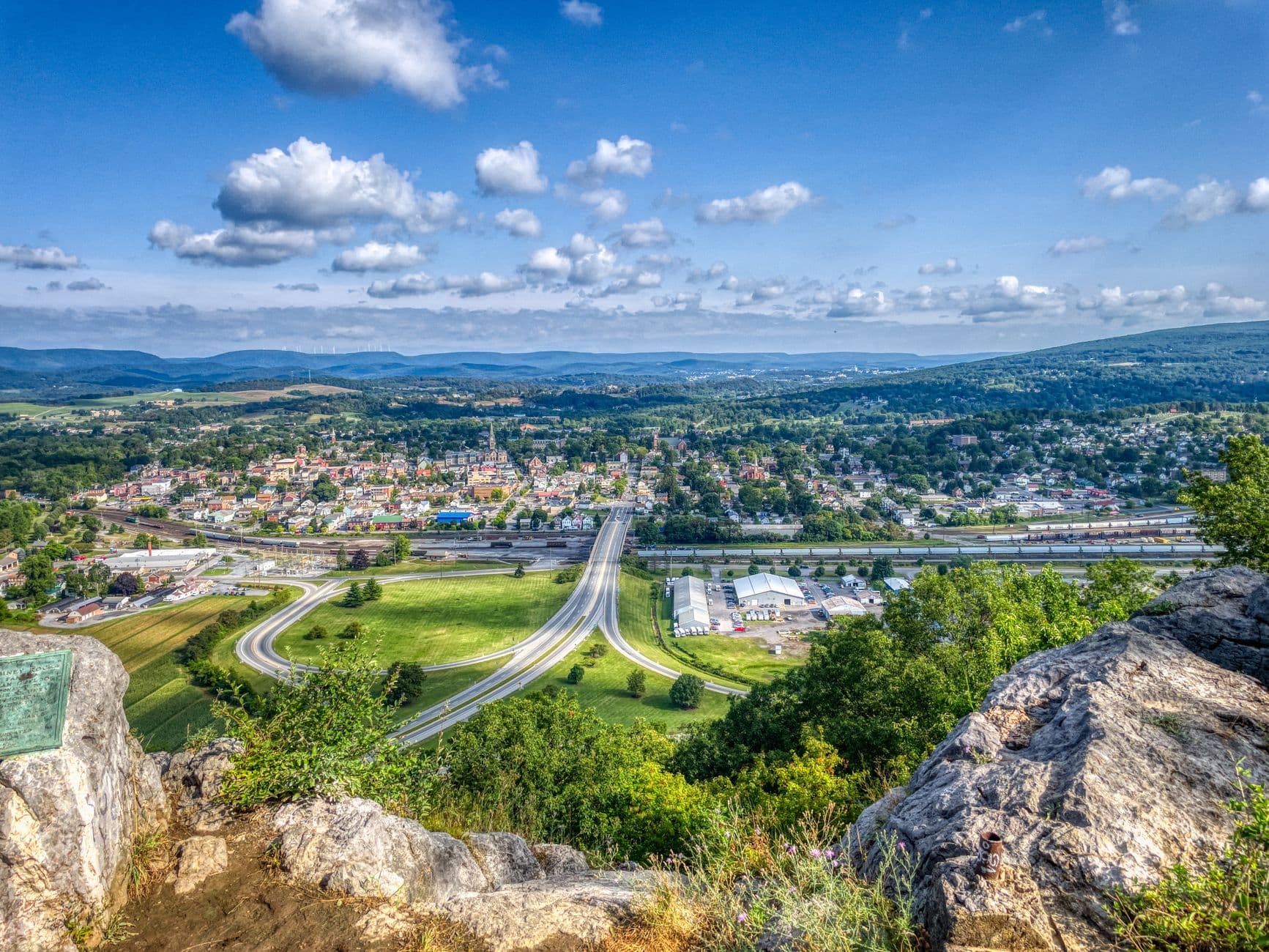
The overlook feels like standing on the roof of Pennsylvania — ridge folding into ridge until they dissolve into blue haze at the horizon. The air smells faintly of balsam, and beyond the wind moving through scattered conifers, there's nothing to hear at all. This is a sit-and-absorb kind of stop, ideal for a slow, wordless half hour with a thermos of coffee before the return walk to the car.

Denton Hill State Park Scenic Vista
Photo by Jessica Lewis šŸ¦‹ thepaintedsquare on Pexels
Photography here rewards patience — the light shifts the haze color through the morning, so a 90-minute stay gives you several distinct shots of the same ridgeline.
The main overlook platform is a short, mostly flat walk from the parking area; side vantage points involve uneven ground, so the main platform is the better choice for easier footing.
Optional detour: Old Logger's Path Trail — After Denton Hill State Park Scenic Vista and before returning to lodging
For those craving true wilderness immersion, even a short out-and-back sampling of the trailhead offers ancient hemlock groves and rushing streams. Skip if: The full trail is a rugged, multi-hour to multi-day hike with no accessible sections and no benches — not suited to a relaxed pace or flat-path preference, so most retirees should skip it entirely and admire it from the trailhead sign only.
If it rains: If storms roll in, the Kinzua Bridge remains visitable in light rain (though not in lightning or high wind) — consider a scenic drive through the highlands instead, pausing at pullovers with valley views until conditions clear.

The day opens gently, with an early arrival at Kinzua Bridge while the platform is still quiet and the creek air holds its overnight coolness. There's no rush here — just weathered wood, twisted steel, and the long view down into the gorge where the old viaduct once carried trains through the sky.

A scenic mountain drive carries you up into balsam-scented air at Denton Hill, where the ridgelines roll out in every direction. This is a low-effort, high-reward stop — find a bench or a flat patch of overlook, settle in, and let the view do the work. By early afternoon, you'll want to head back toward lodging for a slow, unhurried rest before evening.

With no mapped dining options directly tied to today's stops, plan your evening meal around your lodging town rather than the trailheads themselves — small-town diners in the Central Wilds or Kinzua Bridge area typically serve until 8 or 9 PM, so aim to arrive with time to spare. Settle in early tonight; tomorrow's stargazing at Cherry Springs runs late.

Cosmic Stillness

Day 2: Into the Dark, Under the Stars

A relaxed day that eases toward evening, culminating in a nighttime visit to Cherry Springs Dark Sky Park, with minimal walking and long rest periods built in.

Wear
Layer heavily for the evening — even summer nights at Cherry Springs can dip into the 50s°F; bring a warm jacket, closed-toe shoes, and a red-light flashlight to preserve night vision.
Budget
$40-60 per person, mostly food, as the dark sky park itself has minimal to no entrance fees.
75 min drive — A quiet late-afternoon drive through darkening forest roads — watch for deer as dusk falls, and arrive with daylight to spare so you can settle in before full dark.
9:00 PM - 11:30 PM
Cherry Springs State Park (Dark Sky) Ā· evening Ā· 150 min Ā· Cherry Springs Dark Sky Park

As true darkness settles, the sky at Cherry Springs reveals itself in layers — first a scatter of bright stars, then, as your eyes adjust over 20 to 30 minutes, the full sweep of the Milky Way arching overhead with a clarity most visitors have never witnessed. The only sounds are the occasional rustle of nocturnal wildlife and quiet murmurs from fellow stargazers scattered across the open meadow. Bring a reclining chair or blanket, dress warmer than you think necessary, and give yourself at least two hours to let the experience unfold slowly — this is not a stop to rush.

Cherry Springs State Park (Dark Sky)
[Chicago, Rock Island and Pacific railway company] [from old catalog] / wikimedia (Public domain)
If photographing, arrive right at dusk to set up tripods while there's still enough light to see, and expose for the Milky Way core once full darkness sets in, typically 90 minutes after sunset.
The park's paths are unpaved and uneven in low light; bring a walking stick and a red-beam flashlight, and consider staying near the main viewing field rather than wandering to the outer meadows.
Optional detour: Old Logger's Path Trail — Before the drive to Cherry Springs, as a brief morning stretch
A short walk near the trailhead offers a taste of old-growth hemlock forest without committing to the full multi-hour hike. Skip if: The trail itself is intense and not accessibility-friendly; beyond the very first stretch, it's unsuitable for a relaxed-pace, flat-path day and better admired from a distance.
If it rains: Cloud cover defeats the purpose of a Cherry Springs visit entirely — check the forecast the morning of, and if skies look uncertain, treat the day as a rest day near lodging, saving the stargazing for a clearer night if your schedule allows, or enjoy the drive through the Wilds' scenic backroads instead.

Today moves at an even gentler pace than the first, since the main event waits for nightfall. Sleep in, take a slow breakfast near your lodging, and consider a short, easy stretch of your legs on a flat forest path if one is nearby — today is about conserving energy for the evening ahead.

The afternoon is intentionally unstructured — a good time for a long lunch, a nap, or simply sitting on a porch and watching the light change over the trees. Check the weather forecast for Cherry Springs before setting out, since clear skies are essential to the experience.

As dusk approaches, the drive to Cherry Springs unfolds through darkening forest, and by the time you settle into your chairs in the meadow, the sky is already deepening from blue to black. Give your eyes time to adjust, dress warmer than feels necessary, and let the Milky Way emerge slowly overhead — a quiet, unforgettable close to two days in the Wilds. Since no mapped dining sits near the park itself, eat a substantial early dinner in town beforehand, as options directly around Cherry Springs are limited after dark.

Want to tweak this trip?

Our AI planner can customize this itinerary to your exact dates, interests, and travel style.

Customize This Itinerary
Good to Know

Restaurant details (hours, menus, availability) change frequently. Check current hours before visiting, especially in this seasonal, rural region where many establishments close early.

Dietary compatibility tags are general guidance. If you have severe allergies, confirm directly with the restaurant.

Travel tips are general guidance, not professional safety advice. Check government advisories and current park conditions before your trip.

All prices are approximate and may vary seasonally.

We use cookies to improve your experience and analyze site usage. Essential cookies are always active. You can customize your preferences or accept all cookies. Cookie Policy