3 DaysActive Retirees4 Stops

Pennsylvania Wilds, Pennsylvania

3-Day Itinerary for Active Retirees

Ridgelines, Rust, and Stars: A Gentle Three Days in the Pennsylvania Wilds

Ridgelines, Rust, and Stars: A Gentle Three Days in the Pennsylvania Wilds

Here, the forest still outnumbers the people, and autumn arrives like a slow exhale — ridges turning copper and gold while the air sharpens toward evening. This is a trip measured not in miles covered but in stars counted and valleys studied from a quiet bench, built for travelers who'd rather savor one view fully than chase five.

At a Glance

Climate & Weather
Fall in the Wilds brings crisp, clear days — highs in the 50s-60s°F, nights dropping into the 30s-40s°F. Pack layers: a warm jacket, gloves, and a hat for stargazing nights, plus waterproof shoes for damp trails and morning dew.
Getting Around
A car is essential — distances between clusters can be 45-90 minutes on winding mountain roads. Drive during daylight when possible, as roads are unlit and deer are active at dawn/dusk. Fill up on gas in larger towns like Coudersport or Kane before heading into remote areas.
Budget
Budget roughly $60-90 per person per day for meals and modest activity fees — dining here is hearty and affordable, and most park attractions are free or low-cost.
Safety
This is a low-crime, rural region — the main risks are environmental. Watch for sudden weather shifts, wear visible clothing during hunting season, store snacks securely, and make noise on trails since black bears are present. Cell service is spotty, so let someone know your plans.
Connectivity
Cell coverage is thin to nonexistent in the forested valleys and around Cherry Springs (part of what makes the skies so dark). Download offline maps beforehand and expect true disconnection at night.
Local Tips
Arrive at outdoor overlooks before 9am for empty platforms and soft light. Restaurants close early (8-9pm), so plan dinner reservations accordingly. Check the Cherry Springs weather and moon phase before your trip — a cloudy or full-moon night defeats the purpose.

Highlights

  • Standing beneath one of the darkest skies on the East Coast at Cherry Springs
  • Walking the weathered planks of the shattered Kinzua Bridge over its wooded gorge
  • Watching fall color roll across ridgelines from Denton Hill's mountaintop vista
  • Slow mornings with no set alarm, timed instead to mist and light
  • Small-town diners serving trout and comfort food after a day outdoors
  • Wide, flat overlooks made for lingering, not rushing

Day-by-Day Plan

Arrival & Stargazing

Day 1: Settling In Under Open Sky

A gentle arrival day with one easy scenic stop and an evening centered entirely on the night sky, totaling under a mile of walking.

Wear
Comfortable layers for daytime, plus a heavy coat, hat, and gloves for the night program — temperatures at Cherry Springs can dip into the 30s after dark.
Budget
$50-70 per person (dinner plus optional stargazing program fee)
7:00 PM - 10:00 PM
Cherry Springs State Park (Dark Sky) · evening · 180 min · Cherry Springs Dark Sky Park

Arrive while there's still a wash of color on the horizon and let your eyes adjust slowly as true darkness settles in. The Milky Way will emerge overhead like a spill of powder across black glass — no city glow, no haze, just an overwhelming ceiling of stars. Bring a folding chair or blanket; benches are sparse, and this is a night for sitting still, not wandering far.

Cherry Springs State Park (Dark Sky)
[Chicago, Rock Island and Pacific railway company] [from old catalog] / wikimedia (Public domain)
Photography here rewards patience — plan for 3-4 hours if you want long-exposure shots of the Milky Way using the eastern meadow as your open horizon.
Paths are unpaved and uneven in the dark; bring a red-light flashlight (preserves night vision) and sturdy shoes, and consider staying near the parking area if mobility is a concern.
If it rains: Cloud cover cancels the stargazing entirely — this location has no meaningful rain backup, so check the forecast and moon phase in advance. If skies are socked in, treat tonight as a quiet lodge evening and rebook stargazing for tomorrow if your schedule allows.

Take today slowly — settle into your accommodations near Cherry Springs, unpack, and let the quiet of the region sink in. There are no scheduled stops this morning; this is intentional, giving you time to adjust to the remoteness and the early-arriving dusk of fall.

Rest, take a short unhurried walk near your lodging, and eat an early dinner before dark falls — most local kitchens close by 8 or 9pm, and you'll want a full stomach before the cold, still hours of stargazing ahead.

As true darkness falls, head to Cherry Springs. The transition from twilight to full dark takes patience, but the payoff is a sky few people ever see — count meteors, trace constellations, and let the silence do the rest. Head back to your lodging by 10pm for a full night's rest.

Engineering & Overlook

Day 2: Iron and Air: The Kinzua Gorge

A moderate day centered on the Kinzua Bridge and a low-effort mountaintop vista, with roughly 1-1.5 miles of walking total.

Wear
Layered clothing with a windbreaker — the bridge platform is exposed and windy, and Denton Hill's summit can be noticeably cooler than the valley.
Budget
$45-65 per person (lunch, dinner, minor park fees)
driveStarting point for the day — settle in with coffee before the walk out to the span.
8:00 AM - 9:15 AM
Kinzua Bridge · morning · 75 min · Kinzua Bridge & McKean County Highlands

Arrive by 8am and the viewing platform is nearly yours alone — by mid-morning, tour groups and photographers begin to fill the walkway. Step out onto the weathered planks where the 1882 viaduct once carried trains 300 feet above the valley; a 2003 tornado twisted the far end into rust-colored wreckage that now rises from the forest like a fallen giant. The wind through the metal arches is the only sound at this hour, and the cool creek air rises from below.

Kinzua Bridge
Historic American Buildings Survey, Heritage Documentation Programs, a division of the U.S. National Park Service / wikimedia (Public domain)
Golden early light hits the center span beautifully around 8-8:30am; for a dramatic upward angle, walk down toward the creek-level approach.
The main platform is a firm surface but not fully wheelchair accessible in all sections; benches are sparse, so plan rest points and allow 20-30 extra minutes if mobility is limited.
50 min driveA winding mountain drive through changing forest color — worth slowing down for, with a few pullovers along the way if the light looks good.
1:30 PM - 2:30 PM
Denton Hill State Park Scenic Vista · afternoon · 60 min · Kinzua Bridge & McKean County Highlands

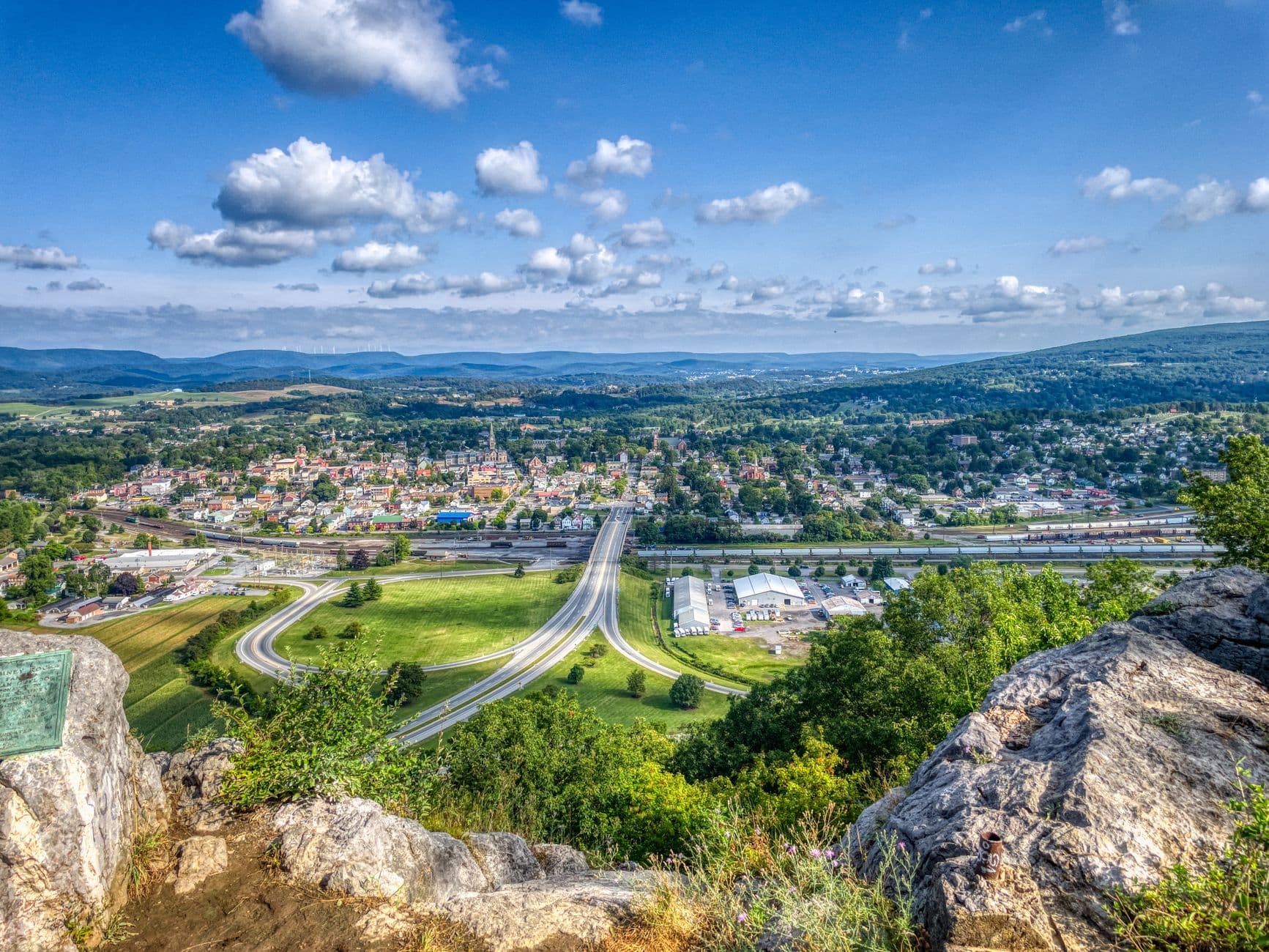
After a relaxed lunch, drive to Denton Hill where ridge after ridge unfolds toward the horizon, layered in fall's rust and gold and softened by afternoon haze. This is a stop built for sitting — find a spot near the main overlook platform, breathe in the scent of balsam, and simply take in the view without agenda. Weekday afternoons here are especially quiet, even during peak foliage season.

Denton Hill State Park Scenic Vista
Photo by Jessica Lewis 🦋 thepaintedsquare on Pexels
For the richest color contrast, visit in the hour before sunset (though today's early-afternoon light is still lovely) — the left-side vantage toward Kettle Creek drainage is especially photogenic in fall.
The main overlook platform is a short, relatively flat walk from parking, making it one of the more accessible viewpoints in the region; benches are limited, so bring a portable seat if you plan to linger.
Optional detour: Old Logger's Path TrailAfter Kinzua Bridge and before Denton Hill State Park Scenic Vista
For those craving a taste of deep wilderness, even a short out-and-back near the trailhead offers old-growth hemlock scenery and rushing streams. Skip if: This is a serious 28-mile backcountry trail with no flat sections or benches — full sections are unsuitable for this pace and should be skipped entirely in favor of rest before the afternoon vista.
If it rains: The Kinzua Bridge remains visitable in light rain, though high winds or lightning close the platform — if weather turns severe, shift your day toward the visitor center at the bridge site or a scenic drive with frequent pullovers instead of the exposed Denton Hill overlook.

Rise early and head straight to Kinzua Bridge while the morning light is soft and the platform is quiet. Walk slowly out across the span, taking in the twisted, rust-colored remains of the collapsed section and the deep gorge below — this is a place that rewards stillness more than distance covered.

After a unhurried lunch back in town, the pace shifts from the industrial drama of the bridge to the wide, open calm of Denton Hill. The drive itself is part of the experience, curling through forest that's just beginning to turn. At the summit, settle onto the overlook and let the layered ridgelines hold your attention for as long as you like.

Head back toward your lodging for an early dinner — local kitchens here favor hearty, unfussy fare, and reservations are wise on weekends. With shorter fall daylight, plan to be settled in well before dark; tonight is for rest rather than another outing.

Reflection & Departure

Day 3: Last Light on the Ridge

A light closing day with one easy return visit to a favorite overlook and time built in for departure, totaling under a mile of walking.

Wear
Comfortable layers with a warm outer layer for any final morning chill; pack rain gear if departure weather looks uncertain.
Budget
$30-50 per person (breakfast and any final incidentals)
8:30 AM - 9:30 AM
Denton Hill State Park Scenic Vista · morning · 60 min · Kinzua Bridge & McKean County Highlands

Return to Denton Hill one more time, now in the cool clarity of early morning when the ridgelines are sharpest and the overlook is nearly empty. This is less about seeing something new and more about a final, unhurried look at the landscape that's defined the trip — a quiet bookend before the drive home.

Denton Hill State Park Scenic Vista
Photo by Jessica Lewis 🦋 thepaintedsquare on Pexels
Morning haze can soften the ridgeline colors beautifully around 8:30-9am — a gentler, cooler light than the golden-hour crowds chase.
Same easy, relatively flat access as your prior visit; arrive early for the least crowded, calmest experience.
If it rains: If fog or rain limits visibility at the overlook, treat the morning as a slower packing and departure period instead, enjoying the moody atmosphere from the car or a covered spot rather than lingering outdoors.

Enjoy a relaxed breakfast before making your way back to Denton Hill for one last, quiet look at the ridgelines that have anchored this trip. There's no rush — this stop is a farewell, not a checklist item, and mornings here are calm and cool.

With the overlook visit complete, begin the drive out of the Wilds at an easy pace, stopping wherever the fall color calls for one more photo. There are no further scheduled stops today, leaving room for a flexible, unhurried departure.

By evening, you'll likely be well on your way home or settled into your next destination, carrying with you the particular quiet of this place — dark skies, iron ruins, and long views that don't ask to be rushed.

Want to tweak this trip?

Our AI planner can customize this itinerary to your exact dates, interests, and travel style.

Customize This Itinerary
Good to Know

Restaurant details (hours, menus, availability) change frequently. Check current hours before visiting, especially in seasonal destinations.

Dietary compatibility tags are general guidance. If you have severe allergies, confirm directly with the restaurant.

Travel tips are general guidance, not professional safety advice. Check government advisories for latest information.

All prices are approximate and may vary seasonally.

We use cookies to improve your experience and analyze site usage. Essential cookies are always active. You can customize your preferences or accept all cookies. Cookie Policy