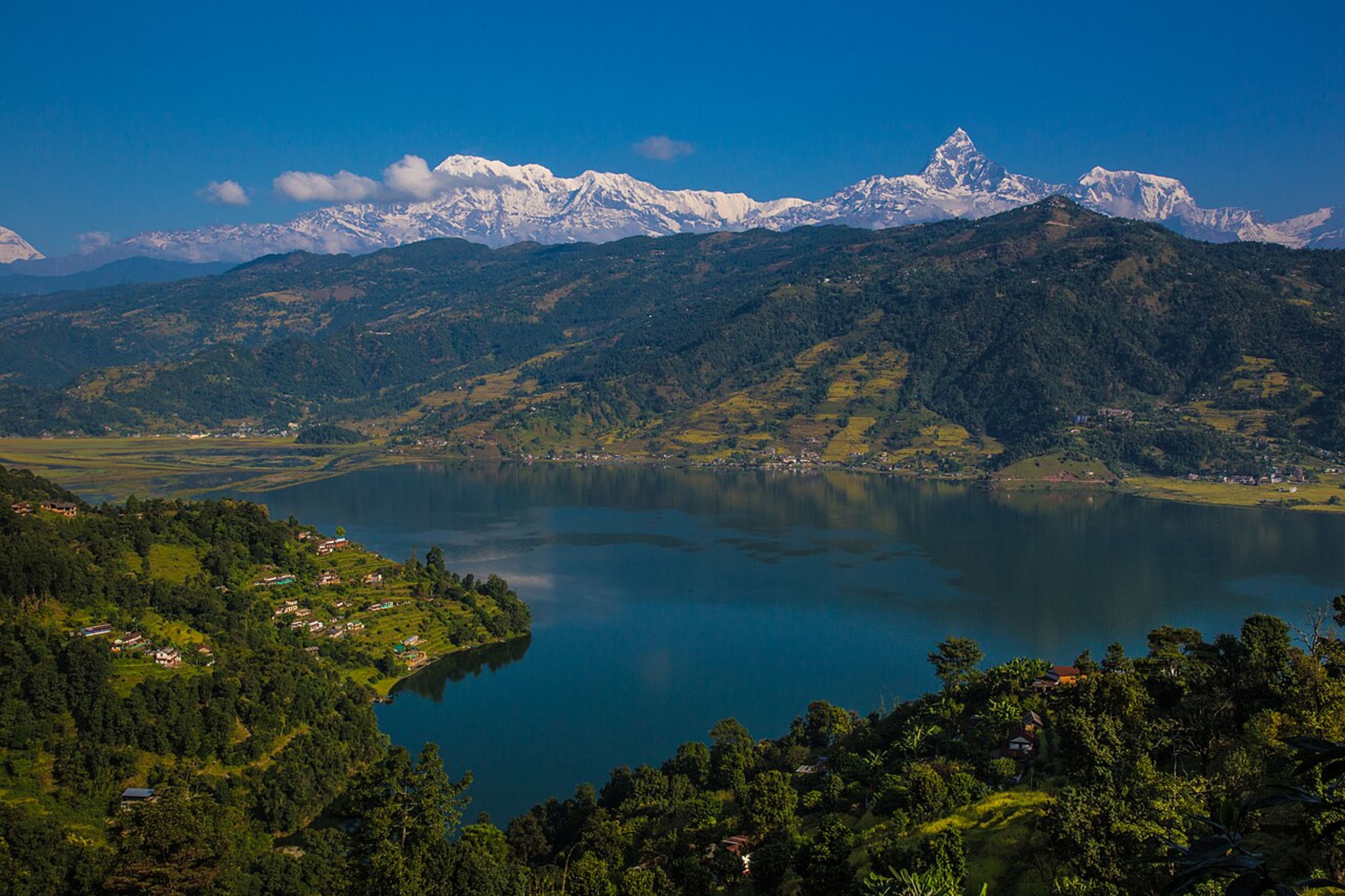
Kathmandu, Nepal
3-Day Itinerary for Solo Traveler
“Golden Spires & Quiet Courtyards: 3 Days Solo in Kathmandu”

Incense curls through courtyards where wood carvers have chiseled the same patterns for six centuries, and prayer wheels spin warm under your palm as monks murmur mantras older than the temples themselves. Fall lays a soft golden light over the valley — cooler air, clearer skies, and thinner crowds mean the sacred sites finally have room to breathe. This is Kathmandu at its most legible: three days, three neighborhoods, and enough solitude to actually feel the place.
At a Glance
Highlights
- Sunrise circumambulation at Boudhanath before the tour buses arrive
- Wood-carved temple facades in Kathmandu Durbar Square at golden hour
- A steep, breath-stealing climb to Kopan Monastery's chanting halls
- Copper-smith hammering echoing through Patan's stone courtyards
- Garden of Dreams as a hushed, marble-floored escape from Thamel's chaos
- Momo-hunting through Thamel's tangled backstreets after dark
- Terracotta rooftops and pottery kilns in Bhaktapur's timeless lanes
Day-by-Day Plan
Day 1: Settling In: Sacred Ground and Garden Silence
A gentle first day moving between Kathmandu's central heritage core and Thamel's garden retreat, covering roughly 3 miles on foot at an easy, jet-lag-friendly pace.
Arrive while the square is still waking — vendors setting up marigold stalls, pigeons scattering off ancient stone, the low murmur of morning prayers rather than the midday roar of tour groups. The wood-carved temples wear their earthquake scars openly, a visible reminder of resilience layered into every reconstructed beam. By 9:30 the crowds thicken noticeably, so this early window is yours.

A hushed contrast to the square's chaos — marble corridors, gaudy chandeliers, and the strange intimacy of walking through rooms where a monarchy quietly ended. Solo travelers often find this an easy, low-effort stop: no need to coordinate pace with anyone, just wander at will through the time capsule of 20th-century royal aspiration.

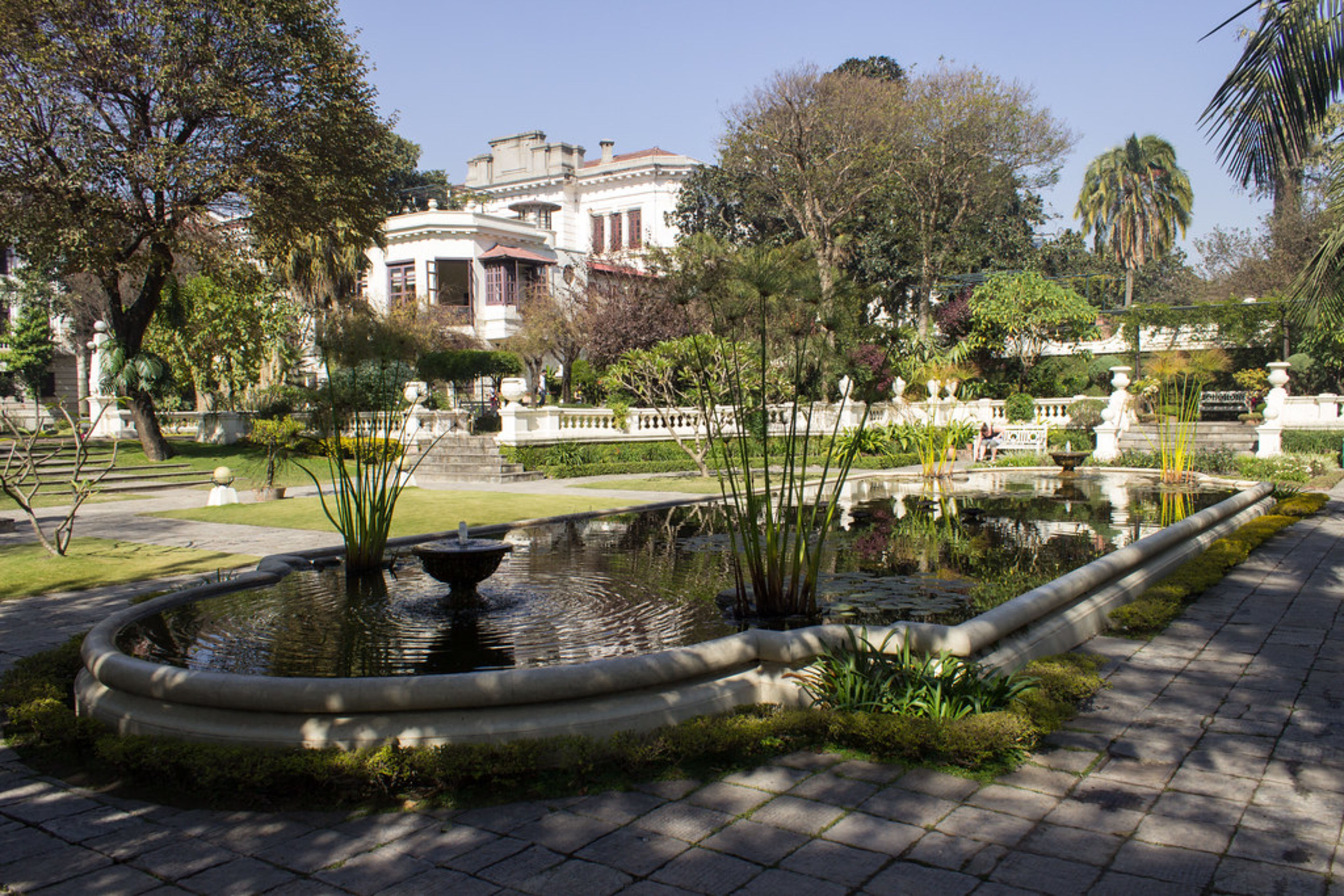
Step through the gate and the city noise simply falls away — fountains trickling, birdsong instead of horns, cool marble underfoot. This is the valley's best-kept secret for solo decompression: bring a book, sit on a garden bench, and let the fatigue of arrival day dissolve. Locals begin arriving for evening strolls closer to 5pm, so early-to-mid afternoon is blissfully uncrowded.
By evening Thamel hits its stride — prayer flags strung above neon signs, the smell of steaming momos mixing with incense, backpackers and monks crossing paths in the same narrow alley. This is prime solo-traveler territory: rooftop bars and communal-table restaurants make it easy to strike up conversation with fellow travelers over a Everest beer or a plate of momos.
The day opens gently at Kathmandu Durbar Square, arriving early enough to catch the square mid-yawn — marigold vendors setting up, pigeons scattering, wood-carved temple eaves catching the first slanted light. From there, a short walk leads to Narayanhiti Palace Museum, where hushed marble halls and chandeliers offer an easy, self-paced wander through Nepal's monarchic past.
After the morning's history-heavy pace, Garden of Dreams offers a deliberate shift into stillness — fountains, birdsong, and marble benches replacing temple bells and vendor calls. It's the ideal spot to let jet lag settle and simply exist for ninety quiet minutes before the city picks back up.
As the light fades, Thamel comes alive with neon, incense, and momo steam. Dinner at Imago Dei's courtyard tables makes for easy, low-pressure solo dining, with plenty of fellow travelers around for casual conversation before an early return to rest up for day two.
Day 2: Stupas, Steep Climbs, and Circling Prayer Wheels
A moderately active day centered on Boudhanath and the uphill trek to Kopan Monastery, covering roughly 4-5 miles including the monastery ascent.
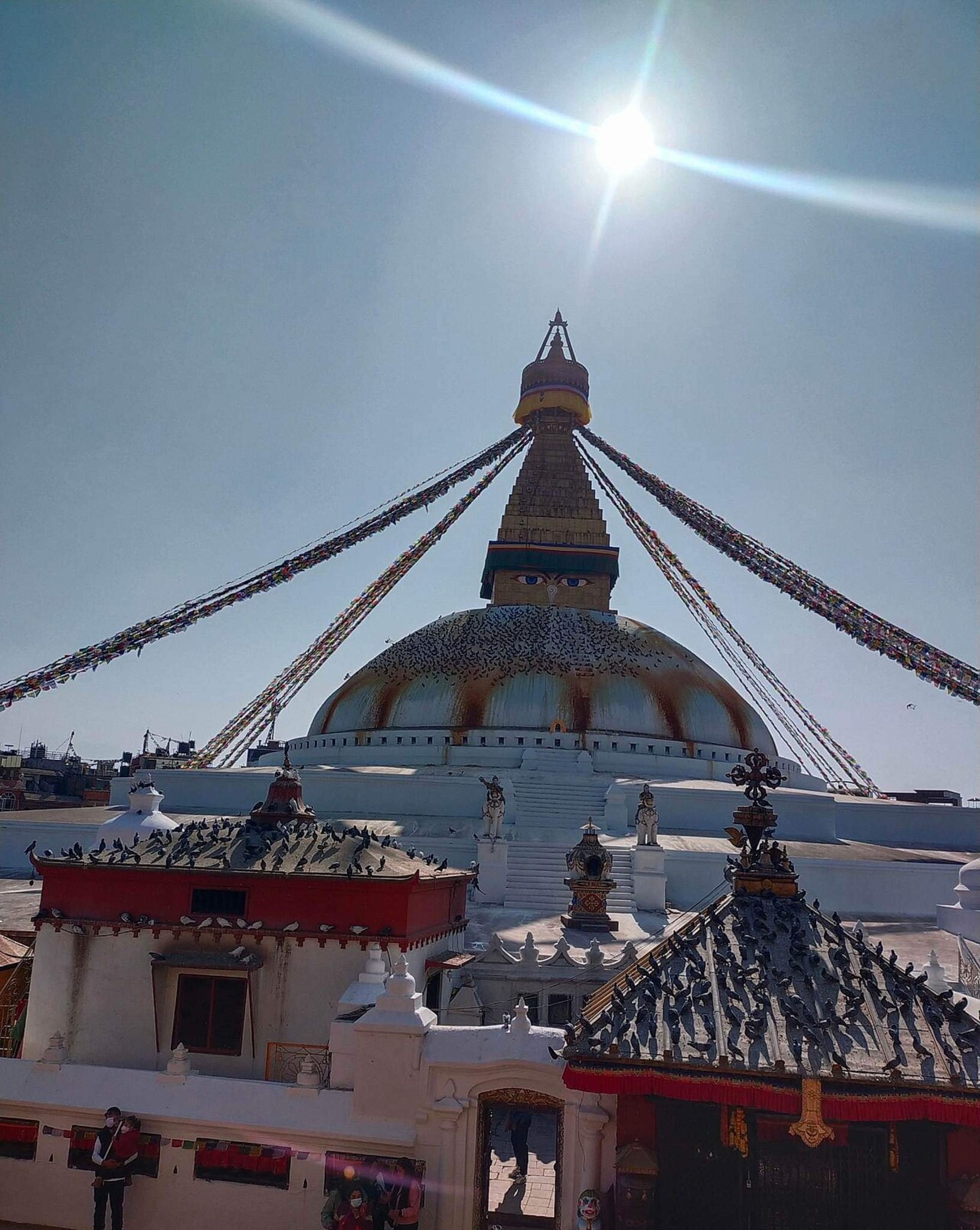
Arrive as pilgrims begin their clockwise laps, butter lamps flickering and low chants drifting from surrounding monasteries. The worn prayer wheels feel cool and smooth under your palm as you join the slow circumambulation — a naturally social, unspoken ritual that solo travelers can step into without a word exchanged. By 10am the plaza fills with tour groups; this early hour belongs to devotion, not spectacle.
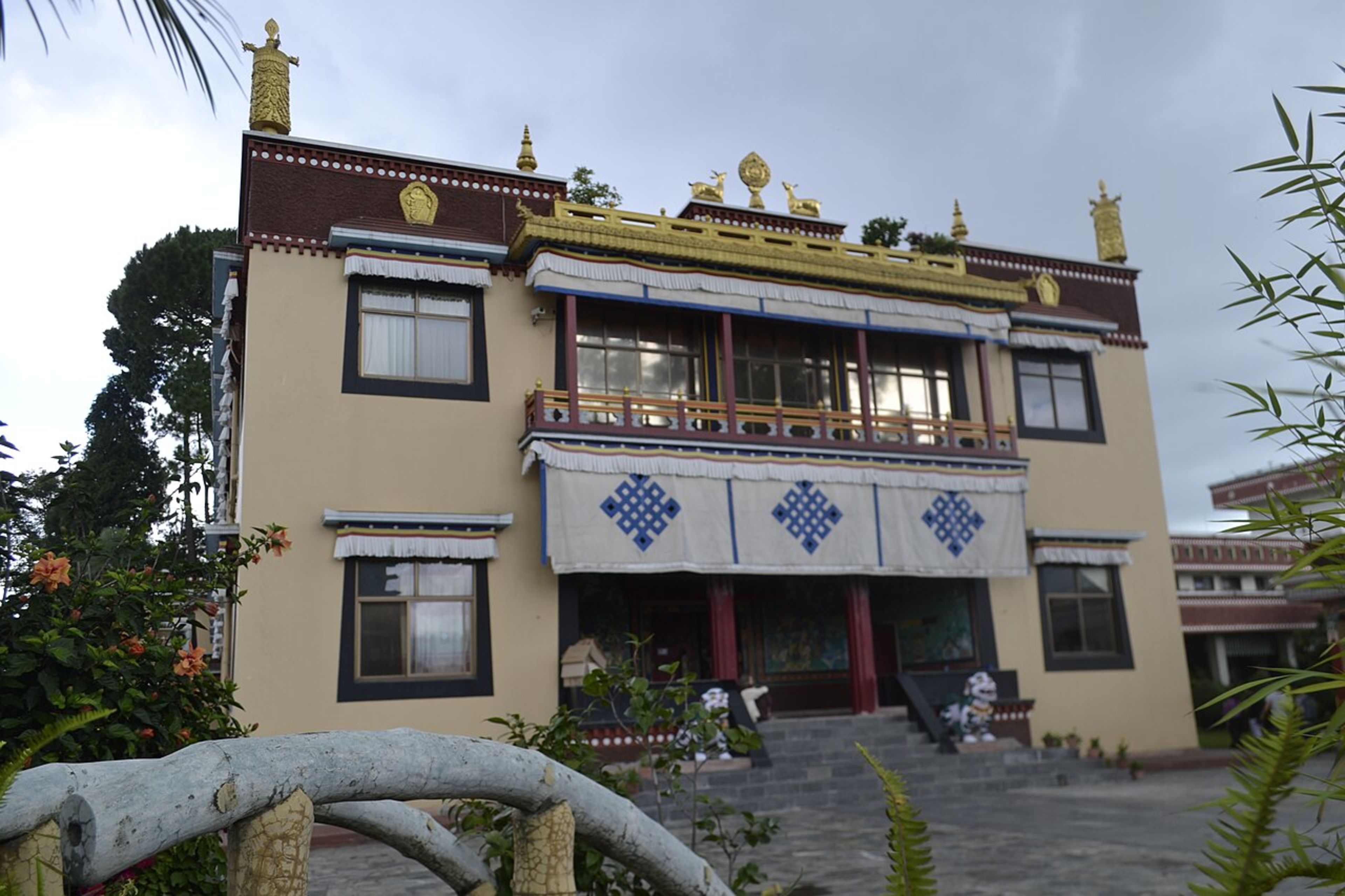
The climb up is steep enough to burn your thighs and steal your breath, but the payoff is a sudden hush — golden stupas, snapping prayer flags, and Tibetan chanting that resonates in your chest rather than just your ears. Arrive before the tour buses show up after 2pm, when the grounds still feel like an active monastic community rather than a sightseeing stop.
Return at dusk for a completely different mood — the day's crowds thinned, butter lamps lit, and pilgrims gathering for evening circumambulation. This is one of Kathmandu's most naturally social solo experiences: walk the clockwise loop alongside strangers doing the same, no conversation required but a quiet sense of shared ritual all the same.
The day begins in near-darkness at Boudhanath, joining pilgrims for the clockwise circuit around the world's largest stupa as butter lamps flicker and chants rise from surrounding monasteries. It's contemplative, unhurried, and a naturally social ritual — no small talk needed, just shared footsteps.
From there, the mood shifts to physical effort: a steep uphill walk to Kopan Monastery, thighs burning, breath short, until the gates open onto golden stupas and resonant chanting. The climb rewards patience and an early start, well before afternoon tour groups arrive.
After descending and resting over noodles near the stupa, return to Boudhanath at dusk for the evening circumambulation — a quieter, lamplit version of the morning ritual, and a gentle, contemplative close to an active day.
Day 3: Copper, Clay, and Carved Wood: Artisan Valley
A culturally rich day split between Patan's artisan courtyards and Bhaktapur's medieval streets, with roughly 3-4 miles of walking at a relaxed pace.
Arrive early enough to hear the ring of copper-smith hammers before the square fills — honeyed light catching the carved wooden details, restoration hoses hissing quietly against brick courtyards. This is Newari craftsmanship at its most concentrated, and the early hour means you can actually watch artisans work rather than photograph them through a crowd. By 10am the square becomes considerably busier.
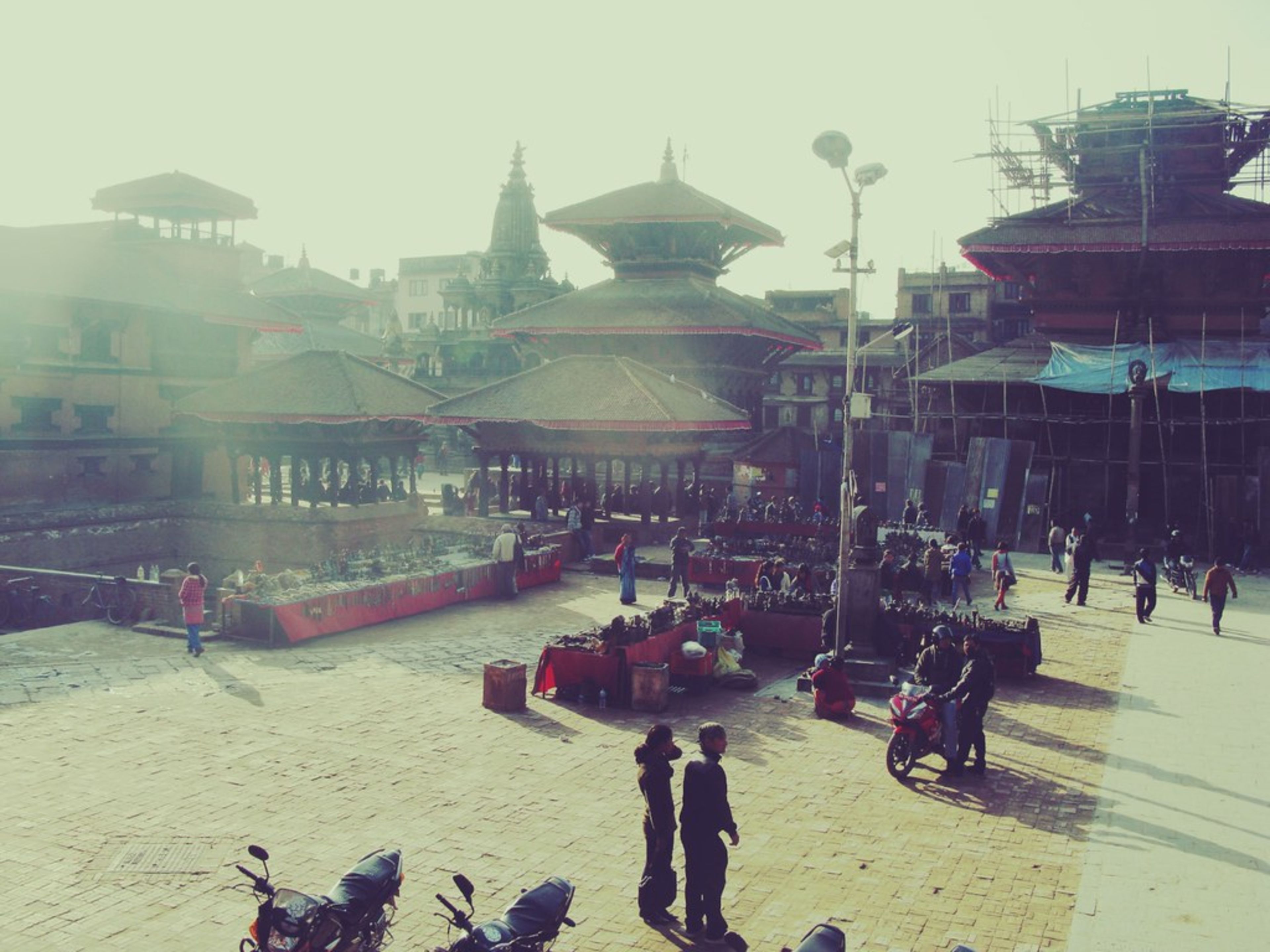
The transition from Patan's polish to Bhaktapur's rawer, more lived-in medieval streets is immediate — pottery kilns smoking, chisels scraping window frames, terracotta dust on artisans' hands. Arriving after the late-morning rush but before the 11am-4pm peak fully empties out means you'll still catch craftsmen at work while avoiding the thickest crowds; staying until closer to 4pm rewards you with the 'acceptable' crowd window as day-trippers head back to the city.

The final day opens in Patan, arriving early enough to hear copper hammers ringing through quiet courtyards before the square wakes fully. Wandering here at a relaxed pace, camera in hand, feels like moving through an open-air workshop as much as a heritage site — carved wood, restoration work, and centuries of craft all visible at once.
After a leisurely lunch, the drive east to Bhaktapur marks a shift in texture — from Patan's polished elegance to Bhaktapur's rawer, clay-dusted medieval streets. Pottery kilns, carved window lattices, and the rhythmic scrape of chisels fill the afternoon, best explored slowly with no fixed agenda beyond following the sound of hammers and the smell of wood shavings.
As the light softens over Bhaktapur's terracotta rooftops, the crowds thin toward evening, leaving the square nearly empty by dusk — a fittingly quiet, reflective close to three days spent moving through Kathmandu's layered history, from sacred stupas to artisan alleys.
Want to tweak this trip?
Our AI planner can customize this itinerary to your exact dates, interests, and travel style.
Customize This ItineraryRestaurant details (hours, menus, availability) change frequently. Check current hours before visiting, especially in seasonal destinations.
Dietary compatibility tags are general guidance. If you have severe allergies, confirm directly with the restaurant.
Travel tips are general guidance, not professional safety advice. Check government advisories for latest information.
All prices are approximate and may vary seasonally.