Great North Woods, New Hampshire
3-Day Itinerary for Couples
“Silence and Snow: Three Days on Lake Umbagog”
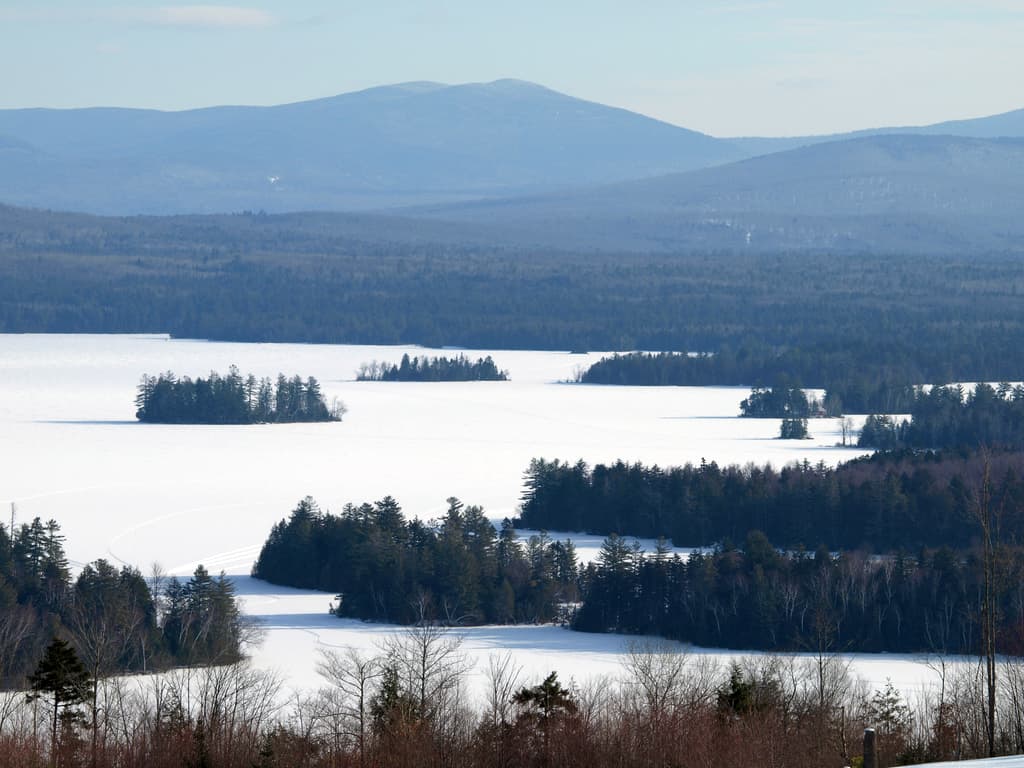
Out here, the forest holds its breath and the lake turns to pale glass under a lid of snow. This is a trip built for two people who want silence as a luxury—where the loudest sound all day might be your own footsteps crunching toward the shoreline.
At a Glance
Highlights
- Sunrise stillness over a frozen Lake Umbagog
- Moose tracks in fresh snow along the shore trail
- Star-drenched skies with zero light pollution
- Slow, unhurried pace built for reconnecting
- A true wilderness lodge as your basecamp
- Golden-hour light on snow-laden spruce
Day-by-Day Plan
Day 1: Arrival & First Breath of Wilderness
A gentle arrival day with a single unhurried stop at Lake Umbagog to orient yourselves and shake off the drive, roughly 1 mile of easy walking.
After hours in the car, this is the moment the trip actually begins—the lake spreads out white and still, rimmed by dark spruce-fir forest standing shoulder to shoulder against the cold. Sound drops away almost entirely here; if you're lucky, you'll catch the low croak of a raven crossing overhead or the distant creak of ice settling. Keep to the accessible shoreline viewing areas near the parking access—footing can be uneven and there are no groomed trails in deep winter, so this is about quiet presence, not distance covered.
Today is about arrival, not adventure—expect a long drive north from Manchester or Boston, through increasingly quiet country as the towns thin out and the forest closes in. Take it slow, watch for ice patches, and let the scenery outside the window do the entertaining.
By early afternoon you'll reach Lake Umbagog, and this is where the trip's rhythm truly sets in. There's no itinerary pressure here—just the two of you, the frozen expanse of the lake, and the particular hush that only deep winter forest produces. Stay as long as the cold allows, then head to settle into your accommodation before dark falls, which comes early this time of year.
With the shortest days of the year, darkness arrives by late afternoon—use the early evening to unpack, warm up, and adjust to the profound quiet of the region. Dinner options are limited and close early, so plan to eat by 6 or 7pm; check with your lodging host for current recommendations, as availability shifts season to season. Step outside before bed if skies are clear—the stars here are unlike anything most visitors have seen.
Day 2: Full Immersion at the Water's Edge
The trip's centerpiece day, spent almost entirely at Lake Umbagog across a sunrise and midday visit, totaling roughly 2-3 miles of walking across two visits.
Arrive before the light fully breaks and you'll have this entire frozen world to yourselves—winter visitation here is minimal to begin with, and at this hour it's just you, the mist rising faintly off any open water, and the first pink light catching the treeline. This is the golden-hour version of yesterday's afternoon visit: same lake, entirely different mood, hushed and almost ceremonial. Bring a thermos of something hot; there's nowhere out here to buy one.
Return at midday when the light is flat and full, and the character of the lake shifts again—wider views open up, and this is your best window for spotting wildlife tracks in the snow along the forest edge, moose sign in particular. Walk a different stretch of shoreline than this morning to keep things fresh, moving slowly and talking quietly; sound carries far out here and startles what little wildlife is moving. This second visit is less about the dramatic light and more about simply being present together in a landscape that rewards patience.
Set an alarm earlier than feels reasonable on vacation—the reward is a sunrise at Lake Umbagog with absolutely no one else around, mist curling off any unfrozen water and the forest lit gold and rose. This is the kind of quiet that couples travel a long way to find, and having it entirely to yourselves is the real luxury of visiting in winter.
After warming up over lunch, head back to the lake for a second, different encounter—midday light flattens the drama but opens up wider views and better odds of spotting moose tracks pressed fresh into the snow. The pace today stays deliberately slow; there's real value in returning to the same place twice and noticing how it changes with the light.
By the time you're back and settled for the evening, you'll have logged a full day of cold-weather immersion—tired in the good way, ready for something warm to eat and an early night. Dinner options remain limited this deep into winter, so check with your lodge host about what's currently open, and don't be surprised if the whole town seems to close by 8pm. Step outside once more before bed; two nights in, the dark sky here tends to feel less overwhelming and more like an old friend.
Day 3: Last Light Before Departure
A shorter final morning at Lake Umbagog for one last quiet visit before the long drive home, under a mile of walking total.
One final visit before the drive south—shorter this time, less about covering ground and more about saying goodbye to the place that's defined the trip. The lake looks different again this morning, softer somehow, and there's a particular ache to leaving a place this quiet knowing how loud the world gets once you're back in range of cell service. Take a slow lap of the shoreline, breathe the cold air deeply, and let this be the image you carry home.
There's no need to rush this final morning—one last unhurried visit to Lake Umbagog, quieter and more reflective than the previous two, closes out the trip properly. This isn't about seeing anything new; it's about sitting with the stillness one more time before the drive back to noise and traffic and everyday life.
By late morning you'll be packing the car and beginning the long drive south toward Manchester or Boston—budget the full 3-4 hours depending on your route, and expect the landscape to gradually shift from deep wilderness back to familiar highway sprawl. Watch for ice on the roads especially in the first hour, as temperatures near the mountains can differ significantly from the valleys below.
Plan for a late-afternoon or early-evening arrival back near the airport corridor, and consider one last simple meal en route as you transition out of the Great North Woods rhythm. The quiet you found up there tends to linger for a while—many couples say the silence is the thing they miss most, long after the cold has faded from memory.
Want to tweak this trip?
Our AI planner can customize this itinerary to your exact dates, interests, and travel style.
Customize This ItineraryRestaurant and dining details for this remote region are extremely limited and seasonal; availability changes frequently in winter, so confirm directly with your accommodation or local businesses before finalizing plans.
Dietary compatibility information was not available for this region's limited dining options—confirm directly with any establishment regarding allergies or restrictions.
Travel tips are general guidance, not professional safety advice. Check government advisories and local road condition reports for the latest information before and during your trip.
All prices are approximate estimates and may vary seasonally; confirm current costs locally.